Share
Tweet
Share
Share
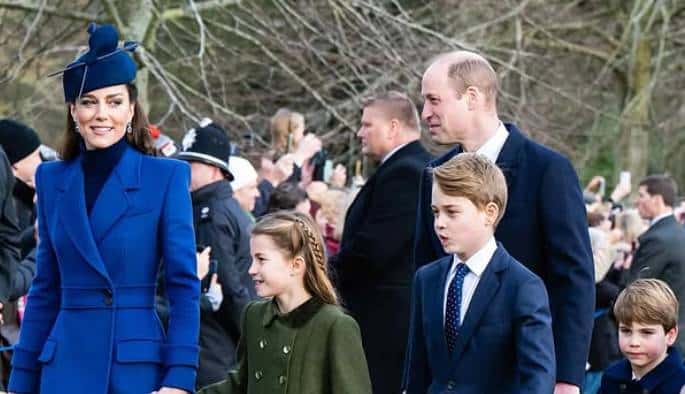
The British royal family experienced a different Easter in 2025, marked by the absence of Prince William and the Princess of Wales, Kate Middleton, from the traditional celebration led by King Charles III at Windsor Castle. Instead of adhering to royal protocol, the couple chose to spend the long holiday weekend with their three children, George, Charlotte, and Louis, at Anmer Hall, their residence in Norfolk, eastern England. The decision, communicated in advance to the monarch, reflects a preference for privacy during a sensitive period, influenced by Kate’s ongoing recovery from a cancer diagnosis in 2024 and King Charles III’s own medical treatment.
The absence did not go unnoticed by royal watchers, who closely monitor shifts within the House of Windsor. Easter, traditionally a time for family unity and public visibility, saw a more subdued celebration, attended by King Charles III, Queen Camilla, and other royals, but without the Prince and Princess of Wales. The Sunday service at St. George’s Chapel, a centerpiece of the event, proceeded as per tradition, though the empty seats of William, Kate, and their children drew attention.
This choice by William and Kate comes amid personal and institutional challenges. Since her cancer diagnosis, Kate has significantly reduced public appearances, focusing on recovery and family well-being. Prince William, balancing his role as heir to the throne with supporting his wife and children, signals a more modern, family-centered approach to royal duties.
Context of the family decision
The decision to forego the Easter ceremony was carefully planned, stemming from a direct conversation between William and his father, King Charles III. The prince emphasized the importance of extended family time, particularly before the children returned to their school routine post-holidays. Anmer Hall, nestled in Norfolk, serves as a sanctuary for the family, offering privacy and a rural setting where George, Charlotte, and Louis can enjoy moments away from public scrutiny.
Gifted to the couple by Queen Elizabeth II for their 2011 wedding, Anmer Hall has become a symbolic retreat for the Wales family, used for rest and family celebrations. The choice of Norfolk underscores William and Kate’s commitment to shielding their children’s privacy, who, despite their public roles, are still young and not yet active in official royal duties.
This absence also aligns with broader strategic adjustments within the royal family. With Kate in recovery and Charles III managing his health, the royals have redistributed responsibilities, relying on figures like Queen Camilla and Princess Anne to maintain public engagements.
Privacy first: Opting for Anmer Hall highlights the focus on safeguarding family life.Health priorities: Kate’s diagnosis and Charles III’s treatment shape the royal agenda.Adapted traditions: The Wales’ absence reflects a monarchy in transition, more flexible to personal needs.Reorganization within the House of Windsor
The absence of the Prince and Princess of Wales at Easter 2025 is part of a broader shift within the British monarchy. Recent years have brought significant changes, from Queen Elizabeth II’s death in 2022 to Prince Harry and Meghan Markle’s departure from royal duties in 2020. Combined with the health challenges faced by Charles III and Kate, these factors have prompted a quiet restructuring of royal dynamics.
Queen Camilla has taken on a more central role since the king’s diagnosis. At Easter, she joined Charles III for the St. George’s Chapel service and other public engagements, solidifying her position as a key support figure. Princess Anne, renowned for her work ethic, has also increased her visibility, handling a robust schedule of domestic and international commitments.
Meanwhile, William and Kate have adopted a selective approach to public duties. As heir to the throne, William maintains an active agenda, focusing on issues like sustainability, mental health, and community support. Kate, despite her reduced schedule, continues to champion long-term projects, such as early childhood development, though her health remains a priority.
Camilla’s prominence: The queen consort has stepped up for ceremonial and public duties.Anne’s reliability: The king’s sister remains a cornerstone of royal engagements.Selective focus: William and Kate prioritize causes aligned with their vision, balancing duty and family.The royal Easter tradition and its evolution
Easter is a cornerstone of the royal calendar, blending religious, cultural, and ceremonial elements. Held at Windsor Castle, the event typically includes the Sunday service at St. George’s Chapel, followed by family gatherings. Under Queen Elizabeth II, Easter was a moment to reinforce familial unity and public visibility for the monarchy.
Under Charles III, the tradition has seen adjustments. In 2024, Easter was already scaled back, with Kate absent and Charles III’s participation limited due to treatment. In 2025, the absence of William, Kate, and their children further underscored the event’s reduced scale, raising questions about balancing tradition with the personal needs of royals.
St. George’s Chapel, the venue for the Easter service, holds deep significance for the royals, hosting events like Queen Elizabeth II’s funeral and Prince Harry’s wedding. The absence of key figures like William and Kate in 2025 reinforces the sense of a monarchy in transition, adapting to a more modern, less rigid framework.
Public reaction and perception of the absence
The decision by William and Kate to skip the royal Easter sparked varied responses from the British public and global media. Many expressed support for the couple’s choice, recognizing the need to prioritize health and family. Kate’s candid video about her cancer diagnosis in 2024 deepened her connection with the public, who view her as a figure of resilience and empathy.
However, some royal analysts suggested that repeated absences from traditional events could fuel speculation about the monarchy’s future. With Charles III and Kate managing health issues and a leaner royal family, debates have emerged about how the institution will maintain relevance and visibility in a rapidly changing world.
British media, known for detailed royal coverage, framed the absence as reflective of William’s priorities. Outlets like The Mirror and The Telegraph noted that the prince is intent on shaping a monarchy aligned with contemporary values, emphasizing flexibility and family over strict adherence to tradition.
Anmer Hall’s role in family life
Anmer Hall is a cornerstone of William, Kate, and their children’s lives. Located in rural Norfolk, the residence offers a stark contrast to the formality of Kensington Palace, their official London base. With ten bedrooms and expansive gardens, the property is ideal for private family moments, away from constant media attention.
In recent years, Anmer Hall has been the backdrop for significant family milestones. During the Covid-19 pandemic, the couple spent extended periods there, conducting virtual engagements and sharing glimpses of their life. Social media posts, such as images of Prince Louis playing in the garden or the family enjoying outdoor activities, project an image of normalcy that William and Kate cultivate.
Choosing Anmer Hall for Easter reflects the couple’s commitment to creating lasting memories for their children. George, Charlotte, and Louis, though royals, attend a local school in Norfolk during stays at Anmer Hall, allowing them a routine closer to that of their peers.
Family sanctuary: Anmer Hall provides a respite from royal pressures.Normalcy for children: The children integrate into the local community, attending nearby schools.Public image: Shared photos from Anmer Hall reinforce the family’s relatability.Health challenges in the royal family
The health struggles of Kate Middleton and Charles III have placed the monarchy in a moment of vulnerability. Kate’s cancer diagnosis, announced after a 2024 surgery, shocked the public, who had followed her recovery closely. Known for her work on mental health and early childhood, Kate has used her platform to raise awareness about early diagnosis and family support during treatment.
Charles III revealed his cancer diagnosis in February 2024, following a procedure for a benign condition. By sharing his condition publicly, the king encouraged others to seek preventive care. His schedule, though lighter, includes symbolic duties like the Easter service, reinforcing his leadership amid personal challenges.
The simultaneous health issues of two central royals are rare in recent history. During Elizabeth II’s reign, her health was rarely discussed until her final years. The current transparency about Charles III and Kate’s conditions signals a shift in how the monarchy communicates with the public.
The monarchy’s future under William
The absence of William and Kate at Easter 2025 prompts questions about the monarchy’s future, particularly under William’s eventual leadership. As Prince of Wales, William has embraced a pragmatic, modern approach, championing causes like sustainability and mental health that resonate with younger generations.
Yet, William faces the challenge of balancing traditional expectations with his vision for a more accessible monarchy. His decision to prioritize family during Easter reflects his intent to humanize the institution, even if it means diverging from protocol.
Kate, as the future queen consort, is integral to this vision. Her empathy and dedication have earned public admiration, and her recovery will shape her public role in the years ahead. Together, William and Kate are forging a new era for the House of Windsor, defined by flexibility and public connection.
Modern monarchy: William envisions an institution aligned with 21st-century values.Kate’s influence: The princess is a key figure in shaping the monarchy’s public image.Balancing roles: The couple navigates tradition and personal priorities.Timeline of recent events
The absence of William and Kate at Easter 2025 is part of a series of events shaping the British monarchy. Below is a timeline of key moments:
September 2022: Queen Elizabeth II’s death and Charles III’s accession to the throne.January 2024: Kate Middleton undergoes abdominal surgery, later diagnosed with cancer.February 2024: Charles III announces his cancer diagnosis after a medical procedure.March 2024: Kate shares a public video about her condition, requesting privacy.April 2024: Scaled-back Easter with Kate absent and Charles III’s limited participation.April 2025: William and Kate skip Easter, spending the holiday at Anmer Hall.
This timeline illustrates the monarchy’s navigation of unprecedented challenges, from a change in reign to health crises. William and Kate’s Easter decision reflects these circumstances while signaling their redefinition of royal roles.