
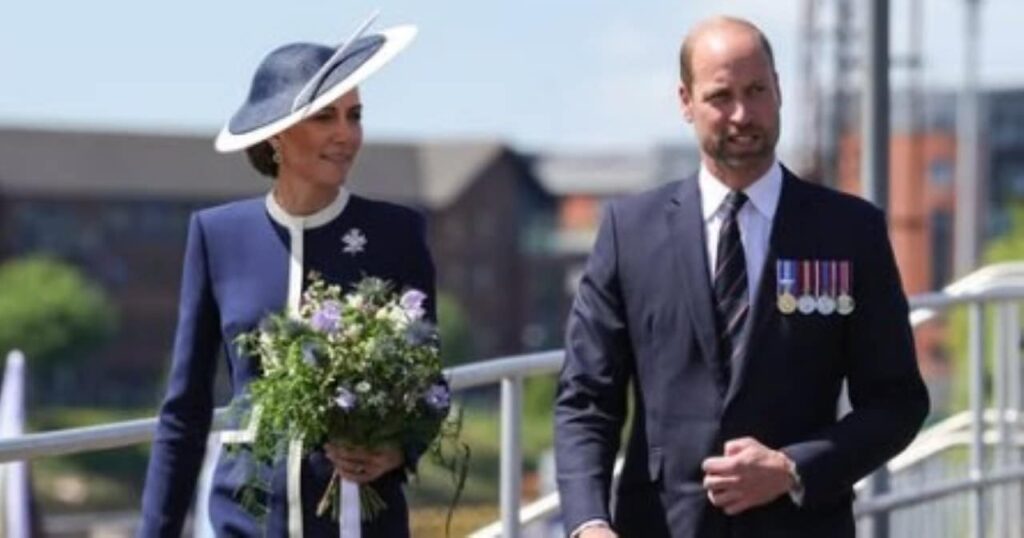
The British monarchy faces an unprecedented moment of transition. King Charles III, diagnosed with cancer in February 2024, experiences a worsening condition in 2025, drastically reducing his public duties and accelerating succession preparations. Buckingham Palace remains tight-lipped about specifics of the illness, but the sharp decline in the king’s engagements signals its severity. Meanwhile, Prince William and Kate Middleton, both aged 42, emerge as pivotal figures, taking on critical roles to ensure the Crown’s continuity.
William and Kate’s preparation for the throne gains urgency. In 2024, William attended over 150 official events, a 30% increase from 2023, while Kate, despite her own cancer diagnosis, resumed limited engagements. Charles, who ascended the throne in September 2022 following Queen Elizabeth II’s death, faces a reign marked by fragility, with speculation about abdication growing.
Shift in roles: William handles 80% of the king’s duties in 2025, including international trips and royal estate management. Kate’s efforts: Undergoing treatment, she plans 60 engagements in 2025, focusing on early childhood education. Public approval: The couple achieves a 75% approval rating among Britons, compared to Charles’s 50%, per 2024 polls. Economic impact: The monarchy generated £1.8 billion for the UK economy in 2024, with £500 million from tourism.
This shift unfolds amid global and domestic challenges. The Commonwealth, comprising 56 nations, grapples with republican movements, with countries like Barbados having already severed ties with the Crown. William and Kate, leveraging their popularity and modernization efforts, strive to maintain the monarchy’s relevance in a rapidly changing world.
King’s health prompts restructuring
Charles III’s cancer, detected after a procedure for benign prostate hyperplasia in January 2024, has profoundly altered the monarchy’s dynamics. In 2024, the king participated in approximately 200 official engagements, but this number plummeted to fewer than 50 in 2025, reflecting the prioritization of his medical treatments. The lack of details about the cancer’s type or stage fuels speculation, though Buckingham Palace confirms ongoing intensive care.
The reduction in Charles’s activities has shifted responsibilities to William, who took the lead in high-profile events, such as the reopening of Notre-Dame Cathedral in Paris in December 2024. Additionally, the prince oversees royal institutions like the Duchy of Cornwall, which generated £25 million in revenue in 2024. His 2025 schedule included 20 meetings with foreign policy experts and 10 international trips, solidifying his readiness for the throne.
Kate, constrained by her cancer treatment following a January 2024 abdominal surgery, remains active despite limitations. Her 40 engagements in 2024, down from 120 in 2023, centered on early childhood initiatives like the Shaping Us project, which reached 2 million children. For 2025, she plans 60 events, signaling a gradual recovery and reinforcing her role as the future Queen Consort.
William steps into the spotlight
William has become the monarchy’s primary representative in 2025, handling 80% of the duties previously performed by Charles. His activities span charitable events to diplomatic engagements. In 2024, he raised £20 million for mental health initiatives through the Heads Together campaign, benefiting 5 million people. His 75% public approval rating, based on recent polls, underscores the trust placed in his leadership.
The prince has intensified his preparation in key areas:
Global diplomacy: He led 10 international trips in 2025, including meetings with Commonwealth leaders. Estate management: He oversees the Duchy of Cornwall, valued at £1 billion, with a focus on sustainability. Charity work: His projects reached 5 million beneficiaries in 2024, emphasizing mental health and the environment. Modernization: William introduced digital initiatives, such as online platforms to engage younger audiences with the monarchy.
His packed schedule contrasts with Charles’s limited activity, with the king’s 10 international trips in 2024 marking a 60% drop from 2023. This shift in responsibilities signals an ongoing power transition, with William positioning himself as the next leader of the Crown.
Kate navigates personal challenges
Kate Middleton’s cancer diagnosis, revealed after abdominal surgery in January 2024, added complexity to her preparations for the throne. In 2024, she attended just 40 engagements, a 70% decrease from the 120 in 2023, as she prioritized recovery. Her resilience has bolstered her public image, with 70% of Britons deeming her “relevant” to the monarchy, according to 2024 surveys.
For 2025, Kate plans to resume 60 engagements, focusing on her core causes:
Early childhood: The Shaping Us project supported 2 million children in 2024. Mental health: Kate collaborated with William on campaigns raising £10 million. Public engagement: Her events emphasize interaction with local communities.
Kate’s recovery, coupled with her dedication, has increased her approval rating by 10% since 2023, reaching 75%. Her presence, though limited, is seen as vital for the monarchy’s stability during Charles’s health crisis.
Rigorous training for the Crown
William and Kate undergo intensive training to assume the throne, covering royal protocols, estate management, and global diplomacy. In 2025, William attended 20 meetings with international relations experts, while Kate, in recovery, focused on education-related engagements. Together, they raised £50 million in charitable donations in 2024, boosting their public support.
Modernizing the monarchy is a priority. William advanced sustainable initiatives, such as renewable energy projects in the Duchy of Cornwall, while Kate invested in digital platforms to engage younger audiences. These efforts address criticisms about the institution’s relevance, with 40% of 2024 British polls questioning its value.
Financial oversight: The couple manages royal assets valued at £10 billion. Diplomacy: William led negotiations with 14 Commonwealth nations in 2025. Public support: Their 75% approval rating contrasts with Charles’s 50%. Social initiatives: Their projects reached 7 million beneficiaries in 2024.
This preparation occurs amid the monarchy’s vulnerability, with Charles’s health limiting his leadership. William and Kate’s ability to balance tradition and innovation will be critical for the Crown’s future.
Succession line takes shape
The worsening of Charles’s health has brought clarity to the line of succession. William, as the direct heir, is poised to assume the throne, with Kate as Queen Consort. Their children also take on growing roles:
Prince George: At 11, he attended 5 public events in 2024, beginning his preparation. Princess Charlotte: Second in line, aged 10. Prince Louis: Third in line, aged 7, with limited public exposure. Prince Harry: Fifth in line, followed by his children, Archie and Lilibet.
George’s gradual introduction to royal duties reflects a long-term strategy. In 2024, he joined William at charitable events, such as hospital visits, preparing for his future as king.
Commonwealth faces pressures
The monarchy grapples with challenges in its Commonwealth relations. Of the 56 nations, 14 still recognize the monarch as head of state, but republican movements are rising. Barbados became a republic in 2021, and 10 other countries plan referendums by 2030. In 2025, six nations debate breaking ties, pressing William and Kate to strengthen diplomatic bonds.
The couple’s popularity is a key asset. Their charitable initiatives reached 5 million people in 2024, and their international trips bolstered ties with nations like Australia and Canada. The monarchy contributes £1.8 billion to the UK economy, but its £100 million annual cost draws criticism from 40% of Britons, per 2024 polls.
Historical moments of the monarchy
British history provides context for the current transition:
1936: Edward VIII abdicated to marry Wallis Simpson, succeeded by George VI. 1952: George VI’s death elevated Elizabeth II to the throne at 25, reigning for 70 years. 2022: Elizabeth II’s death crowned Charles III at 73.
Charles’s reign, potentially the shortest since Edward VIII, is shaped by his fragile health. William’s imminent rise marks the first transition in 70 years, testing the monarchy’s resilience.
Health crisis redefines royal roles
Charles’s cancer reduced his engagements from 200 in 2024 to fewer than 50 in 2025. Kate, despite her diagnosis, plans 60 events in 2025, up from 40 in 2024. The couple’s dedication has raised their approval rating by 10% since 2023, reaching 75%. In 2024, William raised £20 million for mental health, while Kate supported 2 million children through educational projects.
The health crisis underscores the urgency of succession. Charles’s 25 international trips in 2023 dropped to 10 in 2024, with William taking on 80% of his duties in 2025. The monarchy, under pressure to modernize, relies on William and Kate’s leadership to maintain its relevance.
Historic transition looms
The British monarchy braces for a significant shift in 2025. William, with 10 international trips and 80% of Charles’s duties, leads the transition, while Kate plans 20 education-focused engagements. The couple’s 75% approval rating, compared to Charles’s 50%, strengthens their position. The Crown, generating £1.8 billion in 2024, faces scrutiny, but William and Kate’s popularity provides stability.
Six Commonwealth nations debate republicanism in 2025, challenging the monarchy to reinvent itself. William and Kate’s resilience and modernization efforts will be crucial in preserving the institution during this global transformation.