
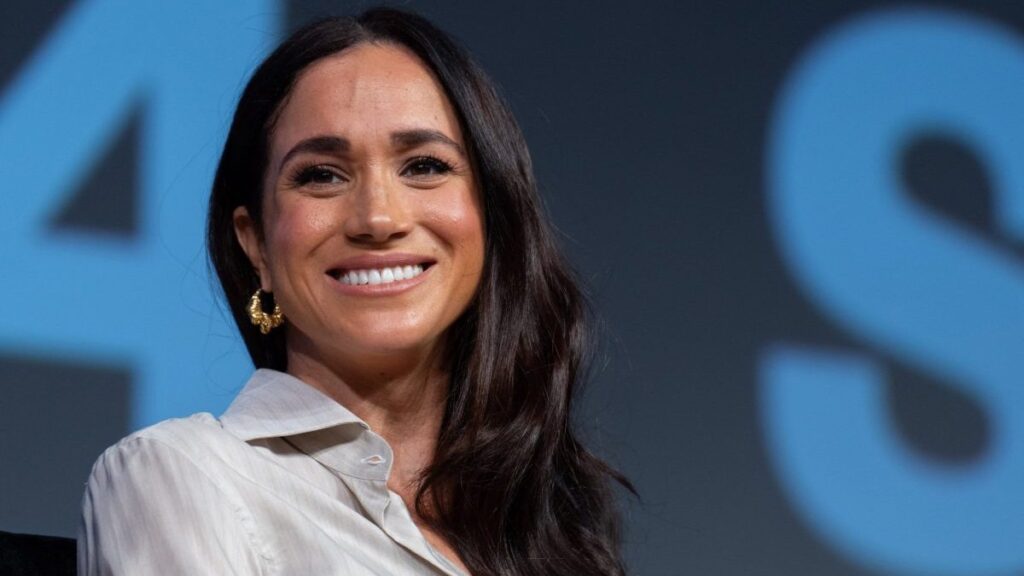
If Meghan Markle was serious about her pivot into the world of business podcasting – whose phenomenal success, as demonstrated by Steven Bartlett’s Diary of a CEO and all its copycats, reveals not just the minds and habits and of entrepreneurs but the culture of hustling, burnout, workaholism, gender disparity and parental guilt that we live in – she would not have opened with packing peanuts.
“Whew,” she gushes, in her elegantly scripted introduction to Confessions of a Female Founder, in which the Duchess of Sussex meets businesswomen, “whether they’ve IPOd or they’re at the beginning of their climb”, for advice as she launches her lifestyle brand, As Ever. “It’ll keep you up at night. I was absolutely consumed with packaging… Boxes, it’s all I could think about”.
I am sure this was intended as relatable and approachable and a reflection of how easy and detrimental it is to become absorbed with small details at the cost of losing sight of the bigger picture, but instead sets the tone for a podcast as light as those styrofoam peanuts that only really concerns itself with surface aesthetics – the packaging – and offers little of substance.
Markle’s first guest is one of her closest friends, Whitney Wolfe Herd, the 35-year-old founder of dating app Bumble, who in 2021 became the world’s youngest self-made female billionaire.
Wolfe Herd is perfect for this podcast’s target audience of millennial women, many of whom will have used her product themselves, and will be fascinated by the background of a woman their own age who understood the gaps in the dating app market and capitalised on it so young.
Unfortunately, Markle elects not to bother dwelling on much of that. After a gushy recap of how they first met, at the Duchess’s New Year’s Eve party, Markle says, “we’ve never actually talked extensively about everything that happened with you and your career trajectory, and a lot of it is like, covered ground, so I don’t need us to go through it all” despite most listeners being here precisely to hear her go through it all.
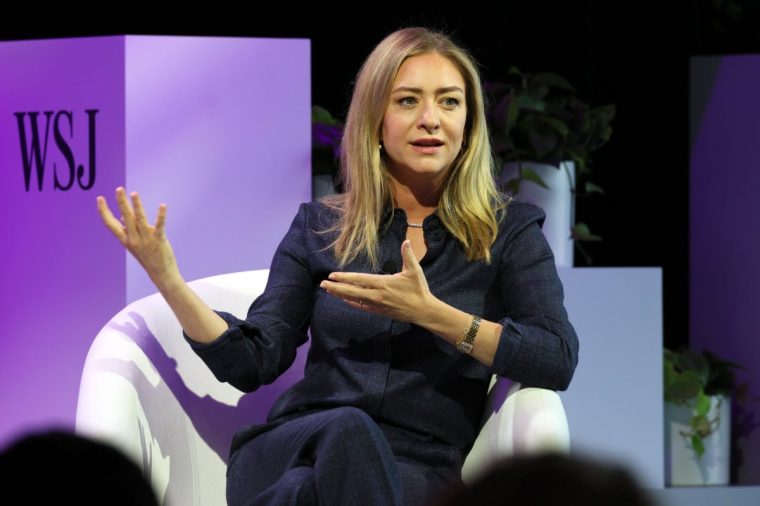 Bumble founder Whitney Wolfe Herd (Photo: Dia Dipasupil/Getty Images)
Wolfe Herd was one of the founders of revolutionary dating app Tinder, but after leaving filed a sexual harassment claim, got a huge payout that in turn led to an unexpected media scandal that left her exposed and alone when she was only 24 years old. She intended her next venture to be a girls-only social network “to encourage kindness among women”.
Eventually, her experiences in abusive relationships and at the hands of misogynistic media attention led her to launch Bumble, an app on which women send the first message and which gave her new purpose to “foundationally rearchitect the way people date and the way people love”.
This is a lofty ambition, and there is little evidence of the app “rearchitecting” any kind of barriers or boundaries between men and women, but as a dating app it’s a triumph and I am truly interested in how she made it happen – and what she had to change about herself – in order to make it one.
But aside from interesting thoughts about why we are schooled to believe rule-following leads to success when most entrepreneurs think outside the box, there is not much truly revelatory that we could not have gleaned elsewhere or predicted.
Motherhood changed Wolfe Herd’s perspective on her work-life balance and forced her to make decisions; she felt inwardly richest when the company was struggling financially, because she had her priorities in order; she has found challenges a moment to “cower or conquer” and like many women, her instinct can be to “turtle”.
I would have loved to hear more detail about those challenges rather than so many vague allusions. I imagine she must have experienced sexism, underestimation, dismissal, failure, regret, sacrifice and suffered through any number of difficult and toxic working relationships. She must have interesting observations about how different men and women are in the workplace. She must have horror stories from the frontlines of an early 2010s start-up.
But little is revealed of the boldness that has made her such a success. As the series continues, it will become clear whether all the inane discussion of energy and bottling essence and “showing up”, rather than a platform for the vulnerability Markle claims to so value, is a deliberate decision or dependent on the guest. I suspect, though, to find that we would be better off listening to Elizabeth Day’s How to Fail.
Still, true to her word, Markle has taken inspiration from Wolfe Herd, whose concept for Bumble in its first iteration as an app called Merci was “no comments, just compliments”, which also appears to be the ethos of Confessions of a Female Founder. There are no pressing questions, no topical references, few thoughtful follow-up questions – save for asking, when Wolfe Herd describes the impact of “being stressed, being miserable, being overwhelmed, being paranoid” onto family and business, “can you turn that off?”
Instead: breathy platitudes (it is apparently no coincidence that Wolfe Herd had two sons with her oil magnate husband, given that professionally she was already “rewriting the history of what men and boys should be in the world” – give me strength), “sweetest-can-be” being used as an adjective and a lot of giggling and fawning and “aw” and “that makes me wanna cry”. More than three times Wolfe Herd tells a story about how wonderful Markle is, and at one stage marvels at her ability to “exist”.
As the conversation concludes, the women agree that the only thing separating it from one of their usual lunches is a “glass of rosé”. Which confirms that the intention – the “why of it all” – was not to deliver real insight into female entrepreneurs but to yet again offer a glimpse at what it’s like to be gal pals with Meghan Markle. No matter the packaging – an inane Netflix series or “raspberry spread” or edible flowers – the product is always Meghan herself.