
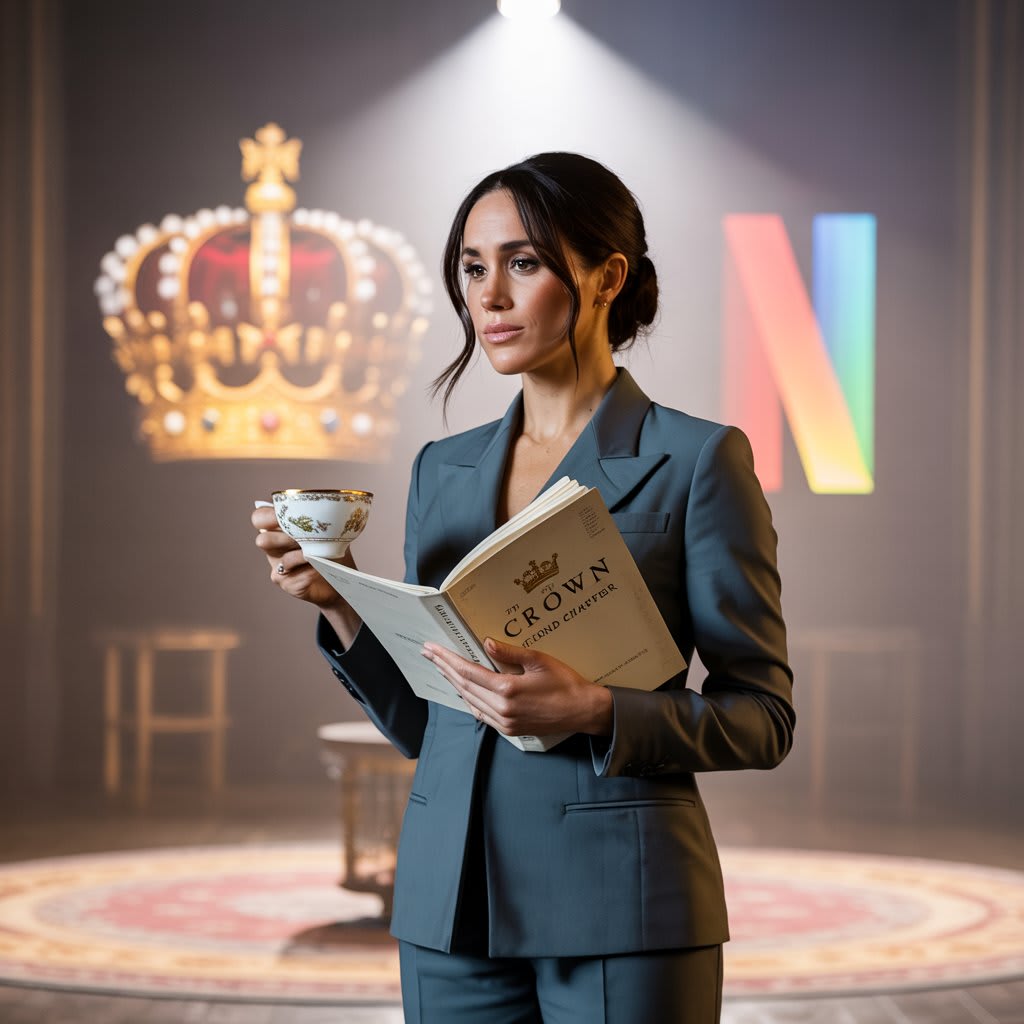
Meghan Markle’s rise in Hollywood hasn’t followed the traditional A-lister path. Long before her royal ties made international headlines, she was a working actress trying to climb the ranks in the entertainment industry. Now, she’s front and center again — not for a blockbuster film or acclaimed series, but for what’s shaping up to be a high-stakes gamble on brand visibility, curated aesthetics, and celebrity networking.
Recent reports suggest that Netflix has renewed Meghan’s lifestyle series for a third season — solo. Prince Harry, once a co-star and collaborator, has been notably cut from the equation. According to insiders, Meghan’s individual projects have garnered just enough traction — a brief appearance on the platform’s top 10 — to keep her in the game. In contrast, Harry’s documentary work and passion projects failed to create much buzz.
The shift in focus from “Harry & Meghan” to just “Meghan” is telling. It reflects not just data and ratings, but a deeper narrative of how Hollywood operates: loyalty, relationships, and star power often trump actual content performance. Netflix co-CEO Ted Sarandos is rumored to have a friendly rapport with Meghan — they’re neighbors, concert companions, and perhaps collaborators in more ways than one. Whether that relationship is personal or strategic, it’s clearly fueling a continued partnership.
But what exactly is Meghan offering? Her lifestyle brand “As Ever” has been met with lukewarm reviews at best. Critics point to small product batches, minimal marketing, and underwhelming packaging. Even loyal fans are beginning to question what the brand truly stands for. A lack of consistency — in both visuals and message — has blurred the lines between her Netflix persona and her business identity.
Adding to the confusion is the mix of high-end aspiration with “relatable” imagery: rustic bowls of fruit, slow mornings in million-dollar kitchens, and curated moments that feel more like Pinterest boards than authentic insights. It’s a delicate balance, one that requires precision — and Meghan may be slipping.
The bigger problem? Hollywood seems to be backing away. Attempts to feature major stars like Beyoncé, Taylor Swift, and Dolly Parton have reportedly gone nowhere. In fact, some representatives are now requesting Meghan’s name not even be mentioned in interviews — a subtle yet strong industry statement. It’s a clear sign that many big names are wary of the “Sussex Brand,” perhaps fearing drama, overexposure, or simply a lack of substance.
Instead of A-list icons, Meghan’s guest list now includes figures like Chrissy Teigen, a celebrity with her own share of social media baggage. This shift reflects more than just booking difficulties; it signals a rebranding strategy built on controversy, not credibility.
Meghan’s past media efforts haven’t exactly helped. Her Spotify deal famously collapsed, with one executive labeling the Sussexes “grifters” and highlighting issues with delivery and content depth. While Netflix remains in her corner — at least for now — it’s evident the relationship is becoming more risk than reward. Financial terms are reportedly being restructured, and the creative vision seems increasingly unclear.
Then there’s the personal side of the equation. Whispers of a Meghan-only memoir and talk of a rebranding separate from Harry have sparked rumors of a professional — and possibly personal — split. Whether or not that’s true, the optics are powerful: Meghan is flying solo, both on screen and in public perception.
Even her carefully curated family moments are under scrutiny. A recent photo featuring her daughter in a beekeeper outfit raised eyebrows for its safety issues and possible staging. What was intended as a wholesome snapshot instead came across as artificial — another example of branding over sincerity.
In contrast, companies that once showed interest in collaborating with Meghan are now aligning with more stable, traditional brands — including the British royal family. Flamingo Estate, for instance, recently partnered with King Charles’s Highgrove initiative, a move that subtly but firmly distances them from Meghan’s orbit. Prestige, reliability, and legacy continue to carry more weight than social buzz.
At the heart of it all is a central question: Can Meghan Markle build a lasting media empire on aesthetics and fame alone? Thus far, her strategy has relied heavily on being seen — trending for a moment, creating conversation, and staying in the headlines. But attention isn’t the same as influence, and the difference is starting to show.
In today’s media landscape, content needs more than curated beauty and celebrity friends. It needs purpose, consistency, and real audience connection. Whether Meghan can shift from spectacle to substance remains to be seen. For now, her empire rests on a fragile foundation: visibility without vision.