
In the ever-watchful world of royal style, no sweater, skirt, or shade of fabric goes unnoticed. The latest round of discussion centers on Meghan Markle’s recent wardrobe choices, which some commentators argue echo Princess Catherine’s earlier fashion moments. To critics, these parallels are more than coincidence — they are evidence of imitation. To others, it is simply the unavoidable overlap that comes with two women dressing within the same cultural spotlight.
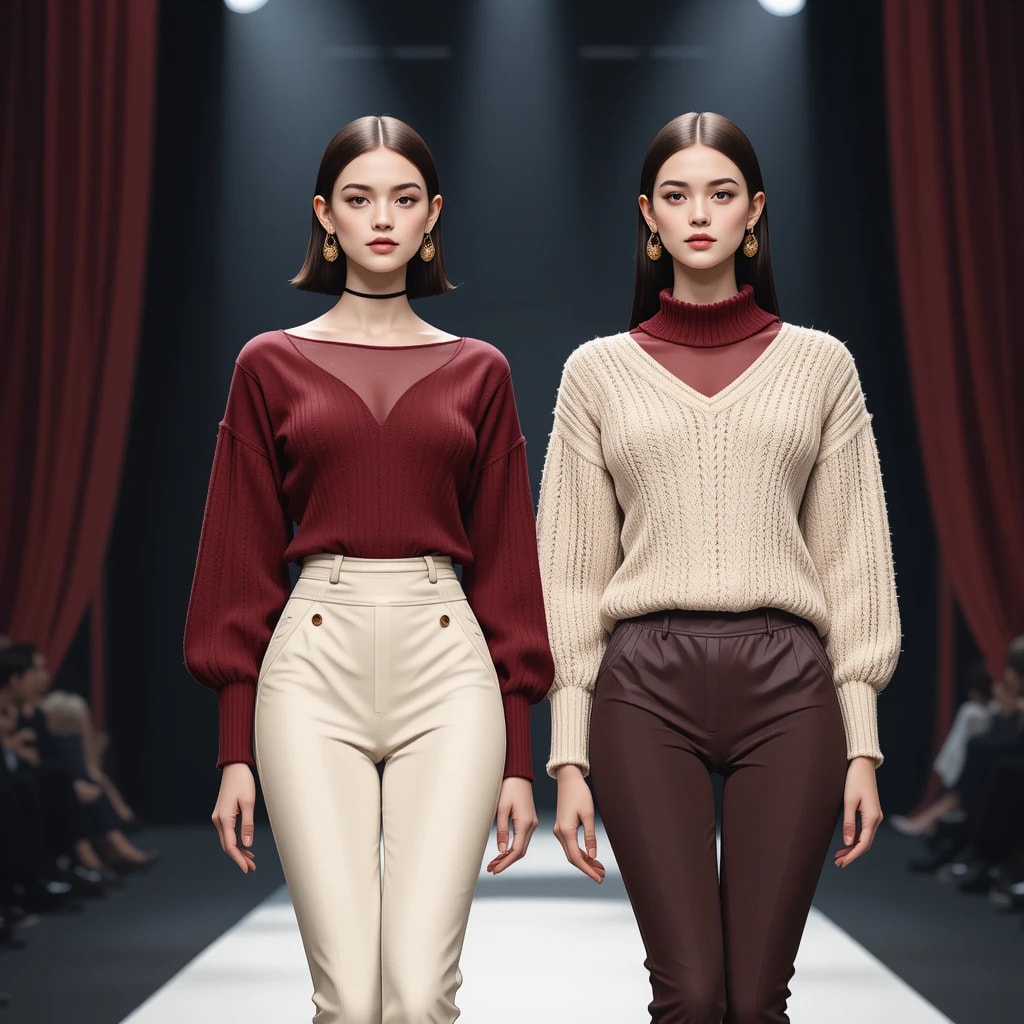
The most recent example involves a jumper. Catherine first appeared in a cream version of a ribbed crewneck sweater in 2023 during a university visit, pairing it with effortless poise. Months later, Meghan was photographed in a nearly identical piece, though in burgundy and at a higher price point. Online observers quickly drew comparisons, suggesting that Meghan’s version lacked the refinement Catherine conveyed.
This was not an isolated instance. Shortly after, Meghan stepped out in a pale blue mock-neck sweater that, for many, recalled Catherine’s casual knitwear style during a family volunteering event. Where Catherine’s look was praised as approachable and natural, Meghan’s choice was critiqued as staged, perhaps even impractical given California’s warmer climate.
Then came the yellow ensemble — a cashmere sweater and pleated midi skirt worn during a media interview. Supporters viewed the outfit as cheerful and bright. Detractors, however, lined it up against Catherine’s history of striking monochrome outfits, arguing that Meghan’s version lacked polish and presence.
What’s striking about these comparisons is not necessarily the clothes themselves. After all, fashion trends often recycle, and items like crewneck sweaters or tailored skirts are staples found in countless wardrobes. What truly fuels the debate is the cultural context in which these women are seen.
Princess Catherine has cultivated a reputation for understated elegance. Her wardrobe choices are rarely bold experiments; instead, they emphasize tailoring, fit, and timeless design. The effect is consistency — a visual identity that conveys stability, poise, and quiet confidence.
Meghan Markle, by contrast, often faces criticism that her style feels less cohesive. Sometimes oversized, sometimes fitted to the extreme, her choices are seen as fluctuating between aspirational glamour and casual minimalism. Where Catherine’s fashion language is fluent and deliberate, Meghan’s is frequently interpreted as experimental, even uncertain.
But is this entirely fair? Fashion, after all, is as much about perception as fabric. Catherine benefits from her role as future queen, with the support of stylists and an established image shaped over more than a decade. Meghan, stepping into the royal stage later and on her own terms, carries the weight of both expectation and skepticism. For every outfit she wears, the public conversation tends to measure it not against general standards, but directly against Catherine’s.
That constant comparison may be at the heart of why the debate feels so charged. When Meghan wears something similar to Catherine, the assumption is imitation. If she chooses something dramatically different, the critique shifts to being inappropriate or tone-deaf. In other words, Meghan’s style is judged not on its own merits but in perpetual relation to Catherine’s wardrobe.
This cycle raises a broader question: can Meghan ever “win” in the fashion narrative? Or has the public already decided that Catherine sets the standard while Meghan follows?
It is also worth noting how fashion coverage of these two women reflects deeper social dynamics. Catherine embodies continuity within the monarchy, and her style choices reinforce that image — polished, consistent, dignified. Meghan, on the other hand, has positioned herself as a voice for independence and reinvention. Yet her fashion is often interpreted through the lens of rivalry rather than individuality.
At its core, fashion should be a form of personal expression. Whether Meghan’s choices are consciously inspired by Catherine or simply reflect shared trends in modern womenswear, they also reflect her effort to navigate life in a spotlight where every detail is magnified. It may be less about imitation and more about the difficulty of forging an authentic identity when public perception insists on constant comparison.
What becomes clear through these debates is that clothes are never just clothes when it comes to royals. They are symbols, stories, and stages for cultural projection. For Catherine, they reinforce her image as a steady future queen. For Meghan, they have become a battleground for acceptance, criticism, and endless scrutiny.
In the end, whether a jumper is cream or burgundy, or whether a skirt is red or yellow, the larger story is not about fabric but about narrative. Fashion is woven with meaning, and for both women, every outfit tells a tale that extends far beyond the wardrobe.
Perhaps the fairest conclusion is this: Catherine and Meghan each bring different energies to their fashion. One embodies tradition; the other experiments with reinvention. Both approaches have value, and both speak to different audiences. The challenge lies not in who wore it better, but in whether we are willing to let each woman be judged on her own terms, rather than always through comparison.