
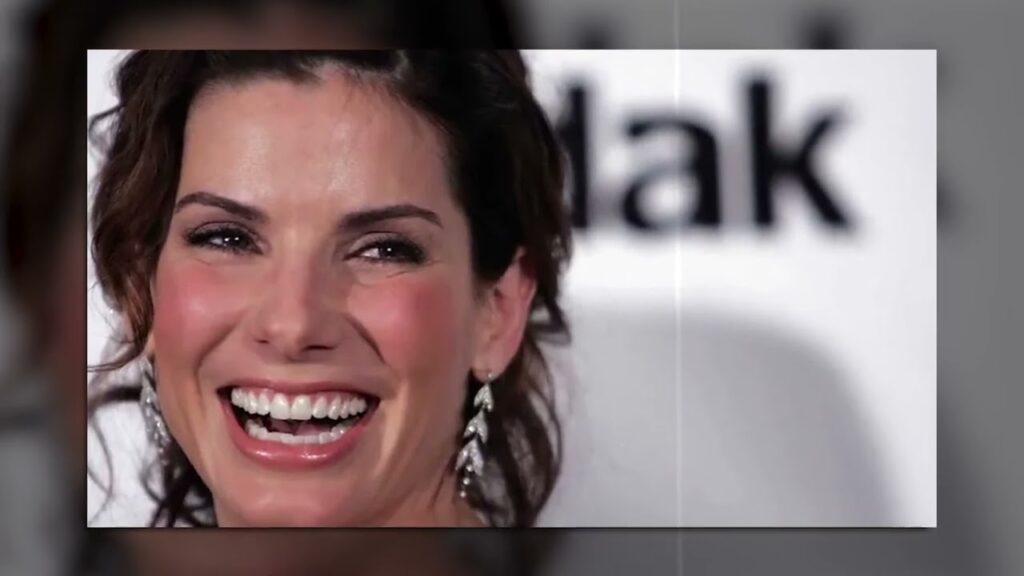
At 62, The Tragedy Of Sandra Bullock Is Beyond Heartbreaking
At 62 years old, Sandra Bulock stands as one of Hollywood’s most beloved icons. An Oscar-winning actress, producer, and the unforgettable star of Speed in 1994 and The Blind Side in 2009. Yet, behind the charm and resilience lies a story far more heartbreaking than fans ever imagined. From devastating personal losses to the quiet grief she has carried offcreen, Sandra’s truth is raw, human, and deeply tragic. What happens when America’s sweetheart finally faces life’s darkest shadows? The secret he’s finally telling. At 87 years old, Sir Anthony Hopkins has chosen a moment that feels both late and perfect to unmask himself. On November 4th, 2025, he will release his autobiography, We Did Okay, Kid. This is not the typical glossy Hollywood memoir padded with charming anecdotes and red carpet memories. Instead, it is a book that dares to tell the truth. Hopkins, knited in 1993, winner of two Oscars in 1992 and 2021, admits openly that behind the legend was a man riddled with regret, loneliness, and silence. The title itself carries deep resonance. It comes from a faded black and white photograph taken with his father, Richard, in the 1940s when Hopkins was just a boy in Port Talbot, Wales. Beneath the smile of father and son, the words we did okay became a lifelong mantra, one that Hopkins has carried through decades of triumph and despair. By naming his book after that memory, Hopkins reframes his life not as perfect or tragic, but as survival against odds, against addiction, against time itself, he insists that we did okay. This memoir is the first time Hopkins has broken his silence so thoroughly. For nearly 60 years, he has lived through rehearsals, roles, and accolades, but rarely through confessions. He has played Hannibal Lectar in 1991, Lear in 2018, and The Father Unraveling to Dementia in 2020’s The Father. Yet, none of those roles ever carried his personal voice the way this book does. He does not mask himself behind Shakespeare or screenplays. Instead, Hopkins confronts what fame often hides, that art can be brilliance on the outside while chaos burns within. And here lies the first sadness. Fans who admired Hopkins for decades as the epitome of poise, control, and artistry will see a different man, one weighed down by mistakes. His memoir reveals the dark shadows of addiction in 1975, the collapse of his first marriage in 1972, the estrangement from his daughter that stretched through the 1980s, and the quiet solitude that followed him into old age. For all his mastery, his greatest performance may have been the one where he pretended he was fine. But Hopkins does not write as a man defeated. His story is not only about regret, it is also about survival. For in 1975, when he was just 37 years old, Hopkins faced the darkest night of his life. Addiction nearly destroyed him, nearly ended his career, nearly killed him. What happened next would define the next five decades. Sobriety became his salvation, the reason he lived long enough to write this book. To understand him, we must revisit that turning point. A life saved by sobriety. [Music] The year was 1975, and Anthony Hopkins was spiraling toward disaster. At 37 years old, already acclaimed for his stage performances at the National Theater in London, Hopkins was drinking so heavily that days blurred into nights. He once woke up in a strange city with no memory of how he had arrived. On another occasion, he blacked out behind the wheel, narrowly avoiding catastrophe. “I was in big, big trouble,” he later admitted in the New York Post. “The danger was real, not only to his career, but to his life. Everything changed on December 29th, 1975. A friend directed him to a support group where for the first time he confronted his addiction. That date marks the beginning of his sobriety nearly 49 years ago by the time of his 87th birthday in 2025. Hopkins has often said that without that decision he would be dead. The man who went on to play Hannibal Lectar in 1991 or win his second Oscar in 2021 would never have existed. Sobriety was not a choice of convenience. It was an act of survival. But sobriety did not erase the wreckage. His first marriage to Petronella Barker had collapsed in 1972. His relationship with his daughter Abigail, born in 1968, was strained to the breaking point. Friends who once trusted him now kept their distance. Hopkins writes in, “We did okay. Kid that while alcohol nearly killed him, the years it stole could never be returned. He survived, but survival came with loneliness. To stay sober, he built walls. Those walls protected him from relapse, but they also locked out love. Yet Hopkins insists sobriety also gave him clarity, discipline, and a second chance at greatness. The Hannibal Lectar who chilled the world in 1991’s The Silence of the Lambs was the product of a sober mind. The grieving father in The Father in 2020, which earned him an Oscar at age 83 came from a man who had endured pain without numbing it. Still, the paradox remains. His greatest roles were purchased through loneliness, regret, and silence. Sobriety saved his life, but at the cost of connection. Survival, however, is not passive. Hopkins did not simply avoid alcohol. He rebuilt himself through discipline. For nearly five decades, he has followed a strict routine as relentless as any rehearsal hall. Rising early, practicing piano, memorizing lists, exercising body and mind. Hopkins turned routine into a shield against both relapse and decline. At an age when most men retreat, Hopkins pushes forward. To understand he his present, we must see how he battles aging itself with discipline, grace, and quiet desperation. Battling aging with discipline and grace. Most men in their 80s slow down. Anthony Hopkins did the opposite. At 87 years old, he rises early every day in his Malibu home, refusing the indulgences of late sleep or junk food. He practices piano, most often box compositions, with the same determination he once gave to Shakespeare at the Old Vic in the 1960s. He says the practice restores his coordination, clears his mind, and keeps fear at bay. For Hopkins, the discipline is not habit. It is survival. Memory too has become his battlefield. To resist the erosion of age, Hopkins performs daily recall exercises. He memorizes lists of words using vivid mental images to anchor them. This technique, which once allowed him to memorize entire Shakespearean saliloquis in the 1970s, now sustains his sharpness. At 87, he treats his mind as if it were another role to rehearse, another performance to protect. Survival, he insists, is relentless work. That work extends to his acting career. In 2024, Hopkins starred as Emperor Vespasian in the gladiatorial epic Those About to Die. Few actors at his age command such roles. Yet Hopkins attributes it to persistence more than talent. He avoids sugar, maintains his weight, and rehearses lines until they are engraved in memory. He says discipline is not just about health, but about dignity. Survival isn’t passive. It’s relentless. He told Diario Aes. His continued presence on screen proves it. But beneath the admiration lies an unspoken pressure. Hopkins fights aging not only with discipline but with fear. The fear of fading. His routines are not only about staying sharp but about maintaining control. The image of him at dawn hunched over a piano playing box prelude in C major is both inspiring and tragic. It is the portrait of a man who refuses surrender yet cannot escape the knowledge that time always wins. Brilliance in his life must be defended daily. Yet no discipline can silence mortality. Hopkins admits in his memoir that as much as he thrives in activity, he is often haunted by solitude. His father once called death the big secret. And at 87, Hopkins finally feels the weight of those words. Even as he fights aging, he wrestles with silence, isolation, and mortality itself. To continue his story, we must leave the rehearsal halls behind and step into the most private arena of all, his reckoning with silence and death. When silence meets mortality. Anthony Hopkins has always been a man of solitude. Long before his film fame when he first left Port Talbot Wales in 1957 to attend the Royal Academy of Dramatic Art, he described himself as a loner, uncomfortable in crowds and restless in conversation. That thread of isolation runs through his memoir, We Did Okay, Kid, published on November 4th, 2025. At 87 years old, he admits that even success cannot erase a life shaped by silence. Mortality is now the shadow he cannot ignore. Hopkins recalls his father, Richard, who worked as a baker in the 1940s, speaking often of the big secret. It was his father’s cryptic way of naming death. Decades later, the phrase still lingers. Alone in his Malibu home, Hopkins confesses that death feels closer than ever. Unlike his acting roles, Lectar in 1991, Lear in 2018, or Anthony in the father in 2020, this confrontation is unscripted. It is not performance. It is reckoning. His solitude is not framed as noble or peaceful. It is the product of fear. Fear of rejection, fear of intimacy, fear of disappointment. Hopkins writes that he often chose silence over conversation, discipline over love, and solitude over connection. I am a loner, he admits. And sometimes that is a sadness beyond words. His walls kept pain away, but they also kept people away. The price of silence, he reveals, is loneliness that even fame cannot soften. For fans, this revelation is heartbreaking. The actor who delivered lines with such command, who embodied characters with fearless depth, has lived a private life, often paralyzed by fear of closeness. His memoir is not a lament, but it is a confession. Behind Hannibal’s controlled menace in 1991 or the father’s trembling decline in 2020 lived a man who struggled to speak openly to those he loved. In silence he performed mastery. In silence he carried regret. And yet silence was never what defined him publicly. On stage and screen, Hopkins built a career spanning more than 60 years. a body of work that made him a legend. From Shakespeare’s McBth in the 1960s to Hannibal Lectar’s chilling debut in 1991 to the Oscar-winning Father in 2020, his mastery is undeniable. But mastery came with its own tragedy. Beneath every accolade lurked the hidden costs of devotion, estrangement, addiction, and voiceless pain. That pain must be heard to understand the man fully. A career of mastery. Anthony Hopkins’s career reads like a catalog of greatness. By 1965, he had joined the National Theater under the mentorship of Lawrence Olivier. By 1968, he appeared in The Lion in Winter, standing alongside Peter Ul and Catherine Heepburn. In 1992, he won his first Academy Award for The Silence of the Lambs. By 2021, at age 83, he claimed his second Oscar for The Father. More than 140 roles later, his name is etched into cinematic history. But his memoir peels away the illusion of triumph. Hopkins confesses that his devotion to craft often came at devastating cost. Long rehearsals in the 1970s, international shoots in the 1980s, and obsessive preparation in the 1990s meant entire years lost to family and intimacy. He admits that acting gave him a place to channel emotion, but it also allowed him to avoid facing it in life. On screen, he could cry, rage, or grieve. Offcreen, he fell silent. The irony is bitter. The very roles that brought him glory often mirrored the pain he refused to voice. Hannibal Lectar’s chilling control in 1991 reflected Hopkins’s own obsession with precision. Stevens, the butler in the remains of the day in 1993, embodied repression and emotional silence, themes Hopkins knew intimately. and in the father in 2020. His portrayal of dementia struck audiences with such authenticity because Hopkins understood the terror of losing control. Each masterpiece carried whispers of his own hidden ache. In many ways, Hopkins’s greatest performance has been himself. He learned to wear composure like a costume. calm on interviews, gracious on award stages, smiling for photographs. Yet in we did okay kid, he drops the mask. I was selfish. I have not been a good husband or father, he admits. These are not words rehearsed for sympathy, but confessions carved by silence. The brilliance of his craft cannot erase the pain it often disguised. Hopkins’s mastery was real, but so was the voiceless pain beneath it. Nowhere was that voiceless pain more devastating than in his family life. Behind the applause and a claim, Hopkins endured estrangement from his only child and the collapse of his first marriage. Fame elevated him, but it also isolated him. Addiction widened the gap and discipline later hardened it. In we did okay kid, Hopkins does not excuse these fractures. He confesses them. To understand the true cost of stardom, we must step into the tragedy of Anthony Hopkins as husband and father. The cost of stardom. Hopkins married actress Petranella Barker in 1966 when he was just 29 years old. Their daughter Abigail was born in 1968. At the dawn of his rise on stage and screen, but by 1972, the marriage had collapsed, undone by drinking, distance, and his relentless pursuit of work. Hopkins admits in his memoir that he left more than a marriage behind. He left a daughter who would grow up largely without him. I was not a good husband or father. He confesses plainly. The estrangement from Abigail became one of his deepest scars. As she grew older, she gave interviews in the 1990s about the pain of being abandoned, of seeing her father only as a figure on the screen. Though attempts at reconciliation surfaced, they rarely lasted. In we did okay kid, Hopkins reflects that fame became both shield and wall. Applause drowned out his guilt, but it also silenced the cries of the child he had left behind in 1972. Hopkins does not excuse himself. He admits that selfishness and obsession drove him away from family. His second marriage in 1973 to Jennifer Linton lasted nearly 30 years. But even that bond was strained by his reclusive nature and emotional distance. Success at the box office in the 1980s and 1990s did nothing to soften his regrets. He lived for scripts, rehearsals, and performances while his personal life withered. The man the world celebrated often felt like a stranger in his own home. This is the cost of stardom laid bare in writing. Hopkins acknowledges that while he won awards, titles, and recognition, he lost the most intimate roles, husband and father. Few stars confess such truths so openly. But Hopkins, at 87, no longer pretends. His memoir reveals the human price behind the legend. The pain behind the performances. The applause remains, but so does the silence. In that silence lives his deepest tragedy, the family that fame and addiction took away. Yet, if family life was fractured, Hopkins still found refuge in creativity. Music, painting, and memory training became the scaffolding that held him together. These pursuits filled the empty hours when intimacy was lost, giving him purpose when human connection felt impossible. But as Hopkins himself admits, the sanctuary was double-edged. Art became both protector and prison, his salvation, but also his solitude. To continue his story, we must step into his private world of creativity and the cost it carried. Creativity as refuge. When Anthony Hopkins could not find connection in family life, he poured himself into creativity. Long before the cameras as a boy in Port Talbat in the 1940s, he would sketch the streets, paint seascapes, and practice piano for hours. That instinct never left him. By the 1980s, when his drinking had stopped, but his solitude deepened, Hopkins returned fully to painting and composing music. Today, his Malibu studio holds dozens of canvases, abstract bursts of color where words fail him. Music became his truest therapy. Hopkins has composed waltzes and symphonies, performed his pieces with orchestras in Europe, and shared recordings online. He is drawn most to Johan Sebastian Bach whose structured patterns soothe him even at 87 years old. Memory itself became another obsession. Using vivid mental imagery, Hopkins trains daily on lists of numbers and words. What began as a technique for memorizing Shakespeare in the 1970s has become in the 2020s a lifeline against decline. These passions, however, came at a cost. Hopkins admits in We Did Okay, Kid that his creativity was both shield and cage. Hours spent with a paintbrush were hours spent away from reconciliation. Notes on the piano drowned out conversations he avoided. He built sanctuaries of art, but they also reinforced his isolation. Art was my companion, he confesses, but sometimes it replaced people. His mastery of sound and color carried him through sobriety, but also hardened his solitude. The sadness is striking. The actor who gave the world Shakespeare’s grandeur in the 1960s, Lectctor’s Menace in 1991, and A Broken Father’s despair in 2020, often retreated into canvases and music instead of family. Fans celebrate his artistry as genius, but Hopkins admits it was survival, necessary yet costly. Art gave him life, but denied him comfort. It became both refuge and prison. In that paradox lies the quiet tragedy of a man who chose creativity over connection. Yet at nearly nine decades of life, Hopkins no longer hides behind art. His memoir marks a turning point. Not polished performances, not glossy paintings, but unvarnished truth. At my age, you don’t waste time pretending anymore,” he told People in 2025. And he has chosen cander, even when it hurts. What happens when a man who has played kings and killers finally drops the mask? The answer is his final truth. Candid, uncensored, and long overdue. [Music] The final truth. At 87 years old, Anthony Hopkins writes as if time has run out for disguise. With 49 years of sobriety, two Academy Awards earned in 1992 and 2021, and a nighthood in 1993, he no longer feels bound to protect an image. In we did okay kid, he declares simply, you say the truth, even if it’s uncomfortable. The truths he shares are devastating. Selfishness, absence, estrangement, regret, but also liberating. At last, the performance ends, and the man speaks. Hopkins admits to arrogance in his 30s, selfish ambition in his 40s, and emotional distance that lingered for decades. He confesses he missed birthdays, anniversaries, and milestones while chasing roles across Europe and America in the 1970s and 1980s. His daughter Abigail, born in 1968, lived much of her childhood apart from him. Hopkins does not sugarcoat this. He calls himself absent, even negligent. These are not polished anecdotes. They are scars written plainly on the page. This cander shocks because it is so rare. Hollywood thrives on myth, but Hopkins dismantles it. He does not reduce his life to knighthood ceremonies in 1993 or red carpets in the 2000s. Instead, he places regret front and center. Addiction nearly killed him in 1975. Divorce cut him off from family in 1972 and silence kept him estranged through the 1990s. The man who embodied perfection on screen admits that offscreen he was profoundly flawed. And yet this honesty becomes its own redemption. Hopkins does not seek pity. He seeks clarity. By writing the truth at 87, he transforms regret into meaning. The memoir is not simply confession, it is liberation. Fans will remember Hannibal Lectar’s chilling control in 1991 or the tragic father in 2020. But they will also remember the man who admitted his failures without disguise. In that rawness, Hopkins reclaims his humanity. His final truth is not about roles but about reality. That reality reshapes his legacy. For decades his story was one of triumph. Two Oscars, a knighthood, decades of mastery. Now his legacy is framed by regret as much as glory. Yet within that regret lies redemption. By admitting his failures as husband, father, and man, Hopkins invites us to see him fully. His memoir redefes legend not as flawless performance, but as truth spoken aloud. In the sorrow of confession, a strange grace emerges and redemption takes root. A legacy tarnished with regret. For years, Anthony Hopkins seemed untouchable. He was kned by Queen Elizabeth II in 1993, won his first Oscar in 1992, and stunned the world again in 2021 with his second at age 83. His career spanned more than 140 films and 60 years of performance. Yet in his memoir, he reveals a different story. Instead of a shining arc of triumph, he presents regret. Divorce in 1972, estrangement through the 1980s, loneliness in the 1990s. The tarnish, he insists, belongs in the picture. Hopkins recalls his father, Richard, born in 1913, and his mother, Muriel, who worked tirelessly through the 1940s, as inspirations for his discipline, but also reminders of sacrifice. He admits he outpaced their lives of hard labor in Wales, yet feels guilt for abandoning his own family in the pursuit of fame. These regrets spoken in 2025 are not side notes. They are central to the story. They shape the legacy more than trophies ever could. What emerges is not a fall from grace, but a reframing. Hopkins acknowledges his failures, absent fatherhood, broken marriages, solitude, but insists that honesty makes them meaningful. His legacy now blends greatness with imperfection. He is not only Hannibal Lectar from 1991 or the grieving patriarch from 1993’s The Remains of the Day, but also the flawed man who admitted the cost of those performances. The brilliance remains, but it is tempered with regret. And in that blending lies redemption. Hopkins shows that legacy is not about pretending to be flawless, but about speaking truth when it matters most. The confession carries weight beyond any award speech. His legend is now defined not just by artistry, but by humanity. Audiences will remember the roles, yes, but also the man who admitted his failures at 87. In the end, Hopkins reclaims his life not by rewriting it, but by finally owning it. And so, the final curtain draws, not on his career, but on the illusion that surrounded it. Hopkins remains alive at 87, still creating, still practicing piano at dawn in Malibu. But his memoir is a farewell to masks. Beyond Hannibal, beyond Lear, beyond Oscars, he now invites us to see Anthony himself. What happens when a legend unmasks? We find not perfection, but truth. And in that truth, there is sadness, yes, but also grace. Beyond the screen. At 87 years old, Anthony Hopkins is still here, still painting canvases, still composing music, still rehearsing lines. But his memoir, We Did Okay, Kid, released on November 4th, 2025, feels like a final curtain call. He is not retiring from acting, but he is retiring from illusion. For decades, the world saw Hannibal Lectar in 1991, King Lear in 2018, or Anthony in the father in 2020. Now he asks us to see only Anthony. He reframes his life with a single phrase. We did okay, kid. spoken first to his father Richard in the 1940s, then carried through marriages, estrangement, and sobriety, it becomes the book’s compass. Hopkins does not declare his life a triumph or tragedy, but something in between. surviving addiction in 1975, rebuilding discipline across nearly 50 years, winning two Oscars across three decades, each becomes part of a mosaic that says simply, “We did okay.” The sorrow is undeniable. Hopkins admits that his artistry cost him dearly. family lost in 1972, estrangement through the 1990s, solitude that still lingers in 2025. His brilliance was never free. Yet he turns that sorrow into grace by writing it openly. He tells us that scars are not shameful but proof of endurance. Icons carry scars, he implies, and so do I. In vulnerability, he gives more than performance. He gives humanity. And so Anthony Hopkins’s legacy becomes larger than cinema. He will always be remembered for Hannibal Lecter’s chilling calm, for Stevens’s quiet ache in 1993 and for the broken father in 2020. But now he will also be remembered for telling the truth when it mattered most. His farewell is not to acting but to illusion. In sadness there is grace. In truth there is redemption. His legend is no longer just legend. It is profoundly painfully human. Sandra Bulock’s journey reminds us that even the brightest stars endure storms unseen. At 62, her legacy is not just defined by box office triumphs or an Academy Award in 2010, but by her courage to navigate heartbreak with grace. She has faced tragedies that no fame or fortune could soften. Loss, grief, and solitude. And yet, she continues forward. Sandra’s story is beyond heartbreaking, yes, but in her resilience, it becomes profoundly inspiring.
At 62 years old, Sandra Bullock stands as one of Hollywood’s most beloved icons—an Oscar-winning actress, producer, and the unforgettable star of Speed in 1994 and The Blind Side in 2009. Yet behind the charm and resilience lies a story far more heartbreaking than fans ever imagined. From devastating personal losses to the quiet grief she has carried off-screen, Sandra’s truth is raw, human, and deeply tragic. What happens when America’s sweetheart finally faces life’s darkest shadows?
Add A Comment