
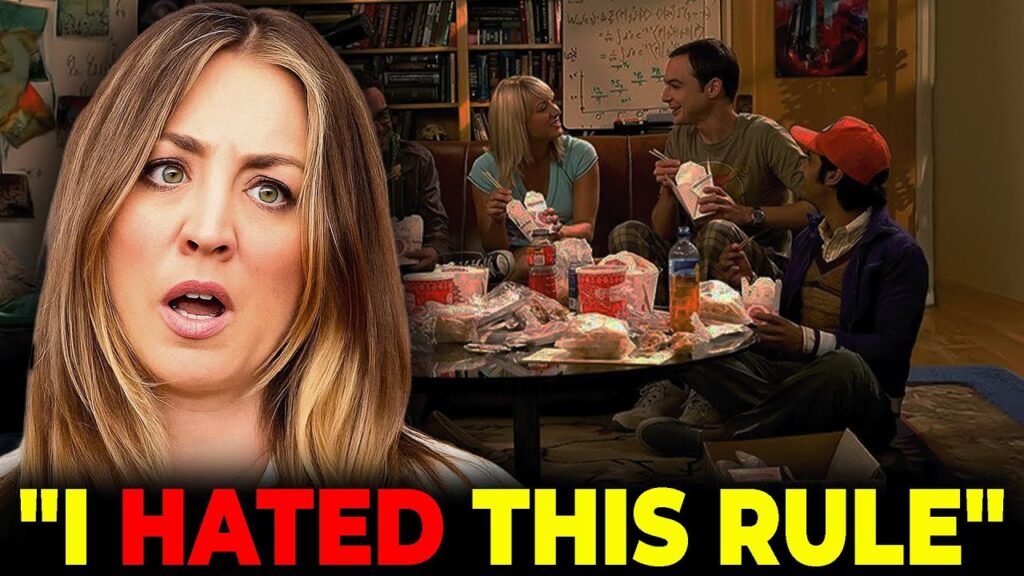
Kaley Cuoco Was Forced to Follow This Rule on the Big Bang Theory
The problem is up to now 11, we have we’re trying to top what we do every single year. Kaye Quoko once revealed, “I hated this rule.” But she had no choice. She was forced to follow it on the set of The Big Bang Theory. That’s right. The hit sitcom wasn’t all laughs behind the scenes. The cast had to stick to a surprising list of rules that kept the show running smoothly for 12 seasons. From strict time management to quirky onset traditions, these rules shaped every episode. In this video, let’s talk about the 20 rules Kaye and the cast were forced to follow on the Big Bang Theory. 20 onset food was real. Tea and rank. Food was one of the most recognizable elements of The Big Bang Theory. Chinese takeout containers, cheesecake factory meals, or Penny’s apartment dinners were constantly on screen. And unlike many sitcoms, the food wasn’t fake. Propmaster Scott London actually prepared real dishes for the cast, from fried rice mixed with soy sauce and vegetables to soups kept warm in thermoses. But while everything was edible, the actors weren’t supposed to actually eat it. Continuity was key. If a scene required multiple takes, someone couldn’t suddenly have half a dumpling missing from their plate. For that reason, the cast mostly just pretended to chew or carefully moved food around with their chopsticks. Kaye Quoko allegedly hated this rule and once joked she’d skip lunch if a dinner scene was scheduled so she could sneak a few real bites when the cameras rolled. Johnny Gleki even had an incident where extra Sriracha in his soup nearly made him gag midcene. Despite the rules, fans worried about food waste when Quoko posted behind the scenes clips. She reassured them that leftovers weren’t thrown away, they were donated, ensuring the meals served a purpose beyond the comedy. 19. No Marvel characters or imagery allowed. The Big Bang Theory built much of its humor around pop culture, especially comic books, but one major omission always stood out. Marvel. Fans noticed that while Sheldon, Leonard, Raj, and Howard constantly debated superheroes, wore comic themed shirts, and even dressed up for conventions, Marvel merchandise never appeared. Not a single Marvel poster hung in Stuart’s comic shop, and none of the characters ever wore a Marvel costume. The reason wasn’t about taste, but business. The show aired on CBS, but was owned by Warner Brothers, which also owns DC Comics. Promoting rival Marvel would have made little sense for Warner, and licensing issues would have added extra hurdles. This explains why Raj once dressed as the Norse god Thor, but not the Marvel version. Even as the Marvel Cinematic Universe exploded in popularity, starting with Iron Man in 2008. The Big Bang Theory leaned almost entirely on DC. From Superman and Batman to endless Flash references, the Pasadena Gang’s comic world was carefully curated to keep Marvel out of sight. 18. Pranks banned after accident. Behind the laughs on the Big Bang Theory, the cast had a reputation for pulling playful pranks on each other between takes. Kaye Quoko even admitted that if she nodded off backstage, someone would find a way to mess with her. But one prank with Johnny Gleki went wrong, changing the rules on set forever. During the filming of a scene in season 6, Gleki and Quoko planned a gag where he’d fake punch her in the head, causing her to tumble off her chair for laughs. Instead of a harmless blooper, Quoko actually hit her head and ended up bleeding. What was meant to be funny ended with her needing stitches, leaving the cast and crew stunned. Showrunner Chuck Lorie immediately stepped in, banning all pranks to prevent further accidents. From then on, the set was strictly business. No more off- camerara h high jinks. 17. No risky leisure activities. Kaye Quoko’s 2010 horseback riding accident nearly ended her career and her life. While training at a Los Angeles ranch, she was thrown from her horse and in a terrifying moment, the animal landed on her leg. Doctors even discussed amputation before a series of surgeries saved it. For showrunner Chuck Laurier, the incident was a wake-up call. Laurier later called it the darkest, most frightening time in all 12 years of The Big Bang Theory. Production scrambled to explain Quoko’s absence, and the near tragedy highlighted just how fragile the show’s future could be. Determined to prevent another scare, Laurier issued new rules on what cast members could do in their free time. He even turned the ordeal into one of his famous vanity cards after season 4’s The Apology Insufficiency, writing, “No frigin horses.” This includes those found on merry-gorounds and in front of supermarkets. Alongside that came bans on motorcycles, boating, and other risky hobbies. While partly tongue-in-cheek, the message was clear. Nothing was worth jeopardizing the show or the safety of its stars. 16. Wardrobe consistency enforced. The Big Bang Theory is remembered for its witty dialogue, running gags, and of course, the unforgettable looks of its characters. Howard Wallowitz, played by Simon Hellberg, stood out the most with his bowl haircut, flashy belt buckles, and impossibly tight pants. But behind the scenes, his wardrobe was anything but comfortable. According to Jessica Radoff’s The Big Bang Theory, the definitive inside story of the epic hit series, Hellberg sometimes needed help squeezing into his jeans, even joking about buttering up the thighs just to get them off. For the pilot, costume designer Mary Quigley even had to sew snaps onto Howard’s turtleneck, turning it into a makeshift onesie so it would stay tucked. Add in the sharp belt buckles digging into him and pins jabbing his neck, and Hellberg was constantly battling his clothes during filming. Still, consistency was essential. Howard’s wardrobe became part of his identity, just as Sheldon’s endless rotation of superhero tees and Amy’s heavy layers reinforced who they were. The wardrobe team’s commitment to maintaining these looks gave the show its visual continuity, grounding the humor in instantly recognizable character designs. 15. They have to accept being written out. One of the harsh realities of working on a long-running sitcom like The Big Bang Theory was that supporting characters could be written out at any time. This happened to Sarah Gilbert’s Leslie Winkl, a sharp experimental physicist who briefly dated Leonard and sparred with Sheldon. At first, Leslie was meant to be a recurring part of the group, and Gilbert was even promoted to series regular in season 2, but the writers soon hit a wall with her character. According to Jessica Radloff, the creative team tested out Leslie as a love interest for Leonard, but the story line fizzled. Audiences were already rooting for Leonard and Penny, and Leslie’s presence complicated that arc. While she did share a fling with Howard, there wasn’t enough narrative space for her to grow in the ensemble. By season 3, Leslie quietly disappeared, returning only for a cameo years later in season 9. Like Emily Sweeny’s underused storyline, her exit showed how actors had to accept that shifting dynamics and fan investment ultimately determined who stayed and who faded away. 14. cast had to promote the show extensively. Landing a role on The Big Bang Theory didn’t just mean showing up for table reads and live tapings. It also meant serving as the face of the series around the world. Cast members were contractually obligated to promote the show through interviews, talk shows, press junkets, and fan conventions. Even when they were promoting other projects, the sitcom always had to be mentioned. Sometimes these obligations were a highlight. Kunal Nayar fondly recalled a trip to Brazil where hundreds of fans camped outside their hotel cheering until the cast appeared on the balcony to wave. “It was like being the Queen of England,” he joked in Jessica Radloff’s The Big Bang Theory, the definitive inside story of the epic hit series. “For him, the sheer affection was heartwarming, but the rule wasn’t always easy to live with.” Johnny Gleki admitted he lost sleep before appearing on Letterman. Nervous about stepping out as himself without Leonard Hoffadder to hide behind. For a show as big as TBBT, global promotion wasn’t optional. It was a carefully enforced part of the job. 13. No improv allowed on The Big Bang Theory. Improvisation was practically non-existent. While many sitcoms thrive on actors riffing off each other, the show’s writers insisted on every line being delivered exactly as scripted. Melissa Ral once compared it to performing a concerto where even a single note out of place could ruin the rhythm. Because the series was filmed in front of a live studio audience, it had to flow like a staged performance. allowing actors to ad lib might have slowed the pacing, thrown off punchlines, or risked breaking the tight 30 minute network slot. Writers also kept a firm grip on the process. If a joke failed, the script was quickly reworked by the team rather than leaving it to the cast to fill the gap. This rule created the sharp, witty dialogue fans came to expect. Yet, there were rare exceptions. Kevin Susman, who played Stuart, once slipped in a small ad lib, “I’m not great at the advice. Can I interest you in a sarcastic comment?” That completely reshaped his character, transforming him from a one-time guest role into a fan favorite regular. That moment proved just how powerful even a single unscripted line could be. 12. Maintain humility. As the Big Bang Theory climbed to the top of television ratings, producers worked hard to keep the cast grounded. Chuck Lore and Bill Pratty often reminded everyone that the show’s success wasn’t about one breakout star, but the strength of the ensemble. With such a massive audience and rising fame, it would have been easy for egos to get in the way. Instead, humility was treated as a rule behind the scenes. Kunal Naar has shared that Laurier once advised him not to rush into flashy career moves, but to appreciate the stability and unity of the group. The cast took that advice to heart. Offscreen, they organized pingpong games, weekend trips, and shared dinners that reinforced their closeness. Jim Parsons later credited these bonds with making long production days easier, while Kaye Quoko described the group as a real family. By keeping their focus on collaboration rather than competition, the cast avoided the pitfalls that often strain long-running shows. This emphasis on humility not only preserved their friendships, but also ensured that the chemistry fans saw on screen stayed genuine for over a decade. 11. Science accuracy enforced by real experts. While The Big Bang Theory was first and foremost a sitcom, its science had to hold up under scrutiny. To make sure of that, the producers brought in physics professor David Saltzburg as the show’s science consultant. His job went far beyond checking equations on the whiteboards. He fact checked dialogue, suggested research topics, and even advised on set design to keep the labs and props believable. Scripts were sometimes sent to him with blank spots marked science to come, allowing him to craft realistic details for the writers to build around. Between Saltsburg’s behind-the-scenes input and Bialik’s onset knowledge, the show earned a reputation for weaving genuine scientific concepts into the comedy. This dedication to accuracy gave the nerdy humor an authentic edge, letting scientists and fans alike enjoy jokes about string theory or the Higs Boson without feeling like the show was faking it. 10. Perform before a live studio audience. Unlike single camera comedies that rely on canned laughter, The Big Bang Theory was performed in front of a live studio audience throughout its 12-year run. Every laugh you hear comes from real people in the room reacting in real time. The decision wasn’t just about authenticity. It also shaped the way the show was made. With fans sitting just feet away, the cast had to deliver every line with precision as if they were performing a play. Melissa Ral once compared the process to doing a filmed piece of theater where there was no room to stumble or rely on improvisation. It also meant that when a joke didn’t land, the writers had to rewrite it on the spot, testing new punchlines until the audience responded. This built-in feedback loop helped sharpen the comedy while adding pressure for the actors to stay on their game. The energy from the crowd gave the performances an edge that can’t be faked, making the laughs feel alive and spontaneous. One of the reasons The Big Bang Theory stood apart from sitcoms that leaned on a laugh track. Nine. First pilot suppressed. Before The Big Bang Theory became the sitcom fans know, it began with a very different pilot. Filmed in 2006, it featured Johnny Gleki and Jim Parsons. But instead of Penny, there was Katie, played by Amanda Walsh. Katie was written as a tough, street smart woman with a cynical edge, and her chemistry with Leonard and Sheldon felt far darker than the show that would follow. A character named Gilda also appeared, while Raj and Howard weren’t even part of the group yet. The result was uncomfortable and offbalance, and most networks passed. CBS, however, saw potential in Gleki and Parson’s chemistry and made the rare choice to give Chuck Lore and Bill Brady another shot. They retoled the show with a lighter tone, replaced Katie with Penny, and added Raj and Howard, creating the dynamic that clicked. The original theme, she blinded me with science, was also dropped. That first version was buried, and the cast was not allowed to discuss it publicly. Eight show ended with core trio’s exit. The Big Bang Theory ended not because of low ratings. It was still pulling in massive audiences, but because Jim Parsons decided he was ready to move on. By season 12, CBS was already preparing to negotiate for a 13th, but Parsons told producers he wouldn’t sign on. That meant the end since Chuck Lore and Bill Prady agreed the series couldn’t continue without Sheldon Cooper or without the original ensemble intact. Parsons explained his decision was less about unhappiness and more about change. After 12 years, he felt a shift in his life, describing it as an intuitive moment of knowing he was done. Exhaustion also played a role as he juggled multiple projects while trying to care for his husband and their ailing dog. The emotional strain confirmed it was time to stop. Once Parsons bowed out, producers chose not to replace him or rework the show, ending the long-running sitcom on a high note rather than stretching it thin. Seven. Jim Parson’s notecard method for Sheldon’s lines. Sheldon Cooper’s dialogue wasn’t ordinary sitcom banter. It was stuffed with physics equations, scientific jargon, and elaborate monologues that could trip up even the most seasoned actor. Jim Parsons knew he couldn’t just skim the script and hope for the best. To make Sheldon believable, he developed a meticulous system that turned memorization into almost a science of its own. Parsons relied on handwritten note cards. He would carefully write out his lines longhand again and again until the words began to stick. During the week, he carried stacks of these cards everywhere, rehearsing one scene at a time before moving on to the next. On weekends, he drilled relentlessly, typing out entire scenes on his computer as a final reinforcement. The process was grueling, even maddening at times, but it guaranteed precision. Show creator Chuck Lore revealed that Parsons always arrived at the table read fully prepared, having already locked in every choice. For Parsons, the repetition wasn’t just work. It was a way to honor the character. His discipline made Sheldon’s rapidfire intellect feel authentic episode after episode for 12 straight seasons. Sixth, Mayolic doubled as the science police. When Mayalik joined the series as Amy Farah Fowler, the writers suddenly had a secret weapon. Unlike the rest of the cast, Bialik held a real PhD in neuroscience, and that expertise meant she wasn’t just acting, she was fact-checking. Science consultant David Saltzburg already reviewed scripts for the Big Bang Theory. But once Bolik came aboard, the team gained another layer of accuracy. She often stepped in to ensure equations, references, and even the way lab work was described felt authentic. The irony is that in season 1, before Amy ever existed, Raj casually mentioned that the girl who played Blossom had a PhD in neuroscience. Years later, that off-hand joke became reality when Bialik landed the role. She admitted she only auditioned because she needed health insurance, but the producers quickly realized her real life credentials elevated the show’s credibility. Over time, Amy grew from Sheldon’s one-off date to a central character, and Bialik became the cast’s unofficial science police, making sure Sheldon’s genius and the group’s experiments stayed firmly rooted in fact. Five, avoid showing facial hair unless scripted. Throughout The Big Bang Theory’s 12-year run, fans may have noticed something unusual, none of the main male characters ever appeared with facial hair. This wasn’t by accident. Producers set a strict rule that Jim Parsons, Johnny Gleki, Kunal Nyar, and Simon Hellberg had to remain clean shaven unless the script specifically called for it. The reasoning was simple. A beard or even light stubble risked breaking the carefully crafted nerdy aesthetic that defined their characters. Facial hair, according to the creators, made the men look a little too confident and cool, qualities that clashed with their socially awkward scientist personas. Offscreen, however, the actors often embraced their natural looks. Glei and Nyar, in particular, would grow beards during hiatuses only to shave them off before returning to set. The one scripted exception came in season 3’s premiere, the electric can opener fluctuation when the group returned from an expedition to the North Pole sporting beards. Ironically, the actors did grow real ones for authenticity, but production insisted on shaving them and applying fake versions instead. Even here, control over the characters appearances was carefully maintained. Four, know how to navigate the set. At first glance, the sets of the Big Bang Theory might look simple on screen. Leonard and Sheldon’s apartment, Penny’s place across the hall, Howard’s house, and the Cheesecake Factory. But in reality, the studio layout was far more complex than viewers ever realized. Everything was built side by side inside Warner Brothers Stage 25, meaning the actors could technically walk from Sheldon’s couch to Howard’s kitchen in a matter of seconds. Still, knowing exactly where to stand when the cameras rolled was a rule that every cast member had to master. During filming, there was no time to fumble through the maze of hallways, stairwells, and apartments. The multi- camera setup required absolute precision with actors hitting their marks on the first try to keep the flow of taping smooth. A famous behind-the-scenes video tour revealed just how interconnected and sometimes disorienting the sets were, which explains why producers insisted the cast memorized the geography like the back of their hands. The illusion of moving between distant locations worked only because the actors treated the set like a carefully choreographed stage. Three, broken character. Despite the disciplined environment of a multi- camera sitcom, the Big Bang Theory cast occasionally struggled to keep straight faces. Most notably Kunal Nayar who played Raj Kutraali. Nyar admitted on the official Big Bang Theory podcast that early in the series he was the worst on the show because he frequently broke character laughing in the middle of takes. His co-stars, particularly Simon Hellberg, would often trigger fits of uncontrollable laughter. NAR recounted one example where Hellberg’s delivery of a simple line, “Friday works for me,” would send him into a near hysterical reaction, disrupting the scene. Despite these interruptions, the production pressed forward with multiple takes capturing the perfect performance. Naar’s struggles improved over time, but the early seasons were a testament to the cast’s patience and professionalism. Behind the cameras, the chemistry among the main actors, Jim Parsons, Johnny Gleki, Simon Hellberg, Kaye Quoko, Mim Bialic, and Melissa Ral created a dynamic environment where comedic brilliance sometimes collided with real life laughter. These moments highlight how even a meticulously planned set couldn’t contain the natural humor and camaraderie of the cast, making the show’s performances feel authentic and alive. Two, engage in flash dances. One of the more light-hearted traditions on the Big Bang Theory set was the cast and crews occasional flash dances, spontaneous dance routines performed in front of the live audience. These weren’t brief gimmicks. The sequences could last several minutes, giving fans an unexpected and memorable spectacle. Over the years, participating became less of a choice and more of a tradition, blending the performers and production team into one playful unit. The final episode of the series highlighted this tradition in style. After wrapping the last scene, the cast and crew surprised the audience with a flash mob to the Backstreet Boys larger than life, celebrating the viewers who had supported the show for 12 seasons. Kaye Quoko documented the performance from multiple angles, calling it one of her favorite moments in the show’s long run. These dances showcased a side of the cast rarely seen in the episodes themselves. carefree, collaborative, and genuinely enjoying the moment. For the live audience, it was a reward beyond the scripted comedy. A chance to see the energy, camaraderie, and playful spirit that made The Big Bang Theory so beloved behind the scenes. One, timeefficient taping became the norm. By the time The Big Bang Theory reached its 200th episode, the cast and crew had perfected a rhythm that kept filming remarkably efficiently. Most scenes were nailed in just one or two takes thanks to sharp writing and the professionalism of the ensemble. For the actors, performing in front of a live audience added both pressure and excitement. Laura Spencer once admitted her favorite part of the show was feeling the fans energy, describing them as loving and supportive through the whole taping. On average, episodes were filmed in about 3 to 5 hours with the smoother nights wrapping up closer to three. Of course, not every scene went off without a hitch. Kaye Quoko recalled struggling through the infamous Strawberry Pop-Tart moment with Johnny Glei when last minute script changes and uncontrollable laughter stretched the shoot far longer than planned. For audience members lucky enough to attend, tapings offered more than just behind-the-scenes comedy. Fans were treated to warm-up acts from Quoko and Gleki, surprise celebrity guests, and an atmosphere Quoko once described as nothing short of insane. Which behind-the-scenes rule from The Big Bang Theory surprised you the most? Let us know in the comments. Don’t forget to like the video and subscribe for more TV secrets. We’ll see you next time.
Kaley Cuoco shocked fans when she admitted, “I HATED THIS RULE,” but she was forced to follow it on the set of The Big Bang Theory. For 12 seasons, the cast lived under surprising rules that shaped one of TV’s most iconic sitcoms. From time-efficient tapings to unforgettable flash dances, these behind-the-scenes secrets reveal what it was really like for the actors. In this video, we’ll uncover 20 rules they followed on The Big Bang Theory, including the surprising one Kaley Cuoco had no choice but to obey. Don’t miss these insider facts fans rarely get to see!
Add A Comment