
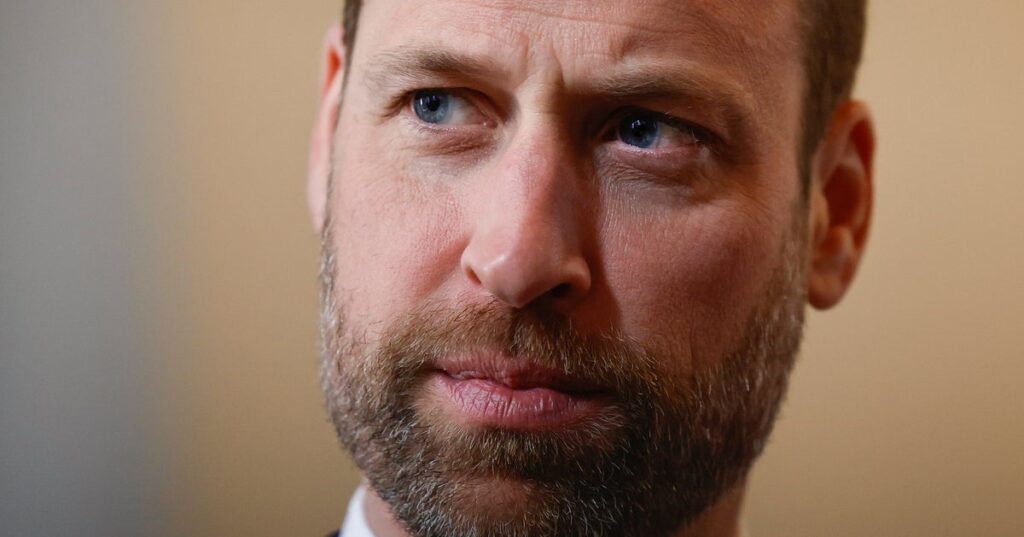
Prince William shared about the “hardest year” he’s ever faced during a rare TV appearance.
The Prince of Wales made a stop by Eugene Levy’s Apple TV+ travel show, “The Reluctant Traveler,” in a preview clip of the episode released this week. (The full episode is set to air Oct. 3.)
William guided Levy through a tour of Windsor Castle and joked that the royals “provide this service for everyone.”
“We do personalized tours everywhere,” the prince joked with the “Schitt’s Creek” actor.
@itvnews
Prince William has described 2024 as the ‘hardest year I’ve ever had’ during a conversation with Schitt’s Creek actor Eugene Levy. The clip’s been released by Apple TV+ and shows the pair bonding over a pink. ‘The Reluctant Traveler With Eugene Levy: Living the Royal Life in the UK’ will be on Apple TV+ from October 3. New episodes are out weekly until the October 31 finale. #itvnews #royals #princewilliam
♬ original sound – itvnews
During the visit, Levy asked the prince what he did in his spare time (sleep), before settling in for a pint at a local pub.
The two then got personal, as William shared, “2024 was the hardest year I’ve ever had.”
“You know, life is sent to test us,” the prince said. “And being able to overcome that is what makes us who we are.”
Last year was indeed a tough year for William and the royal family as a whole, as William’s wife, Kate Middleton, and father, King Charles, were both diagnosed with cancer.
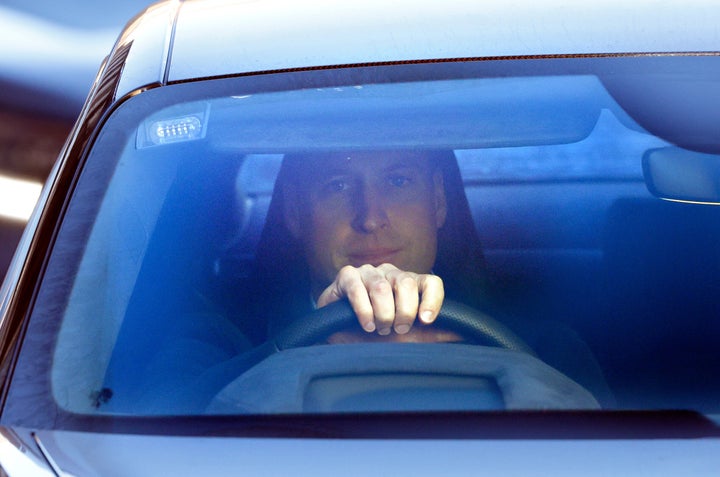 Prince William leaves The London Clinic after visiting the Princess of Wales on Jan. 18, 2024, following her abdominal surgery.
Max Mumby/Indigo via Getty Images
Charles revealed his cancer diagnosis in February 2024, just after undergoing surgery for an issue related to his prostate.
Kate publicly disclosed her cancer diagnosis in March 2024, though she has not shared what kind of cancer she has. She announced in September 2024 that she had finished chemotherapy.
A former aide and adviser to William, Jason Knauf, has previously spoken about the toll 2024 took on the future king.
“Within a couple of weeks, if you’re Prince William, you find out that both your wife and your father have cancer,” Knauf said in an interview with “60 Minutes Australia” in February. “I couldn’t believe it.”
“It’s the lowest I’ve ever seen him,” Knauf said, adding that “the problem was that all this crazy sort of conspiracy theory stuff kicked off in the background, online. ‘Was she really ill?’”
“But [William and Kate] didn’t want to say yet that she had cancer because they hadn’t told the children, and they were still working through how to tell the children,” he said.
20 Years OfFreeJournalism
Your SupportFuelsOur Mission
Your SupportFuelsOur Mission
For two decades, HuffPost has been fearless, unflinching, and relentless in pursuit of the truth. Support our mission to keep us around for the next 20 — we can’t do this without you.
We remain committed to providing you with the unflinching, fact-based journalism everyone deserves.
Thank you again for your support along the way. We’re truly grateful for readers like you! Your initial support helped get us here and bolstered our newsroom, which kept us strong during uncertain times. Now as we continue, we need your help more than ever. We hope you will join us once again.
We remain committed to providing you with the unflinching, fact-based journalism everyone deserves.
Thank you again for your support along the way. We’re truly grateful for readers like you! Your initial support helped get us here and bolstered our newsroom, which kept us strong during uncertain times. Now as we continue, we need your help more than ever. We hope you will join us once again.
Support HuffPost
Already contributed? Log in to hide these messages.
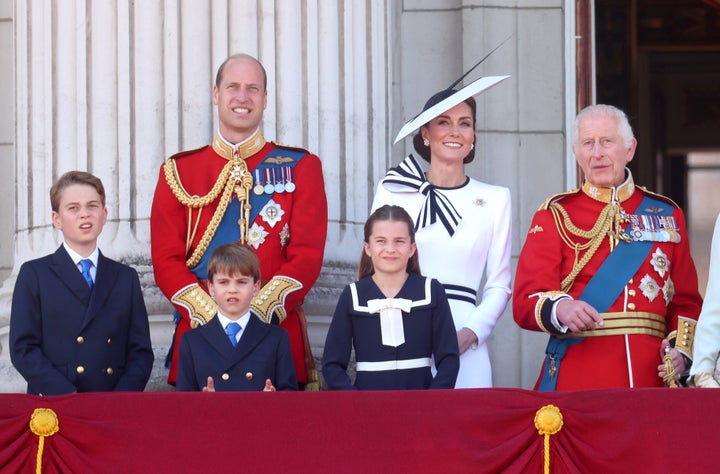 The royal family stands on the balcony during Trooping the Colour at Buckingham Palace on June 15, 2024, in London.
Chris Jackson via Getty Images
While conspiracy theories in addition to cancer treatment might have seemed like the hardest part of Kate’s health journey, the Princess of Wales has also spoken about the “difficult” parts that factor into recovery.
“You put on a sort of brave face, stoicism through treatment. Treatment’s done, then it’s like, ‘I can crack on, get back to normal,’ but actually, the phase afterwards is really, really difficult,” she shared this summer during a visit to England’s Colchester Hospital.