
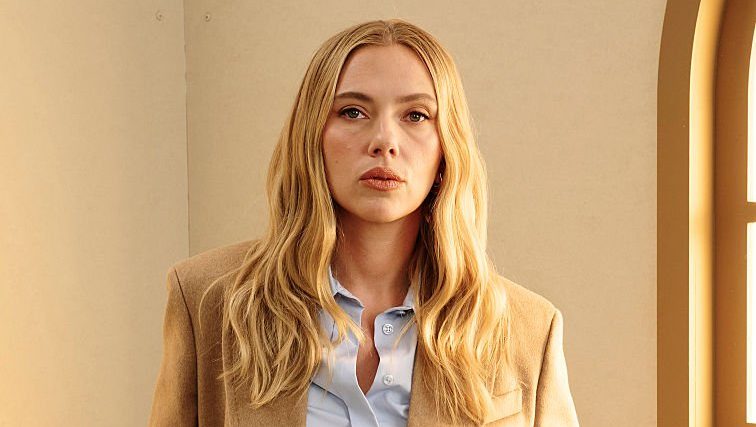
Some stars come out of nowhere, and others grow up in front of our eyes.
Scarlett Johansson has been acting on screen since she was 9 years old. With a name worthy of a Henrik Ibsen character and a face that might have been Ingmar Bergman’s muse, she established herself as someone to watch as Thora Birch’s blasé best friend in “Ghost World” and confirmed her place as a serious actress opposite Bill Murray in Sofia Coppola’s “Lost in Translation.”
For those who remember the early indie roles — which included then-prestigious leads in three Woody Allen movies — it’s like seeing the kid who once mowed your lawn elected mayor, the girl next door turned glamorous role model. In a sense, Johansson never stopped evolving, setting fresh challenges for herself with every project.
The recipient of Variety’s Legends and Groundbreakers Award at the Newport Beach Film Festival worked her way up to being the industry’s top-paid female star, locking in (and later fighting to be fairly compensated for) that title as Marvel’s Black Widow character.
Since the beginning, she’s been balancing blockbuster projects with riskier art-house roles. The year she co-starred in Michael Bay’s “The Island,” for example, she also made “Match Point.” And just this past summer, a month before “Jurassic World: Rebirth” upended the franchise’s gender expectations (instead of needing to be rescued, her Zora Bennett character is the movie’s action-ready mercenary), she brought her feature directing debut to the Cannes Film Festival.
Instead of playing it safe, Johansson chose to make “Eleanor the Great,” a tricky film that balances crowd-pleasing comedy with uncomfortable truths about how to honor those who survived the Holocaust. In the movie, June Squibb plays an elderly Jewish woman who stumbles into a support group at the local Jewish Community Center and adopts her best friend’s experiences as her own.
It’s hardly the story you might expect a director under the age of 70 to attempt, and yet, if there’s one thing Johansson has consistently asserted throughout her career, it’s that she doesn’t want to be limited by other people’s ideas of what she could or should be doing — whether that’s starring in anime adaptation “Ghost in the Shell” or entertaining the idea of playing a trans character in “Rub & Tug,” a film that fell apart after Johansson dropped out. Without making excuses, those controversies come with the territory of being one of Hollywood’s most fearless actresses.
Who else could have carried “Her” — the near-future parable in which Joaquin Phoenix’s character falls in love with an AI chatbot — on the strength of her voice alone? That same year, she looked (and sounded) almost unrecognizable in Jonathan Glazer’s sinister sci-fi thriller “Under the Skin,” which caught audiences off-guard by suggesting that Johansson’s misleadingly approachable persona might be masking something dangerous.
For a star of her stature, Johansson has played far fewer romantic leads than Julia Roberts, Nicole Kidman or Sandra Bullock. In fact, the rawest performance of her career is just the opposite, as one half of a toxic couple caught in the vicious tailspin that is “Marriage Story” (that role earned her an Oscar nomination the same year she was similarly recognized for her supporting role in “Jojo Rabbit”).
All those Marvel movies have allowed her to be strategic with her choices. Whether that’s indulging Wes Anderson’s imagination (as a three-time member of his ever-growing ensemble) or producing her own projects, Johansson always manages to surprise.