
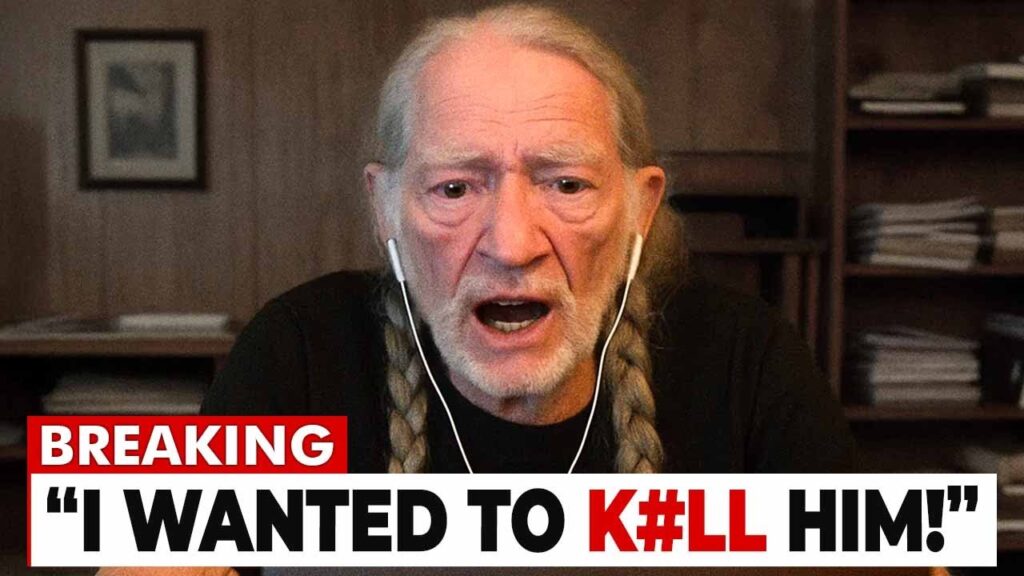
At 92, Willie Nelson FINALLY Names The Singers He Couldn’t Stand!
what you might come back as. No, I think we probably come back as ourselves, you know, for some other form. Yeah. Why do you believe in reincarnation? I don’t believe life ends ever. Yeah. Well, I like a lot of different kinds of music. I had a variety of music that I really truly liked. So, I tried to learn everything I could. I used to smoke two or three packs of cigarettes a day and drink whatever there was there to drink, you know. And uh I had pneumonia four or five times. My lung collapsed. I almost died. At 92, Willie Nelson is finally breaking his silence and some big names in country music are shaking in their boots. Ever been tempted to quit? Yeah. Oh yeah. I quit overnight. Do you? After every tour, I said, “This is it.” Yeah. And then I’m get the urge again to go back. Who did he really despise? Why now, after all these years, is he finally calling them out? The secrets behind those polite smiles might shock you. So, let’s get into it. Willie Nelson isn’t just a country music icon. He’s a walking testament to pain, defiance, and survival against odds most wouldn’t dare imagine. Sure, he gave us On the Road Again, that warm anthem of wanderlust, and restless hearts, but behind that melody is a man forged in fire. For more than 70 years, Willie has stared down betrayal, ruin, and loss that would crush anyone else, turning every wound into a song that cuts straight to the soul. We all go through periods where we have to feel like we have to follow our gut and do what we feel like right at the time when everybody else might think it’s dumb. He didn’t just survive. He weaponized his grief, transforming scandal into dignity, silence into anthems, and heartbreak into art. Now at 92, while most would fade quietly, Willie still walks through storms with a defiant fire and an almost unbearable calm. Yet behind the familiar smile lurks a weight so heavy it would shatter ordinary men. His final chapters may be darker, more shocking than anything the world has yet seen. Before fame, before the grally voice and the haunting melodies, Willie Nelson was a ghost in his own childhood. Born in 1933 in Abbott, Texas, he was abandoned before he even learned to walk. His mother vanished without a trace, leaving no note, no explanation. His father followed suit, remarried, and disappeared, too. Just like that, Willie and his sister Bobby were left in the hands of poor, well-meaning grandparents, survivors themselves, but powerless to fill the gaping void left by absent parents. It wasn’t neglect. It was a brutal, merciless reality, and it would haunt Willie forever. Nashville at the time you were in Nashville. I like Nashville. Fine. There was a couple of people in Nashville. I didn’t care too much. Willie Nelson’s grandfather, Abbott’s blacksmith, and the first to place a guitar in his hands, was the boy’s only anchor, his silent hero. And then, when Willie was just six, pneumonia stole him, too. That death didn’t just hurt, it annihilated what little security remained. In his autobiography, Willie writes with brutal honesty, “Our separation from mother and daddy seemed worse than a death because they were still out there in the world. But they weren’t with me and Bobby like they were supposed to be. Imagine the cruelty. Your parents alive out there somewhere, completely uninterested in you.” That isn’t just grief. That’s abandonment in its rawest, most unforgiving form. Most children cry because their parents are away. Willie cried because he knew they’d never return. By seven, he wasn’t playing with toys. He clung to a guitar like it was a lifeline. Learning chords not for fun, but to quiet the hurricane in his chest. I’ve always loved music, and I grew up with, you know, my sister Bobby played piano. So, the same time, my granddad gave me an old harmony guitar. I’ve been writing poems since I was seven or eight years old. By nine, while other kids were wrestling in the dirt, Willie was performing in local bars and with the Bohemian Pula Band, trying to turn unbearable pain into sound and sound into survival. Gospel in church wasn’t for salvation. It was a plea for someone, anyone, to hear him. Every stage he stood on as a child was less about performance than a desperate cry for connection. The music millions would later treasure was born from nights staring at ceilings, asking why love always abandoned him. The Texas sun doesn’t shine, it punishes. Teenage Willie bent over cotton fields, hands blistered, back aching, pulling whatever he could from the soil to feed a family already on the edge. By 14, he had worked more jobs than most adults. Tree trimmer, bouncer, disc jockey, encyclopedia salesman, dishwasher, saddle patcher, anything to survive. I was selling a $600 set of encyclopedias to people who couldn’t afford a decent meal. He admitted later, it didn’t feel right. But when you’re young, broke, and chasing something as fragile as a dream, you take what you can. Bars at night, dusty turntables by day, sleeping wherever he could. Floors, cars, or not at all. And Nashville, the so-called promised land of country music, slammed its doors in his face over and over. No label, no interest, no promise, just rejection after rejection after rejection. And yet, through it all, Willie kept singing because silence in his world would have swallowed him whole. Delete and fast forward. Like the title. Yeah. You see, delete and fast forward, my friend. The wars are all over and nobody wins. Closed doors, endless silence, and then a night so dark it nearly ended him. In his 20s, living in a crumbling trailer on the edge of a Nashville cemetery, Willie Nelson was drowning in rejection, failure, and whiskey. One night, he walked into the street and lay down. Not for attention, not for drama, because he didn’t know what else to do. Cars swerved around him like he was invisible. No one stopped. No one even noticed. Life didn’t flash before his eyes. There was just silence. He got up and walked back to the bar, then took another drink. No applause, no rescue, just survival. That’s the moment legends are made. Not in the spotlight, but in sheer relentless endurance. Willie didn’t rise because he saw hope. He rose because quitting was worse than any pain he had already endured. Another night broke Carlos and with nowhere to sleep, he tried hitchhiking to Portland to find his mother. Nobody stopped. He curled up in a ditch in the rain, guitar by his side, wondering how much lower life could go. Then a stranger, a trucker, offered a ride and $10 for a bus ticket. Tiny lifeline. Barely enough, but enough to keep going. That moment became part of Willy’s quiet mythology. A man who refused to stay broken. He called those years a long storm. And they were. No shelter, no compass, no applause. Just pain, cold nights, and the raw truth. Music was all he had, and it would have to be enough. Some men write history. Willie Nelson wrote its soundtrack long before anyone knew his name. About it, you’ll just go crazy again. Just delete and fast forward, my friend. Like it. By the late 1950s, after years of bending under the Texas sun, climbing trees, scraping by as a DJ and dishwasher, he still clutched his guitar like oxygen. Nightclubs, demos, late night lyrics, the seeds of American music, but no one listened. In 1959, with a baby on the way and pennies in his pocket, he sold Family Bible, a gospel ballad inspired by his grandmother for just $100 to buy groceries. The song became a radio hit. But Willy’s name not even on the label. The applause came, but not for him. That heartbreak became a pattern. Song after song, masterpiece after masterpiece, slipping quietly into someone else’s spotlight. A haunting melody born from the deepest pits of pain and longing soared to fame through Paty Klene. Funny how Time Slips Away became Billy Walker’s signature. Pretty paper found its life through Roy Orbison. These weren’t just songs. They were the emotional blueprint of a generation. And yet, Willie Nelson, invisible. While his words echoed through juke boxes and bars, the man behind them poured drinks, wiped tables, and watched others claim the glory. Nashville wasn’t just indifferent. It was hostile. When Willie tried to sing his truth, producers dismissed him. Too rough, too raw, too weathered, no pompador, no rhinestones, just braided hair, tired eyes, and a face etched with miles of survival. They couldn’t hear the poetry in his gravel. They couldn’t see the soul in his weariness. It’s kind of hard to uh to make music if you have people trying to tell you how to make your music. And I was I was sort of uh forced because of contractual agreements to make they wanted polish. Willie brought truth and for that they told him he didn’t belong. Imagine writing the soundtrack of someone else’s rise while your own story is erased. Song after song, he watched others climb while he walked dim streets, hunting secondhand guitars and sympathetic ears. Backup gigs, DJ shifts, Sunday school, anything to survive. Each song he gave away was a piece of himself, disappearing into someone else’s fame. The heartbreak wasn’t explosive. It was a slow, relentless ache that burrowed into his chest and never left. By the early 1970s, Nashville had quietly decided Willie Nelson didn’t fit. His voice was spiritual, defiant, raw. Their world wanted predictability, rhinestones, radio ready smiles. When RCA dropped him and critics sneered, he drove back to Texas with nothing but bruised pride and a battered spirit. His ridgetop ranch had burned months earlier, as if the universe itself were torching everything he tried to be for the industry. At 39, broke and burned, most would have disappeared. Willie, he found Austin. Austin wasn’t Nashville. No rigid rules, no molds, no gatekeepers, just space for the raw, the unpolished, the unapologetic. And in that chaos, a legend would rise. Not polished, not manufactured, but real. Walker, Michael Murphy, all the people who are more or less established down in here in this area. Want it to stay the way it is. They want it to to keep growing naturally. In smoky bars and backyard stages, long-haired hippies sat beside rodeo cowboys. They didn’t care if you looked like a rebel. They cared if you sounded like one. And when Willie Nelson walked in, scarred by rejection, but humming with raw poetry, they saw what Nashville never did, an outlaw. In 1973, he released Shotgun Willie, a ragged, unapologetic album that didn’t beg for approval. It didn’t care for radio. It just told the truth. And for the first time, people listened, not because it was perfect, but because it was real. That album cracked the door. Then came 1975 and Redheaded Stranger, a barebones concept album with haunting silences and stripped down production. RCA had once told him to clean up. Colombia Records let him run wild. The result, a masterpiece, soft-spoken, almost ghostly, but every note landed like a confession. Critics called it unmarketable. Fans called it revelation. That same year, he joined forces with Whan Jennings, Jesse Coulter, and Tom Paul Glazer to create Wanted, The Outlaws, the first country album to ever go platinum. The man they once dismissed became the face of a movement. But this wasn’t just music. It was defiance. Willie didn’t just sing heartbreak. He became proof that from the ashes of rejection, a new fire could rise. Braids, weed, guitar his way. He dared to sound like himself. And in doing so, he gave permission to every misfit, dreamer, and drifter told they didn’t belong. If you sell a lot of records, well then more people know who you are. And it opened up some doors. I felt like, you know, if they bought this one, maybe they’ll Willie wasn’t chasing stardom anymore. He had become something bigger. The voice of the unmarketable, the anthem for the discarded. The outlaw hadn’t just found a spotlight. He built his own damn stage. And for the first time, the world finally listened. But while the world sang his songs, another storm brewed. His personal life, hidden behind the applause, was collapsing. Married to Shirley Collie, his second wife, partner, and fellow musician, he carried secrets too heavy for headlines. One quiet afternoon, Shirley opened a hospital bill by mistake. The charge? The delivery of a baby girl born to Connie Nelson. No need for questions. The truth stared at her in ink and numbers. Willie tried to downplay it. It’s not a big deal. Just a hospital visit, the Bill said otherwise. Eventually, he confessed Conniey’s my girlfriend. Paula’s our daughter betrayal of this magnitude shattered whatever remained of their marriage. He would later marry Connie, but the cost lingered for decades in guilt, in headlines, in exhaustion. Willie once quipped, “There’s no such thing as ex-wives, only additional ones.” humor masking a life weighed down by too many goodbyes. Around the same time, his beloved ridgetop ranch burned to the ground, a place he had poured heart, roots, and hope into. Marriage gone, label contract gone, Nashville gone. At just 40, emotionally bankrupt and spiritually hollow, he sat amid the ruins of everything he had tried to build. There was a moment he nearly quit music entirely. Not for lack of love, but for fear he no longer had the strength to survive it. And yet something inside refused to die. Maybe stubbornness, maybe defiance, maybe the raw, unbroken fire of a man who had survived far too much to surrender. Positive thinking, believing it’s going to be okay. So far, it has been. Maybe it was guilt. Maybe it was the echo of a child strumming a guitar in a church pew, believing music could still heal. Whatever it was, it pulled Willie back to the stage, heartbroken, conscience heavy, but unbroken. That’s what made him different. Not just the voice, not just the songs, but the way he bled quietly, walked through fire, failure, and heartbreak, and never stopped singing. The flames didn’t just take his home, they stripped away the last illusion of stability. As his marriage crumbled and Nashville slammed its doors, Willie wasn’t stepping away from a career. He was stepping into the unknown, carrying only his scars, and a sound the world had never fully heard. They thought he was finished, too raw, too weathered. His best songs sold and sung by others, pushed out like a worn page from a forgotten book. By the early 1970s, his ranch in Ridgetop had burned. His marriage to Shirley Collie collapsed in scandal, and RCA wanted him to bend or break. He chose neither. At 39, Willie packed the ruins of his life and returned to Texas. Austin didn’t promise fame or shiny stages. It offered freedom, the kind that smells like beer and sweat, dances barefoot on dirt floors, and lets music bleed straight from the soul. Austin in the early 70s was chaos and harmony. Hippie strummed beside cowboys. Rednecks and radicals sat shouldertosh shoulder. No polished boots mattered. Only honest songs. And in that wild, beautiful mess, Willie found home. He wrote and sang like the man he truly was. We don’t want uh a bunch of high rollers, ripoff artists from other parts of the world to come in here and b it up for the rest of the people. In 1973, he dropped Shotgun Willie. Sharp, defiant, unapologetic. Critics sneered. Fans felt it in their bones. He wasn’t chasing approval. He was telling the truth. That album cracked the surface. Then came heartbreak albums. Each one a page torn from his bruised soul. In 1975, Redheaded Stranger arrived. Quiet, sparse, ghostly. Labels thought it a mistake. It was too strange, too bare. But that was the point. It sounded like Willie. The world leaned in. Multi-platinum. The Outlaw was no longer hiding. That same year, teaming with Whan Jennings, Jesse Coulter, and Tom Paul Glazer, he released Wanted. The Outlaws, the first country album to go platinum. They weren’t just making music. They were rewriting the rules. Willie grew his hair, wore what he pleased, smoked what he wanted, and played like a man reborn. The man Nashville tried to erase had finally built his stage, and the world had no choice but to listen. No rhinestones, no spotlight tricks, no desperate bids for approval, just a worn guitar named Trigger, a battered heart, and a voice that had finally found room to breathe. Willie Nelson’s heart bore the marks of a thousand battles, a TBI, decades of scars, nights spent staring at ceilings in the dark. But somehow, against every expectation, it kept beating. He didn’t claw his way back into the spotlight. He didn’t gravel for fame or plead for relevance. He built a new stage, hand by callous hand, cord by trembling cord, truth by unvarnished truth. And somewhere in the raw, sprawling heart of Texas, the world began to listen again. Not to a superstar, but to a man who had endured, survived, and refused to surrender. By the dawn of the 1990s, Willie Nelson had already performed the near impossible. He had risen from ashes that would have consumed lesser souls, reconstructed his life with nothing but grit and vision, and in the process reshaped country music itself. He became an icon of outlaw spirit, a living testament to perseverance, a symbol of the unshakable human will. Make music the way that it had been done in the past without any new things, new ideas. They’re a little bit reluctant to take any chances. But life, as it always does, wasn’t finished testing him. The next storm didn’t come in the shape of heartbreak, betrayal, or disease. This one came in the cold, impersonal form of a letter, a verdict from the federal government. The IRS demanded $16.7 million in unpaid taxes. Every misstep, every misguided adviser, every blind act of trust had finally caught up. In an instant, everything Willie had rebuilt, his ranch, his recording studio, his cherished memories, was at risk of vanishing. Federal agents stormed his home. They seized his prized possessions. They took his recording equipment. They even took Trigger, the guitar that had been his voice when the world had gone silent. For most men, this would have been unbearable. For Willie, it was almost incomprehensible, a gut punch that might have crushed anyone else. But Nelson didn’t fold. He didn’t hide. He didn’t curse the fates or blame anyone else. He did what he had always done. He made music. But this time, it wasn’t about charts, accolades, or radio hits. This time, it was about survival. In 1992, stripped of almost everything, Willie Nelson recorded an album that would become legendary in its honesty and audacity. The IRS tapes. With nothing but a modest studio, his weathered voice, and the raw power of storytelling, he poured himself into every note. The concept was stark and compelling. A man offering his memories, his life, his soul for the chance to reclaim his future. There were no slick producers, no glossy packaging, just pain, reflection, melody, and a voice that carried every scar like a badge of honor. It was broadcast directly to the public through late night infomercials. A desperate gamble. And yet, in that raw simplicity, something extraordinary occurred. just for me, but for country music is incredible. Uh, from, you know, 10 times larger than I was 10 years ago. The world didn’t just listen. The world felt it. They felt the weight of a life lived in extremes, the cost of brilliance and stubbornness, and the unbroken spirit of a man who refused to be defeated. Willie Nelson wasn’t just surviving the storm. He was turning it into art, turning loss into legacy, and in the process redefining what it meant to be truly free. America listened, not out of pity, but out of love. Fans, old and new, rallied behind him, buying the album as a way of saying, “We’re still here with you.” They remembered the songs that had carried them through lonely nights, broken hearts, and restless drives down endless highways. And now, in an almost sacred exchange, they gave back. This wasn’t a comeback engineered by slick marketing, chart manipulation, or glossy label campaigns. It was pure, unfiltered connection. One man’s truth reaching the hearts of millions. Little by little, dollar by dollar, Willie chipped away at the mountain of debt that had threatened to bury him. He didn’t declare bankruptcy. He didn’t hide behind lawyers or complicated settlements. He stood in front of his audience, guitar in hand, and sang. And they answered. They like it. It’s simple. to tell, you know, like Arlon Howard says, three chords in the truth. So I I think that sort of resonates. I never heard that. By the mid1 1990s, the debt was nearly gone. Trigger returned to his hands. His dignity returned. And more than that, the world was reminded again that resilience, real unshakable resilience, is louder than ruin. For most artists, the IRS tapes would have been a footnote, a curious blip in a long career. For Willie, it was another chapter in a story that refused to end. A man brought to his knees who found a microphone and rose again. Even legends bleed in silence. And for Willie, the deepest wounds didn’t come from financial ruin or rejection. They came from faces he could never see again. On Christmas Day 1991, while millions lit candles, unwrapped gifts, and embraced family, time stopped for Willie Nelson. He received a phone call that shattered something irreparable. His firstborn son, Billy Nelson, had passed away under heartbreaking circumstances. Billy had been working on a gospel album, a quiet reflection of faith and fragility. But behind closed doors, a storm had been raging, Willie would later say simply and devastatingly. I’ve never experienced anything so devastating in my life. There are no songs for a pain like that. No melody for a silence so deep. For years, every note he strummed carried the echo of Billy’s voice, a memory unfinished, a story untold. And every Christmas since behind the lights and the laughter lived a father’s ache, quiet, unrelenting, impossible to silence. A wound dressed in music, but never healed. For a time, Willie stopped playing Christmas shows. When he returned, it was never quite the same. Fans say they could hear it in his voice, a hesitation behind each lyric, a pause where there once had been certainty. And at every family gathering, there remained an empty chair, a constant silent reminder of what he had lost. You said a couple of times, you believe in reincarnation. Yeah. Have you thought about what you might come back as? Now, I think we probably come back as ourselves. It still sits there, a quiet, unmovable reminder of what once was. Then came February 2020. The world was only beginning to whisper about a virus, a threat nobody could fully grasp. But Willie Nelson was already bracing for a different kind of loss, one that had been circling him for decades. Paul English, his drummer, bodyguard, outlaw companion, and brother in spirit, passed away at the age of 87. Paul wasn’t just a bandmate. He was family. Their story began in 1955 when Willie was still sleeping in cars, playing for spare change, chasing a dream most thought impossible. Paul showed up with nothing but a pair of paint brushes and a cardboard box, claiming he could drum. Somehow he could, and he would become Willy’s anchor through bar fights, empty wallets, endless highways, and the chaos of a life lived at full throttle. If I hadn’t gone with Willie, Paul once said, “I’d be in the penitentiary or dead.” And he wasn’t joking. He carried cash, guarded the band, settled scores, sometimes with a pistol tucked in his boot. But more than muscle or loyalty, Paul was the calm in the storm. When bandmates argued, he didn’t speak. He gave a look and silence fell. On stage, the band could play without missing a beat. But when Paul’s rhythm ended, something in Willy’s world went silent, too. Amy Nelson, Willy’s daughter, would later call Paul the co-atriarch of their family. He hadn’t just kept time on drums. He had kept the family together. And when that heartbeat stopped, a part of Willy’s world went dark. The band played on. The music moved forward. But to Willie, a crucial rhythm had vanished irretrievably. Two years later in 2022, that silence deepened. His sister, Bobby Nelson, passed away. Bobby wasn’t just a sibling. She was his first duet partner, his first bandmate, his lifelong musical shadow. Together, they were raised by grandparents after being abandoned by their parents. She had stood beside him at the family piano, played on his first recordings, and knew every scar he carried from childhood. forever. You know, we we go all the way back and uh he’s been back there for many years, 70 years that we worked together. And Bobby and Willie co-authored a book, Me and Sister Bobby, a love letter to resilience and music. In it, Willie wrote, “Without my sister, I’d never be where I am today. I’ve always needed her. Her death wasn’t just a loss. It was the collapse of a bridge to everything he used to be. In that silence, in those absences, Willie was reminded again that life and love are fragile, and even the strongest bridges can crumble. She wasn’t just part of his music. She was part of his memory, a witness to years nobody else remembered. When Bobby left, Willie didn’t just lose a sister. He lost a historian, a keeper of truth, a lifelong harmony. He still plays her favorite songs, but slower now, as if waiting for a note that will never arrive. as if hoping to hear her voice in the echo to bridge the gap that death had carved. And then, as if fate wasn’t finished, came the final blow. In September 2024, Chris Kristofferson, Willy’s brother in-arms, fellow highwayman, and lifelong confidant, passed away at 88. Their friendship wasn’t just professional, it was cosmic. Two poets who refused to be polished, who lit the outlaw fire that still burns today. Together with Johnny Cash and Wayan Jennings, they formed the Highway Men, a super group of rebels who didn’t just sing about freedom, they embodied it. Legend Dad. Yeah, I see. I think what you see is what you get with him. And And I I I look at him like I I think he’s one of the best people on this planet. Chris was the Harvard graduate who swept floors just to pitch songs. Willie was the Texan drifter who turned pain into poetry. They were misfits made for each other, sharing the stage, the road, the backstage jokes, the bad hotels, and the quiet moments before the curtain rose. After Chris’s death, Willie said simply, “He left a lot of fantastic songs around for the rest of us to sing. I hated to lose him, but it wasn’t just about songs. It was about losing the last voice that truly understood his own.” With Johnny, Whan, and now Chris gone, Willie stood alone. The final Highway Man. Fans see his signature braids, his gentle smile, and might think nothing has changed. But look closer. There’s a flicker in his eyes, a weight in his shoulders, the quiet weariness of a man who has watched too many sunsets with one fewer friend beside him. At 92, when Willie takes the stage, something is missing, or rather many things. He still smiles. He still strums. But behind that calm warmth is a man walking through a graveyard of memories. The crowd sees a legend. On stage stands a father without his son. Who’s the greatest songwriter ever lived? I don’t know. You got to talk about Merl Haggard and Hank Williams and uh and then you start guessing and you got Christopherson and Billy Jo. A brother without his sister, a band leader without his beat, and a poet without his muse. They say time heals, but some wounds don’t heal. They learn to sing. And Willie somehow still does. He does not wail. He does not collapse. He does what he has always done. Turns grief into melody, sorrow into verse, and loss into life. As long as there is breath in him, there will be a song, a conversation with ghosts, a prayer through chords. This is not just a story of loss. It is a story of endurance, of love that outlives bodies, of grief that shapes melodies, of one man who continues to walk on, carrying the ghosts of his greatest companions in every chord he plays. If his music has ever touched you, know this. Every song now is a conversation with the ones he has lost. Every lyric is a whispered prayer. Every performance is a eulogy with rhythm. Maybe that is why Willie Nelson is still here. Not to escape the pain, but to transform it into something the world can hold. Behind his weathered smile rages a quiet war, one that doesn’t appear in headlines or album charts, but is written in every breath he takes. Long before he became an outlaw legend, his battles began quietly and early. In a haunting memory from his memoir, Willie recalled swapping eggs from his family’s chicken coupe for packs of camel cigarettes at just six years old. What started as a child’s imitation of adulthood soon became a lifelong shadow. What I don’t want to do, but if I want to do it, get out of the goddamn way because I’m going to do it. And uh I suggest everyone have an attitude. That shadow deepened over time, taking its toll not only on him but on those around him. cigarettes, he later confessed, claimed the lives of his mother, father, stepmother, and stepfather. Half the people in my family, he wrote, were killed by cigarettes. Yet for decades, he couldn’t quit. And through it all, through loss, grief, addiction, and the inexurable march of time, he found a way to keep singing, to keep turning life’s darkness into light. Note by note, chord by chord, song by song. He sang through the smoke, tooured through the wheezing, smiled through the burn. For decades, he ignored the warning signs until the damage became irreversible. Willie Nelson was diagnosed with emphyma, a slow, merciless disease that eats at the lungs, making every breath a conscious effort. By 2015, with his health declining, he underwent a stem cell operation to repair some lung tissue. Years of wear and tear had caught up. Collapsed lungs, hospital visits, and rumors of retirement. Yet, even as his body begged him to slow down, his soul refused. I don’t feel bad, he told the press. I don’t hurt anywhere. I don’t have any reason to worry about dying. Fearless words, but seasoned with weary wisdom. He quit tobacco finally, but marijuana remained. Not rebellion, but relief. It dulled pain, eased inflammation, and kept his spirit light even as his lungs labored. The braids, the bandana, the joint and hand, they became as iconic as the music itself. When smoking anything became too dangerous, he adapted, switching to edibles. The fire was gone, but the spark remained. Willie had learned to endure without surrendering who he was. Perhaps what’s most remarkable isn’t how he’s suffered, but how he’s endured. The public sees the performer, the legend. Those closest see a man who wakes up in pain yet picks up his guitar anyway. A man who has lost breath but still sings. A man whose voice may have thinned but whose soul grows louder with every note. He cancels shows when necessary. retreats to his Texas home when needed, but he always comes back. Always. Lucas Nelson, his son, describes it simply. His resilience in the face of adversity. Every scar on his lungs has a verse written in its place. Every diagnosis, a new cord struck at 92, while most men count pills. Willie counts down to his next show. His gate is slower, his frame leaner, but there is still a gleam in his eyes that refuses to dim. His health may betray him, but his spirit has not. He transforms suffering into legacy breath by breath, song by song. Today, Willie lives far from the chaos of the road on a private ranch in Spicewood, Texas. Hundreds of acres of open skies, fields, and animals. A refuge, not just a home. Inside, his memorabilia whispers decades of music and memory. But the true treasures are family. Lucas, Amy, and those who continue the dialogue of music and legacy. Performances with his children aren’t just concerts. their conversations across generations. Echoes of Willy’s past now surrounded by love and continuity instead of uncertainty. Physically, he is worn, thin, timeweathered skin, but eyes that sparkle with mischief, peace, and hard-earned wisdom. He replaced cigarettes and smoking with disciplined care, organic food, light yoga, meditation, herbal supplements, and long walks across the ranch. Age is honored, not fought. Financially, Willie rebuilt from ashes. Once crushed by the IRS, he now enjoys a quietly wealthy life, royalties, tour revenues, product endorsements, a CBD line called Willy’s Remedy, and real estate holdings, including his beloved ranch. As of 2025, his net worth is estimated at 25 to $30 million. It has survived fire and storm just like him, and it still sings. Now the last living member of the highwaymen, Willie carries not just his memories, but theirs, too. Echoes etched into every note he plays. While he hasn’t publicly announced a will, those close to him confirm he’s quietly arranged his affairs, leaving his children not just an estate, but the spirit of his music. Willy’s view on death is as calm as his songs. I don’t hurt anywhere. I don’t worry about dying, he told the Associated Press in 2025. A statement not of bravado but of hard one piece. He no longer battles time. He welcomes it. This is a man who has poured everything, his voice, his words, his wounds into his music. And he still gives. He still tours. He still creates. He still laughs under Texas skies. If you’ve ever tapped your foot, shed a tear, or hummed along on a long drive, you’ve carried a piece of him. Maybe now it’s time to give back. Leave a comment, share a memory, hit like. Not just for the music, but for the man. Some voices never go silent. Some hearts never stop singing. That’s it for today. See you in the next video.
At 92, Willie Nelson FINALLY Names The Singers He Couldn’t Stand!
At 92, Willie Nelson is finally breaking his silence—and some big names in country music are shaking in their boots.
Who did he really despise? Why now, after all these years, is he finally calling them out? The secrets behind those polite smiles might shock you.
Here on Hollywood Whisperer we are all about the latest spill in Hollywood! You can rest assured that we will bring you all the latest celebrity drama and gossip especially concerning your favorite actors! We´ll also make sure to keep you updated on the newest movie updates and releases – so if you are interested in anything that happens in Hollywood, you should make sure to stay tuned!
And there you have it guys! We hope you enjoyed the video! If you did please consider leaving a like and telling us what you thought in the comments!
Here are some links to some of our other videos that you might find interesting as well:
“FORGIVE ME” Justin Bieber Apologies to Hailey Bieber (IG LIVE VIDEO): https://www.youtube.com/watch?v=u-m_Q7FS91I
Emilia Clarke REACTION Before Replacing Amber Heard in Aquaman 2! https://www.youtube.com/watch?v=PYXp9wXHUWw
Johnny Depp OFFICIALLY REHIRED | Back In a New Pirates of the Caribbean 6 Movie? https://www.youtube.com/watch?v=utozMdfngVk
Elon Musk Speaks Against Amber Heard & Defends Johnny Depp!
https://www.youtube.com/watch?v=wOo2BFTRrL4
So, if you are interested in anything related to Hollywood, make sure to smash that subscribe button to see more of our content in the future! 🎬 https://bit.ly/3kzplQd
Disclaimer: Content might be gossip, rumors, exaggerated or indirectly besides the truth. Viewer advised to do own research before forming their opinion. Content might be opinionated.
#HollywoodWhisperer #Celebrity #willienelson #discovery
2 Comments
I have seen this before
I believe in reincarnation.