
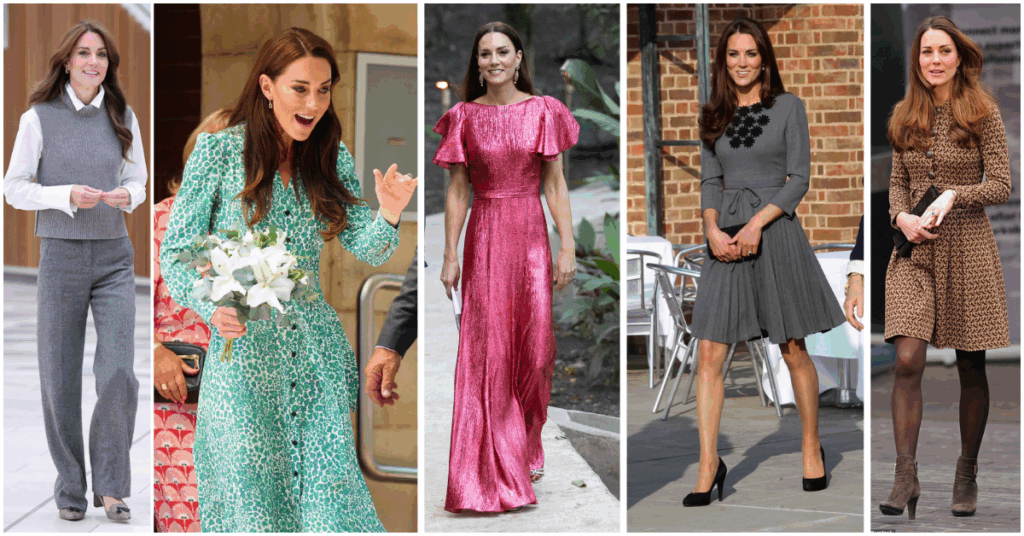
For years, the public was told that Kate Middleton represented the best of British fashion, a royal ambassador whose wardrobe could transform any label into a household name. Earlier this year, reports claimed she would soon grant her royal warrant to selected British brands, a seal of approval once believed to guarantee success. There were even reports of a potential Vogue cover celebrating her style. The Kate quickly stated that she did not want her image to revolve around fashion. Now the results speak for themselves. British fashion houses are struggling, and several labels once linked to the Princess of Wales, including one founded by a former prime minister’s wife, have collapsed despite years of royal exposure.
Advertisement
Royal Exposure Without Endurance
For more than a decade, media outlets credited Kate’s public appearances with boosting sales for British fashion houses. They claimed that the maternity dresses she wore helped propel Seraphine to an initial market capitalization of £150 million stock market debut in 2021. Jaeger and L.K. Bennett once benefited from her visibility at official events. Now, several of the mid-tier British brands once linked to Kate have since folded, highlighting how royal visibility rarely ensures long-term survival. Even Cefinn, founded by Samantha Cameron, wife of former Prime Minister David Cameron, and championed by both Kate and Queen Camilla, closed earlier this year despite high-profile coverage.
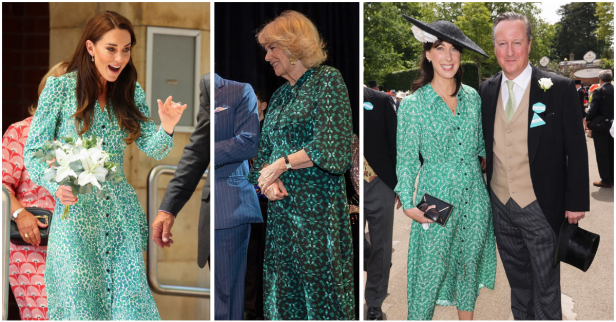 Cefinn’s collapse highlights the myth of the Kate Effect as royal fashion endorsements fail to save struggling British brands.
Our previous investigations revealed the same trend. Royal exposure may generate headlines, but it does not ensure financial survival. Seraphine’s administration and Cefinn’s losses show that publicity cannot offset inflation, weak retail confidence, or rising production costs. The “Kate economy,” built on press photography and royal mystique, is struggling to compete with a digital fashion market driven by youth and innovation.
Public Reaction Turns Against the Fairytale
The Mail’s comment section became an unexpected referendum on Kate’s public image. Readers dismissed her style as “boring” and “dated,” questioning why anyone would buy clothes simply because she wore them. One user described her wardrobe as “church-lady chic,” while others compared her outfits to “The Golden Girls.” Similar sentiments spread across social media, where users criticised her reliance on coat dresses, her heavy makeup, and her lack of modern flair.
When you happen to come across the comments before the Daily Fail manipulates them, they’re quite entertaining.🤣🤭 pic.twitter.com/3mSpcr6weJ
— Zandi Sussex (@ZandiSussex) October 13, 2025
This shift marks a cultural change in the carefully curated public narrative about Kate. The public no longer accepts royal style as the benchmark of elegance. What was once seen as timeless now feels static. Even Project Runway mocked her signature silhouette earlier this year, capturing a mood already growing online as audiences expressed fatigue with a royal aesthetic that refuses to evolve.
Advertisement
The Media’s Manufactured Legacy
British fashion journalism played a central role in building the myth of Kate as a commercial powerhouse. For years, headlines positioned her as the most influential royal style figure, often in contrast to Meghan Sussex. Yet while Meghan’s creative projects continue to generate measurable engagement, from lifestyle ventures to fashion collaborations, the brands Kate promoted have largely vanished. The comparison exposes how media spin, rather than market evidence, sustained the idea of her retail influence.
Even the Middleton family’s own ventures failed to escape financial collapse. Party Pieces went into administration with unpaid debts, and James Middleton’s gifting start-up Boomf folded soon after. These failures expose the gap between royal visibility and business viability. The royalists will continue to romanticise the “Kate effect,” but industry data tells another story. Perhaps the only thing the press has managed to keep afloat is the illusion itself.
Advertisement
Like this:
Like Loading…
Discover more from Feminegra
Subscribe to get the latest posts sent to your email.