
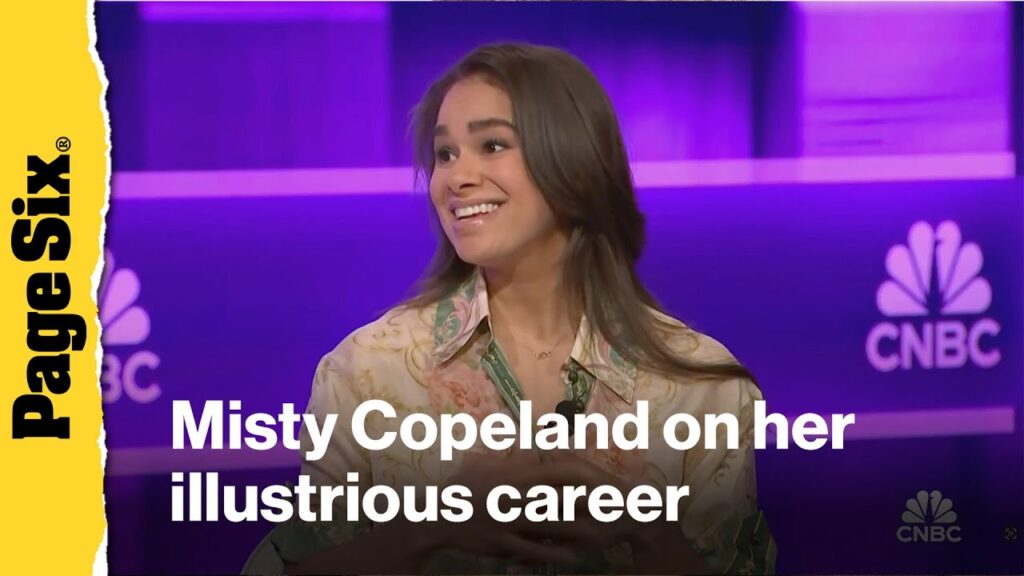
Misty Copeland on her illustrious career and overcoming adversity
When I was six, I wanted to be a ballerina. So, I’ve never been more self-conscious of my posture than I am right now. Um, you’re such an inspiration. And I wanted to start at the beginning of your story and your almost impossibly quick rise. You started dancing when you were 13, which is considered really old for ballet. And then within three months, you were on point. Within about a year, you were performing professionally. What drove you to do what seems by any measure impossible? Um, I mean it’s very apppropo that I walked into Mariah Carey because um, you know, I feel like at the start of um, you know, my artistic development um, was my love of music. So I I grew up in a single parent home, one of six children, often houseless for um, most of my childhood. And there was something about music that just, you know, it was speaking for me. I didn’t yet have my voice and understand what it was I wanted to do. And Mariah Carey in particular gave me a sense of pride in who I was as this young biracial girl, kind of figuring myself out. And I think that was when I really started to understand the importance of representation. Um, seeing someone who looked like me, who was succeeding. And I think that was kind of at the beginning of this fire that I started to build within me. Um, but I think that it was h coming from the circumstances that I come from and feeling like I don’t want to continue this cycle and I’m going to find a way to get out of this and through something that I love and that I’m passionate about. So when I stepped into the ballet world at 13, it wasn’t an afterchool curricular activity. this was this was going to be my career. So, from day one, when my ballet teacher um discovered me at the Boys and Girls Club on a basketball court, which is where I took my first ballet class, wearing gym clothes and socks, uh she immediately saw potential in me and and you know, told me I was a prodigy and the goal was to to dance for American Ballet Theater. So, you know, I had pretty much about four years to get there, which is very quick uh to make it to one of the elite companies in the world. And so, I think it was just this idea that um I had no other choice and I fell in love with it as well. I was so eager and so hungry to learn as much as I could. So, every day it wasn’t like I was, you know, dreading going into ballet class. Uh there was also something that was so comforting about being in that space, you know, coming from such an um and stable uh background, being in the studio. I it was the first time that I felt safe and that, you know, there was consistency. I knew every day exactly what I was going to do, which wasn’t the case in my life outside of ballet. I knew I was going to step into the studio and do a pa and a tandu and a deage and a fondue. Um and there was just something so uh comforting about that. So, a a valuable balance to maybe the chaos at home, but at the same time, dance requires so much rigor, so much practice, so much focus and determination. Was it hard to maintain that given maybe the chaos at home or or the instability at home? No, it was so easy for me. You know, I feel like I’ve had the opposite experience, and you could probably speak to this too because you danced. Um, but the opposite experience of a lot of people in ballet and this is, you know, the work I’m doing now through my foundation, just changing that stigma because it is possible to experience the beauty of ballet and this incredible technique and not have it be traumatic, not have it, you know, have a teacher that, you know, can scar you and tell you you don’t have the right body, you’re too fat, and you don’t have the right skin color, whatever it is. That wasn’t my experience. I stepped into the studio and felt beautiful and felt alive and so uh you know I also felt this sense of um like I could relax which I think is the opposite of what people might think of. That’s amazing. And you mentioned your first teacher and you wrote a book about one of your mentors. So clearly mentorship is incredibly important to you. How did your mentors impact your your career and how do you think about mentorship now? it mentors the mentorship it’s the backbone of my success. Um I feel like that started to develop being a member of the Boys and Girls Club because it’s really you know what they do is built on um you know a support system with within those walls. Uh, and so once I stepped into the ballet studio, it’s really ingrained into the the classical ballet culture, you know, this art form where a lot of it’s not really documented in terms of like the steps in in, you know, written form. And so it’s really passed down from one person to the next, literally through their body um, and through their words onto the next dancer. And so that’s such a beautiful understanding, I think, of mentorship. But being a black woman in an elite white company, I’ve had an incredible circle of black women around me throughout my career that have been there for me, you know, when I didn’t have anyone to turn to next to me that understood the journey that I was on. And Raven Wilkinson, who my latest book is about the wind at my back, um was a black ballerina in the 1950s. And she just gave me so much inspiration and hope. someone who experienced, you know, racism on a level I couldn’t even imagine, but still, you know, wanted to give back to this art form. And I just felt like if she could, you know, feel and uh, you know, exude what she does after living her life and through her career, I could do anything. Well, and you did do something that many people never would have expected, which is you changed the archetype of ballerinas as being white and really changed that stereotype. Um, but it sounds like it was not easy. I saw the interview when you talked about being asked to lighten your skin, which seems just impossibly horrifying to hear that. Um, what’s so impressive to me about these experiences that you’ve had is that you’ve decided to fight them publicly. You’ve talked about this publicly. You did a video on Tik Tok which was viewed by millions of people where you’re painting your point shoes to match your skin with with makeup and and you’ve been advocating for new point shoe emojis um to to change the conversation. What made you decide to take on the responsibility of having these conversations in public? I felt like there’s no other way to exist within this world of ballet without doing that. I feel so fortunate to have been in the position that I’m in and have the platforms that I have because so many generations that have come before me did not have that access and opportunity. So I’ve always looked at my this experience as as a responsibility, a responsibility to speak about my experiences, a responsibility to tell the stories of so many who have come before me um that you know their their stories aren’t documented in history books. And so it feels easy um to to do this. I if I if I couldn’t speak and be honest, I don’t think I could truly be the artists that I am. Do you feel the dance world changing around you? Yes. I’m going to say yes. I would say, you know, I’ve been a part of the prof as a professional. I’ve been, you know, at American Ballet Theater for almost 25 years and um I have seen change. I would say the most change I’ve seen has been in the last five years. Um, you know, the pandemic and, you know, the uprising of Black Lives Matter and George Floyd. I never thought actually in my lifetime that I would see as much change I as I have, even though it’s been so small. Um, but I am hopeful. If I wasn’t, I wouldn’t be able to continue to do the work that I’m doing um, both like internally and externally uh, you know, of the ballet world. Your determination as a dancer and your determination to to do this work is so impressive. Um, and I think one thing that’s worth noting is like obviously being a dancer is incredibly hard. Um, but when dancers suffer from injuries sometimes they don’t come back from them and you suffered from a major in injury and I wonder since this is so relevant to anyone in business is how you thought after that injury about pushing through. And how you think about pushing through when when things get really tough or seem impossible. Those are the fun times. I I love a challenge. I think that’s why I’m a part of the ballet world. It’s not easy, especially as a minority. Um, I’ve always looked at injury as like this, like this is the moment that I’m going to really learn about myself, learn about my body, learn how I can find ways of having some sense of control. And I think that’s something that I’ve had throughout my life as a young person, not having control over whether we’re going to have food on the table or a roof over our heads. Um, and I was always looking for ways to find control. And so, you know, that’s just, I guess, been one of my strengths is learning from those moments. You know, one of my favorite parts about performing live is um that it’s live and when you fall, how do you recover? Like, that’s the real test of a professional. So, I love those opportunities if you’re not getting injured, of course. I love that. Yeah, the excitement of live. You never know what’s going to happen. Um, we experience that on live TV all the time. Um, what’s what’s amazing is how many different things you do. You’re dancing, that’s a full-time job, but you also have a foundation, and I want to get into the businesses separately, but tell us a little bit about what you’re working on in the foundation right now. Yeah, you know, because of the way that I came into the ballet world. It’s always been in the back of my mind that I wanted to pay it forward in some way. I mean, I’ve been a part of a lot of different organizations that are doing work through the arts and through dance, and I’ve been an ambassador for the Boys and Girls Club for over a decade. Uh, but I wanted to find a way to bring ballet to as many people as I can, give them access and and hope. And so through the the Misty Copeland Foundation was founded three years ago and our signature program um we started two years ago and it’s called Be Bold. It stands for Ballet Explorations. Ballet offers leadership development and it’s bigger than ballet. You know, we’re right now we’re starting out in in New York City. Um we’re at 14 different community sites. It’s a free afterchool ballet class. So, right now we’re in the Bronx and in Harlem. Um, and we’re reaching over 250 kids already, but it’s it’s introducing ballet to them in a way that uh works for them and within their community. So, it’s not taking this white European art form and bringing it to the Bronx and saying like kids like connect with this. Um, you know, we’ve created our own curriculum. We have uh two teaching artists in every class. We have a live musician in every class. And it’s not just classical piano music. It’s every instrument, live instrument you can possibly think of. Um, and getting them to understand that the technique is there to tell a story and for them to find joy and community within it. That’s awesome. And people may not realize, but you’re also an entrepreneur. You have a production company. You made an amazing short film called Flower, which I recommend everyone find online and see. It’s beautiful. Um, and you also have a new clothing line that just debuted this fall. Um so how do you think about entrepreneurship and finding these these these projects these businesses that naturally flow from what else you do? Um everything stems from you know my passion and that is giving back giving to you know communities that might not have opportunity um and exposing them to dance you know finding ways to diversify it. And so, you know, I’m never thinking like, uh, I have this idea in my head and I’m going to make it happen. It just naturally and organically happens based off of my passion and this mission that I have. Um, so everything that I’m doing is really, you know, geared towards that same goal and same and same mission. So with the production company Life and Motion Productions, you know, what better way to bring more uh access to give access to seeing dance and uh than through film and media. Um you know, we not every town has a theater where you can come in or not everyone has the funds to be able to afford it. So what better way than to make, you know, film and um whether it’s on YouTube or whatever way we can just to get it out there to people. And with the um the athletic wear brand, you know, I think that it’s really important uh that people understand what goes into being an artist and what goes into being a ballet dancer. You know, I think that we especially in America have a narrow view of what that is and often think that it’s, you know, it’s simple, it’s easier on stage twirling around in a tutu, but we’re working just as hard or harder than any athlete and we’re artists and actors on top of it. And so to be able to partner with Derek Jeter in creating our athletic wear brand, Greatness Wins, I think that it’s an amazing example to set for athletes that we don’t have to just be the face of a brand or a product. That we can be investors, we can be founders, we can start our own companies based on our experiences of actually living that life. I love that. Um, a final question before we wrap up. It sounds like when you were 13, you knew exactly what you wanted. You were on this path. Um, but I wonder now here you are decades later. Is there something you wish you had known then that you now know now? Something that has turned out to be essential to you not just as a dancer but also as a leader and a change maker. Um, starting out late at 13 years old like that that understanding of that message has been my power that it’s never too late to dream of of whatever you know you want to accomplish. um that there’s no linear way or right or wrong way of getting to the place that you want to get to. And so I always look back at that 13-year-old girl and just think like um you set me up for success. Like now I have this mindset where it doesn’t matter how old I am, I’m going to keep fighting for what it is I want. And that is a perfect and very beautiful note to end on. Misty Copeland, thank you so much. Thank you.
In a previous CNBC interview, MIsty Copeland opened up about her career and the adversity she faced in the dance world. Take a look back at what she said ahead of her final performance.
#mistycopeland
Page Six is your source for celebrity news, gossip, entertainment, pop culture, photos, video and more.
Catch the latest news and gossip here:
https://pagesix.com/
Follow us on:
Facebook – https://www.facebook.com/pagesix/
Twitter – https://twitter.com/PageSix
Instagram – https://www.instagram.com/pagesix/
Check out We Hear, our Page Six podcast!
And Page Six Style has the latest news on celebrity style including fashion trends, red carpet photos, and beauty tips.
Catch the latest news here: https://pagesix.com/style/
Follow us on:
Facebook – https://www.facebook.com/pagesix/
Twitter – https://twitter.com/PageSix