
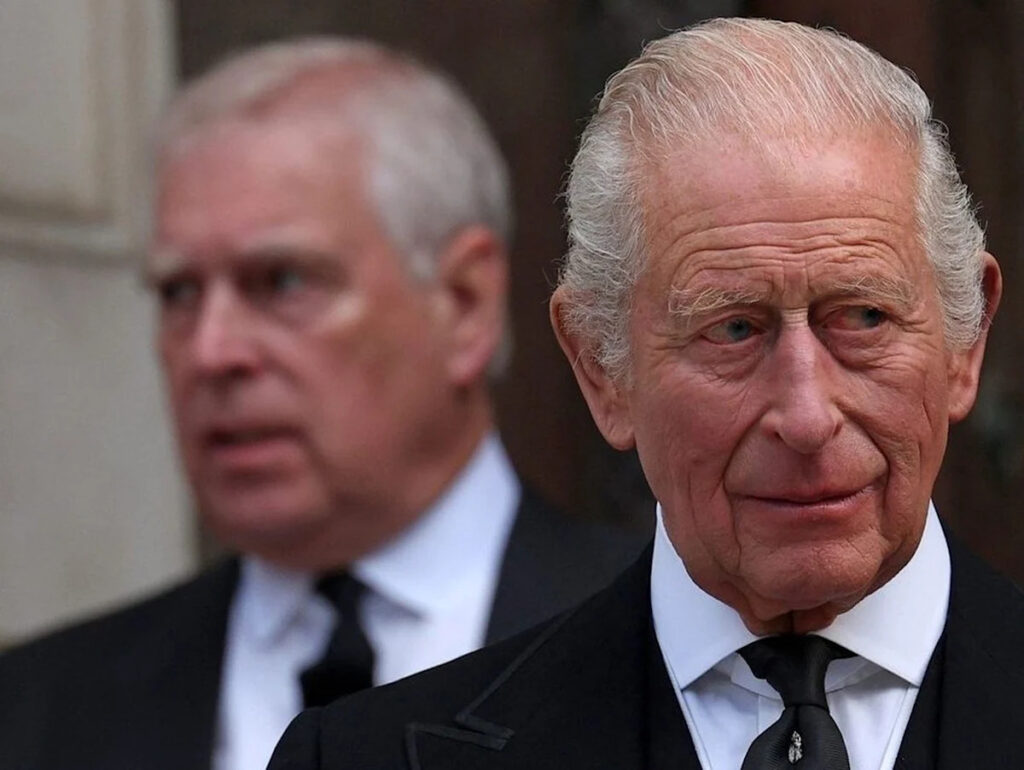
While disgraced member of the British royal family Andrew Mountbatten Windsor was stripped of his title and home, the former prince will likely still be dependent on his bloodline for some time.
On Thursday, King Charles III stripped his younger brother of his title and estate for his controversial ties to deceased sex offender Jeffrey Epstein. This means he loses his “prince” title and was kicked out of Royal Lodge, where he has lived for decades.
However, it’s understood that King Charles will still be funding Andrew’s new home and making “appropriate private provision”, the BBC reported.
It’s no secret that the Royal Family is wealthy. But how is their expansive wallet filled?
Their funds come from the Sovereign Grant, which is an annual payment from the U.K. government (via taxpayers) to the monarch to cover the cost of official duties, according to the Royal Family website.
Here’s a breakdown of the Sovereign Grant and what it’s about.
How much does the Sovereign Grant pay?
For the 2025-26 cycle, the Sovereign Grant for the Royal Family was roughly CAD $242.8 million, an increase from $158.6 million the year prior — the same amount as the previous four years, the BBC reported.
Of that $158.6 million in 2024-25, $95.2 million was the core grant, with the remaining $63.4 million going towards the modernization of King Charles’ residence, Buckingham Palace, a 10-year, $678 million project.
The Royal Family’s financial statements also noted that they received an additional $39.5 million from visitors to Buckingham Palace.
It also noted that taxpayers’ funding for the Royals has tripled since 2012, a year when the Sovereign Grant was $59 million. A House of Commons Library report noted the increase was due to the Buckingham Palace modernization project.
The Sovereign Grant broken down
So, where does the money from the grant go?
Profits from the Crown Estate, a property business owned by the Royal Family, go to their treasury. The BBC reported that the level of profit is used to calculate how much cash the U.K. government gives to the Royals.
In 2023-24, the Crown Estate had $27.6 million in assets, millions worth of properties in London, along with almost half the land along the coasts of the United Kingdom. King Charles can’t sell any property or keep any properties for himself.
The Sovereign Grant itself was initially worth 15% of the Crown Estate profits that were generated in the previous two years. That percentage increased to 25% in 2017-18 to help pay for the Buckingham Palace project before decreasing to 12% for the 2024-25 period.
The Royal Family profited from six offshore wind farms, leading to an 82.8 million increase in the Sovereign Grant in 2025.
RECOMMENDED VIDEO
If the Crown Estate’s profit falls, the Royal Family still receives the same amount from the previous year, with the government making up the difference, thanks to the Sovereign Grant Act of 2011.
Over the last decade, revenue received from the Crown Estate was $9.2 billion, which was used for public spending, according to the U.K. government.
How does the Royal Family spend the Sovereign Grant?
Funds from the grant help pay for any expenses of the Royal Family as part of their royal duties. This includes any travel expenses to royal events, and the upkeep of properties and staffing.
Does the Royal Family receive any other funding?
The Sovereign Grant isn’t the only way King Charles and his royal clan get funding.
The Royals also get funding from the Duchy of Lancaster, a private estate that covers more than 180 square kilometres of land in Lancashire, Yorkshire and London, the BBC reported.
The Duchy of Lancaster is passed down from monarch to monarch. As of this past March, it was worth $1.2 billion and had made $44.9 million in profit annually.
There’s also the Duchy of Cornwall, which benefits whoever holds the title of Duke of Cornwall — who is currently Prince William. The Duchy of Cornwall covers land in southwest England and had $2 billion worth of assets, which made $42.1 million in profit this past March.
Profits from both duchies can be spent however King Charles and Prince William choose to.
Anything privately owned — such as art or jewelry — can be sold to generate income for the family.
Do the Royals pay the tax man?
When it comes to taxes, members of the Royal Family have voluntarily paid income tax.
The late Queen Elizabeth II voluntarily paid income tax and capital gains tax on her personal income. King Charles does the same.
While the duchies are exempt from corporation tax, King Charles and Prince William voluntarily pay income tax on the revenue they generate, but that amount isn’t made public. The King and his son do not pay capital gains tax, as they don’t benefit from any increase from the duchies’ assets, the BBC noted.
For any income from any privately-owned assets, members of the family do pay taxes.
As well, King Charles doesn’t have to pay inheritance tax on any funds he received upon the death of his mother, Queen Elizabeth, thanks to a “sovereign to sovereign” exemption made in 1993 by then British prime minister John Major.
What doesn’t the Sovereign Grant cover?
The Sovereign Grant doesn’t pay for things such as security for the Royal Family or any major events.
Security arrangements are normally paid for by Britain’s Metropolitan Police, the BBC reported.
Some major events, such as Queen Elizabeth’s funeral and King Charles’ coronation, were paid for by taxpayers.