
(Credits: Far Out / DreamWorks Pictures)
Mon 12 January 2026 8:45, UK
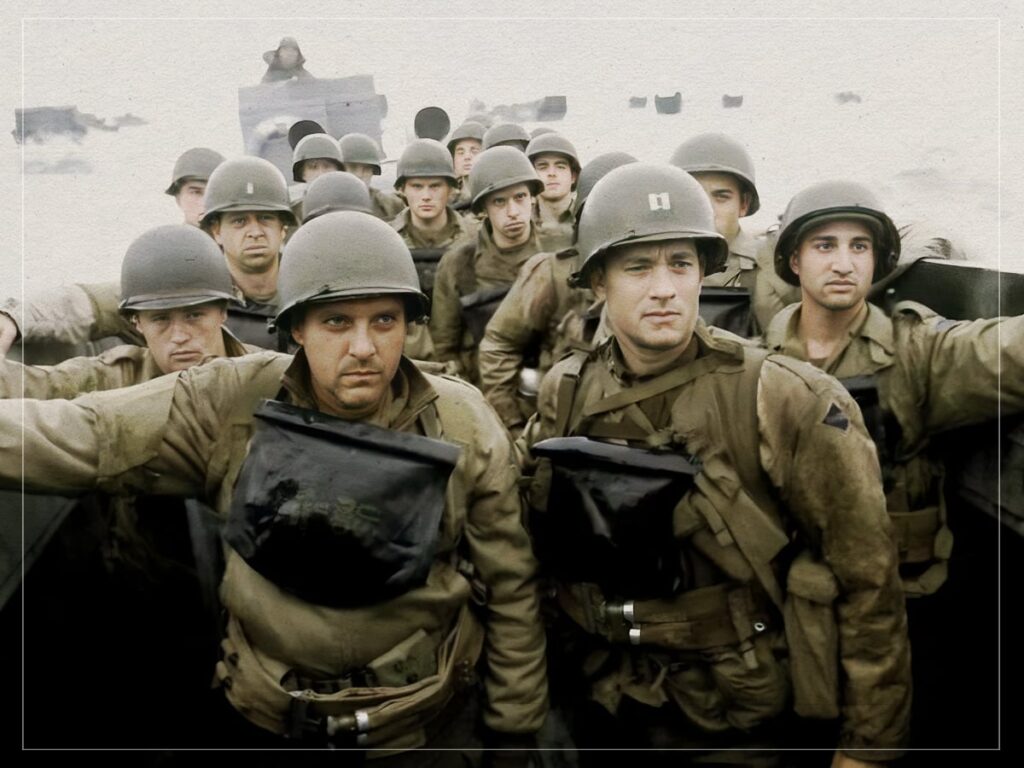
Saving Private Ryan is one of the greatest war movies ever made, later influencing the likes of Dunkirk, Hacksaw Ridge and The Pacific with its fierce commitment to realism and raw depiction of the horrors of war, becoming one of Steven Spielberg‘s greatest releases.
Spielberg has always shown a fascination towards war stories, with his heart-wrenching Schindler’s List and War Horse, saying that his interest in this side of history was sparked by the stories he heard from his parents growing up about the Holocaust and WW2, with his father serving for the United States air corps from 1942 onwards.
Due to his exposure to these stories from a young age, Spielberg was familiar with the harsh reality of the war, which can be seen through his unflinching gaze and brutal realism in Saving Private Ryan. It is undoubtedly what made the film such a success, garnering critical and commercial acclaim for its ability to weave Spielberg’s natural zeal for storytelling alongside the desecration of humanity that all war is. But, after the first screening, Spielberg was worried he had taken things just a little too far.
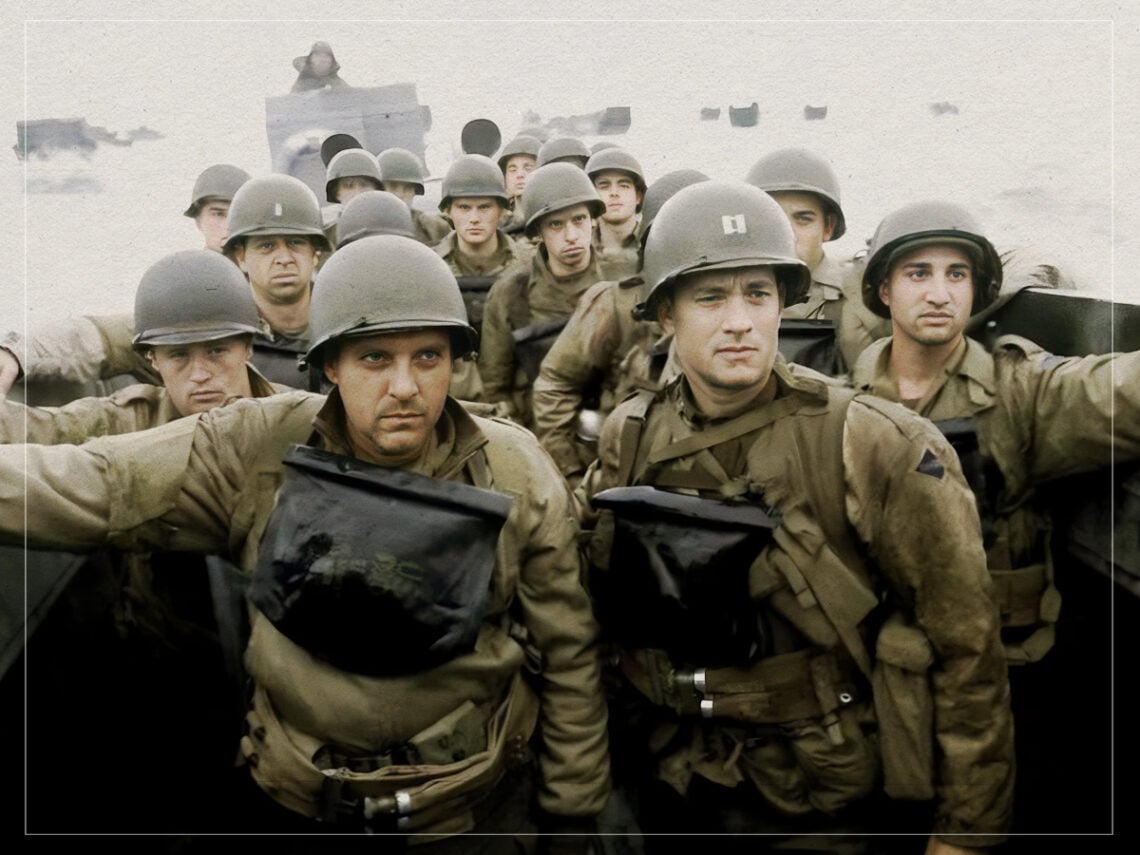
Saving Private Ryan, which was released in 1998 and stars Tom Hanks, is a staggering story about US Army Captain John Miller and his battle to infiltrate German-occupied territory and rescue a member of their troops. Spielberg creates emotionally heightened combat sequences that attack the senses with endless gunfire, bullets and flying body parts that completely immerse you in the horrors of war. It is an unforgiving viewing experience that is intentionally difficult to watch and reinforces Spielberg’s political messaging about the psychological impact of war and the people who suffer through it.
However, while the film has been praised for this very reason, Spielberg was initially sceptical about how audiences would react to it after one scene that he was convinced he’d taken too far, with the cast members even expressing concern over the intensity of it.
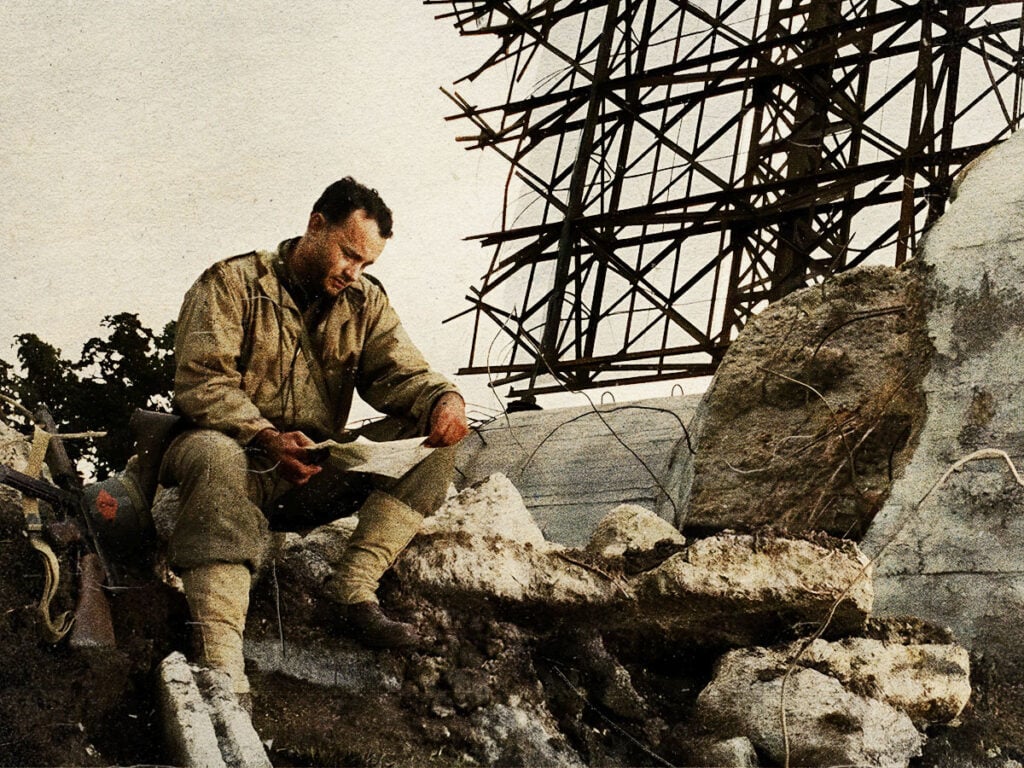 Tom Hanks in ‘Saving Private Ryan’. (Credits: Far Out / DreamWorks Pictures/ Paramount Pictures)
When Adam Goldberg was asked about this scene (who plays Private Mellish in the film), he said, “I was originally just going to be shot in the final battle, when Capt. Dale Dye suggested that I get into a hand-to-hand combat fight, because one of the things I excelled in at boot camp was using the bayonet. So Steven and I started talking about it, about wanting it to be as realistic as possible. There was a lot more of what you saw in the rough cut — it was so graphic that Steven’s projectionist — who projected the dailies in Los Angeles — told him he can’t leave the scene in the movie. It’s too painful to watch. Remembering back, I think there was a lot more of me screaming how much it hurts”.
Speaking to Far Out exclusively, the actor confided about the role that he actually doesn’t “really love my performance” in Saving Private Ryan, but regardless, “it was hugely impactful for me personally.” He added, “And then, just the making of that movie.” The actor continued: “And then, of course, the resonance that it had, particularly at the time, with the veterans that it affected. It was an incredibly powerful experience, and I won’t ever have that experience again.”
While Goldberg has appeared in many other movies and television shows, he is arguably most recognisable as Mellish. “People will have very emotional reactions. Whether they stop me in the street or whether it’s knowing them for three weeks and they say, ‘Hey, by the way, I gotta tell you that scene in Saving Private Ryan when you get stabbed, it still haunts me’.”
He continued, “And I would say that it’s got to be the most impactful thing I’ve ever done in terms of my experience, in terms of feedback to a performance, in terms of sheer straight-up recognition.”
Given how relentless and harsh the action is, it’s hard to imagine a moment that was too emotionally difficult to keep in, and who knows how different the film would be if Spielberg hadn’t left these moments on the cutting room floor.
However, he still managed to achieve the same effect without these additional painful moments, and the film continues to be a lasting testament to Spielberg’s vision and power of storytelling and one of the definitive war stories in cinematic history.
Related Topics