

Piper Rockelle, OnlyFans and why the internet is mad at her
The 18-year-old YouTube-child-star-turned influencer recently joined the adult content creation platform and made nearly $3 million on her first day.
Piper Rockelle has never been able to escape the spotlight, and she doesn’t want to anytime soon.
However she would like to set the record straight as she faces criticism for joining OnlyFans, a subscription-based adult content site. On Jan. 1, the-YouTube-child-star-turned influencer, who recently turned 18, made nearly $3 million in her first day on the platform, according to her management team, Ruthless Media Partners.
Joining the adult platform is not a decision she came to lightly, Rockelle says, and she knows her impressionable fan base may be influenced by her choices. It’s a risk that weighs on her, she says.
Rockelle, in part, made the move in an effort to take control of her story. She’s sick of commenters dissecting the snippets of her life they see online − and she wants her young fans and critics alike to know that’s all they’re really seeing. Snippets.
Piper Rockelle is ‘grateful’ despite controversy
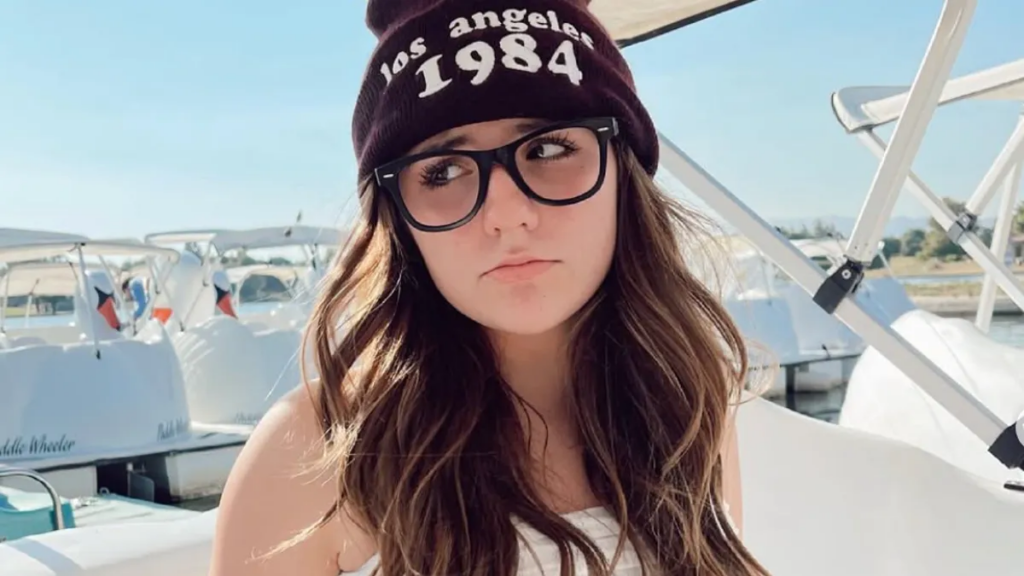
Zooming in from a high rise apartment in Los Angeles, she wears a shirt that says “Hating Me Won’t Make You Pretty.” Rockelle isn’t at home. She’s at one of the vacation rentals she utilizes to make content − a frequent occurrence these days.
A tattoo on her right wrist reads “be grateful.” She is, she says.
Rockelle has read the comments calling her names − and the ones that preach she’ll regret doing OnlyFans; she’s heard the online theories that her mom controls her. But being in the public eye, she says, is everything she’s “ever wanted.”
“If people are going to write my narrative and say that I’ve been exploited my whole entire life, go ahead, I’m exploiting myself,” Rockelle says.
“I enjoy doing what I’m doing,” she adds. “I really don’t care what people have to say.”
In a simple T-shirt, through a laptop camera and with light makeup on, Rockelle looks and sounds like any other 18-year-old. But she’s not − and she acknowledges that. She frequently tells her fans she’s only in this spot because of the abnormal fame she experienced her whole life, allowing her to gain traction.
Coming of age in the spotlight
After a brief stint on the Lifetime reality show “Dance Twins,” Rockelle rose to fame as a child star on YouTube, where her content was managed by her mother Tiffany Smith. In 2018, Rockelle started appearing in videos with a group of other tweens. The group, deemed “The Squad,” would post orchestrated relationships, pranks and 24-hour challenge videos. Smith functioned as the manager and producer of the group.
They experienced massive, viral heights. Rockelle amassed more than 10 million subscribers at the time — she has 12.2 million as of 2026 — and at her peak, she was earning up to $500,000 a month, according to data shared in the Netflix 2025 documentary, “Bad Influence: The Dark Side of Kidfluencing.”
But in January 2022, Rockelle’s world came crashing down.
Eleven members of The Squad filed a lawsuit against Smith and her boyfriend, Hunter Hill, seeking $22 million in damages. They accused Smith of “emotional, verbal, physical, and at times, sexual abuse” and claimed some members of the group weren’t adequately compensated for their work.
Smith and Hill have denied these allegations in interviews.
In the wake of the lawsuit, YouTube demonetized Rockelle’s channel, cutting off her main source of revenue.
“I was working with my best friends at the time, like literal best friends, like, I consider them family,” Rockelle says. “It was really hard.”
“The only time when I realized that I was making money is when I lost it all,” Rockelle says, explaining that the legal proceedings took a toll on her mental health.
The lawsuit was settled for $1.85 million in 2024, but the attention didn’t stop there. In April 2025, Netflix dropped its documentary, which followed the lead up to the lawsuits, casting scrutiny on safety in the influencer industry.
What followed was an onslaught of attention from Rockelle’s followers, many of whom viewed her as a victim of her mother. On multiple occasions, Child Protective Services arrived at her doorstep after followers made calls about her.
As public perception of her shifted, Rockelle she says she turned to what she could control: her image. She struggled with an eating disorder from ages 15 to 17, which she says was challenging to navigate as the internet commented on her body.
“I had so much being taken away from me; I had so much stress,” Rockelle says.
For years before she turned 18, Rockelle’s fans and critics speculated that she would join OnlyFans. Many onlookers bombarded her page with comments asking about it. She drew controversy when she collaborated on TikTok with members of the Bop House while she was still underage, and in December of 2025 she formally joined the content house before launching on OnlyFans.
Many OnlyFans content creators feel their lifestyle offers them financial stability and freedom. But teenagers, particularly young girls, who see TikToks showcasing these stars’ lifestyles, may get the impression that being an OnlyFans star is aspirational. The gaps between this online reality and their backstories create a disconnect for viewers who don’t see the challenges that lead women to seek out careers in adult entertainment, child psychiatrist and Yale School of Medicine Professor Yann Poncin previously told USA TODAY.
“I do think it creates an unrealistic sense of reality,” Poncin said. “This just really presents as an exciting lifestyle. These girls seem to have it together. They have things, they have money, they have the shining objects.”
Poncin added the teenage years are a critical time when girls start developing their identity and determining who they are in relation to their larger peer group. Influencers and celebrities now play a part in shaping how teenagers perceive themselves.
“This is a time when you try on essentially different outfits of identity. ‘Who am I? What am I? What am I becoming?’” Poncin said.
Rockelle says she knows her life isn’t like how it appears to be online, and she’s not trying to be a role model.
“That was a huge thought for me,” Rockelle says. “Once I did decide to do this, I was like, a lot of girls are going to be disappointed, and a lot of girls are possibly going to want to follow this life path that I’m doing.”
She’s working on trying to separate her public life from her private persona. She hopes the money from OnlyFans can help her build a house and open a cat rescue.
However, part of what makes Rockelle so appealing is her perceived “realness.” As she answers interview questions for nearly 40 minutes, she manages to come across as organic and unfiltered, though her responses are clearly well-planned. Still, at times, her youth shows.
“I don’t ever think I want another boyfriend. I just think I want to be by myself for the rest of my life and my family and a little farm with horses,” Rockelle says. “I’m very happy by myself.”
She knows she made a huge decision, and has a message for her followers: “You don’t have to tell me what I’m doing, because I know,” Rockelle says. “I don’t like when people write my own story.”
(This story was updated because an earlier version included an inaccuracy.)
Rachel Hale’s role covering Youth Mental Health at USA TODAY is supported by a partnership with Pivotal Ventures and Journalism Funding Partners. Funders do not provide editorial input.
Reach her at rhale@usatoday.com and @rachelleighhale on X.