
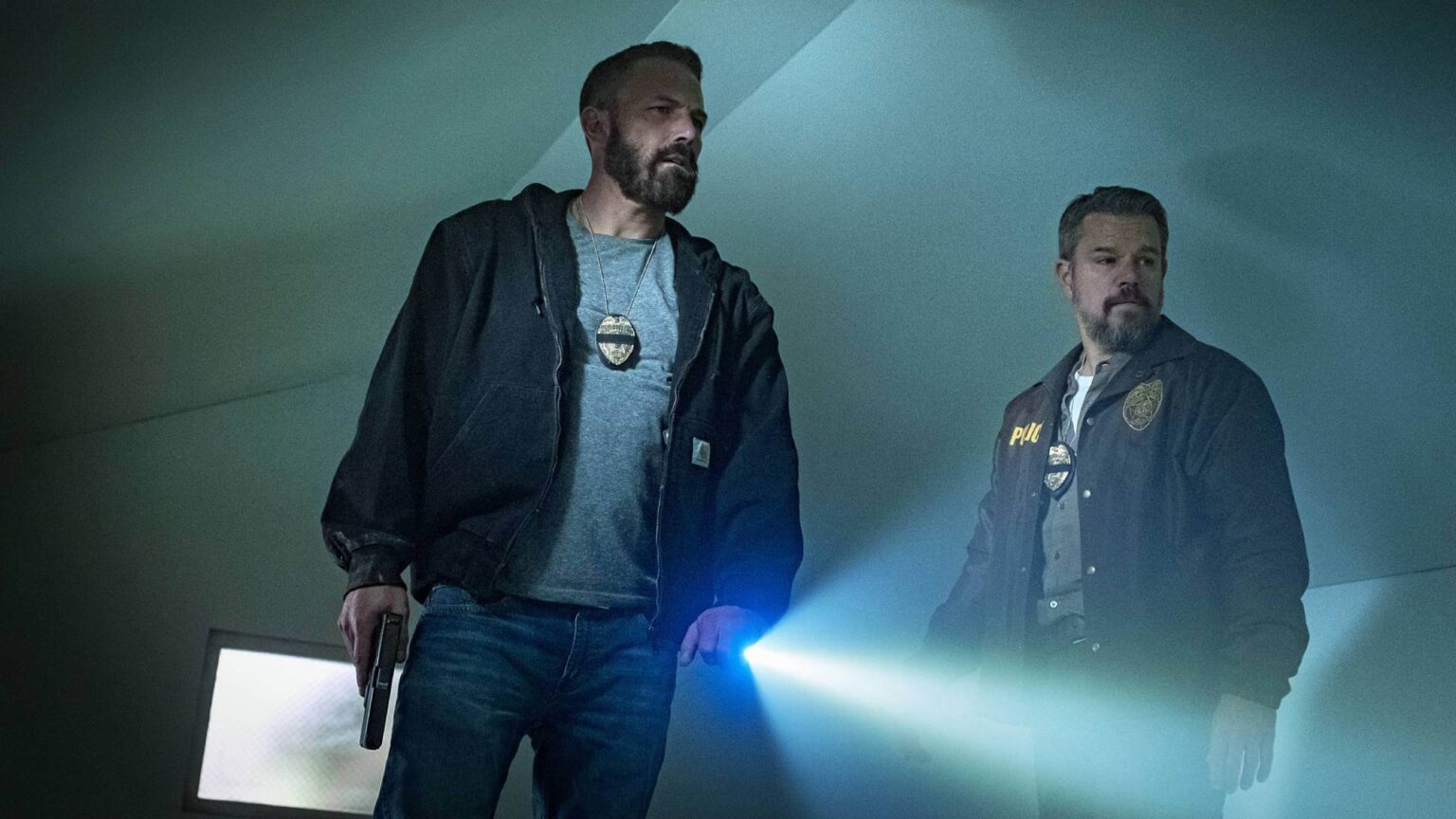
Ben Affleck and Matt Damon are currently on the press tour for their new Netflix cop drama The Rip, an itinerary that included a beefy two-and-a-half-hour stop this past Friday on The Joe Rogan Experience. For those capable of filtering out the Rogan of it all—there is a lot of talk about how big and strong various UFC fighters look and are—it’s a rare opportunity to watch the two friends and co-producers let loose with each other in an extended, mostly informal setting, shooting the shit about making movies, the encroaching nature of AI, and generally just running their mouths. (Sometimes to irritating effect, as when Damon suggests that “being canceled” is so bad that the people in question “would’ve preferred to go to jail for 18 months.”) And sometimes in more interesting ways—as when Damon let slip some info, and maybe a little frustration, about Netflix’s suggested approach to movie making.
Which apparently extends into both action sequences and moments of quieter contemplation. Here’s Damon: “The standard way to make an action movie, that we learned, was you usually have three set pieces. One in the first act, one in the second, one in the third, and the big one with all the explosions and you spend most of your money on that one in the third act. That’s your kind of finale. Now, [Netflix is] like, ‘Can we get a big one in the first five minutes?’ We want people to stay tuned in.” Meanwhile, Damon says, creators for the streamers are being told that “It wouldn’t be terrible if you reiterated the plot three or four times in the dialogue, because people are on their phones while they’re watching.”
Netflix and its fellow streamers’ war with the human attention span has become an increasingly commented-on battleground in recent years; back in 2024, anonymous screenwriters were opening up about being told by the streamer that characters should “announce what they’re doing so that viewers who have this program on in the background can follow along.” The general belief among the streamers appears to be that their films will either be watched on phones, or run in direct competition with the devices in viewers’ hands; Damon, who’s otherwise pretty positive about the relationship with Netflix—he and Affleck have both highlighted how the streamer worked with them to put together a deal where more of The Rip‘s budget went to paying its crew—notes that such approaches can’t help but have knock-on artistic effects: “It’s going to really start to infringe on how we’re telling these stories.”