
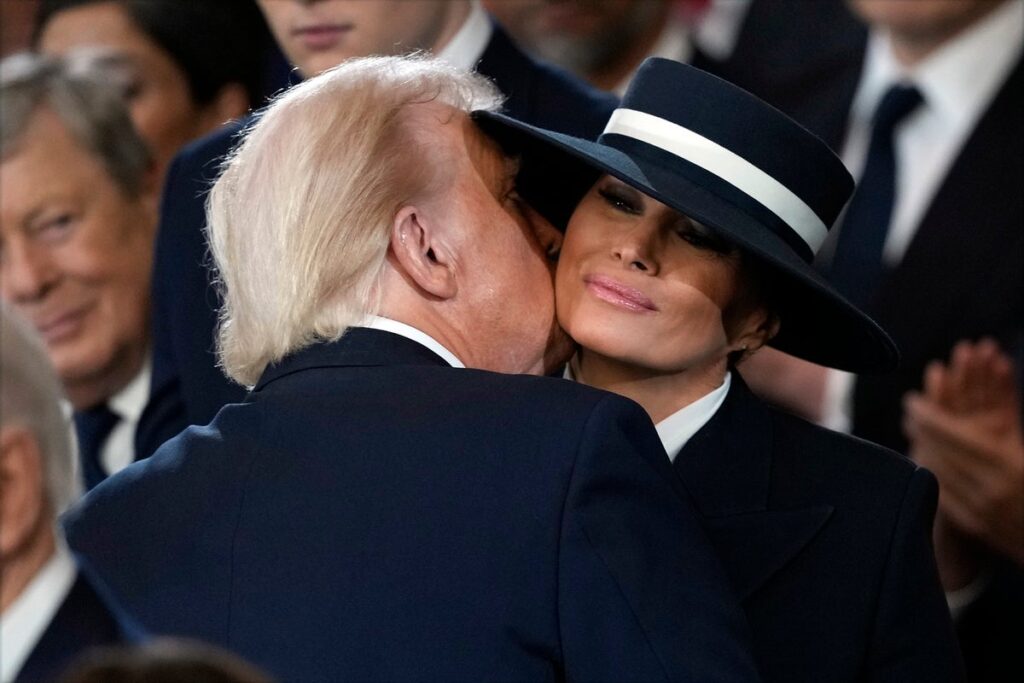
In the trailer for Melania Trump’s co-produced, eponymous documentary, the first lady sits in a White House function room while her husband stands at a lectern and announces: “My proudest legacy will be that of peacemaker.” To which Melania responds, “Peacemaker and unifier.”
This breadcrumb was released in December, but as the film is finally released this Friday, barely a month later, Melania’s “peacemaking and unifying” narrative seems starkly out of step with what is unfolding in real time.
Since the trailer dropped, her husband has bombed infrastructure across northern Venezuela, captured its president, Nicolás Maduro, and his wife, Cilia Flores, and transported them to New York City to face narcoterrorism charges; launched a massive aerial bombing campaign in central Syria; bombed Isis-affiliate targets in northern Nigeria; signalled he is ready for military intervention in Iran; carried out strikes against suspected drug boats in the Caribbean; and, in the US, overseen a brutal surge by ICE immigration squads that have included the fatal shootings of Renee Nicole Good, a 37-year-old poet and mother, and Alex Pretti, an intensive care unit nurse.
open image in gallery
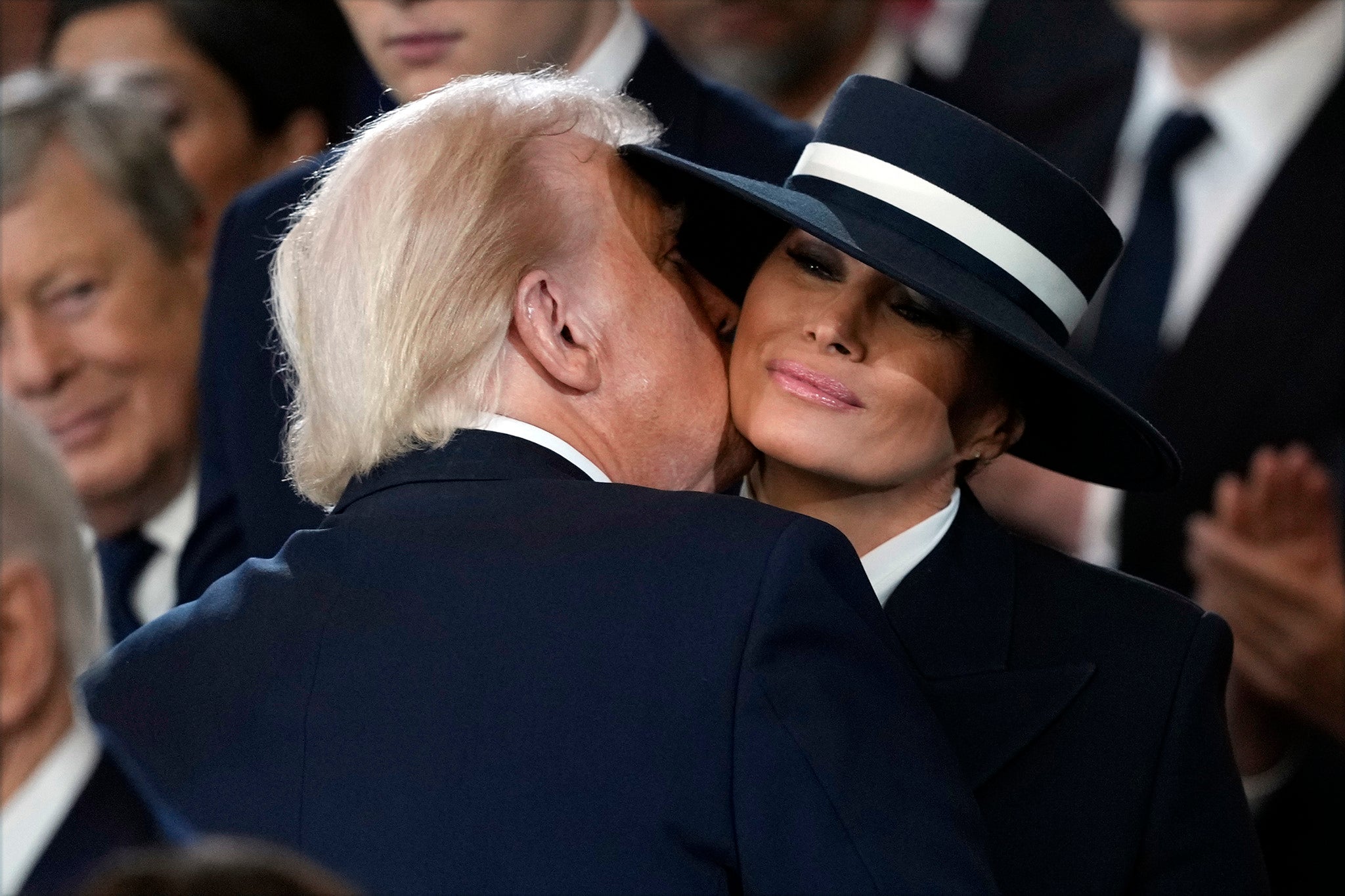
Awkward look: At the presidential inauguration last year, Melania wore a wide-brimmed hat that seemed to ensure a physical distance was kept between her and her husband (Getty)
Whether these explosive contradictions have caused a ruction behind the scenes is, perhaps, the wrong question to ask of a marriage this unique. In the Trumpian universe, where reality is often subordinate to production value, Melania’s on-screen endorsement of a “peacemaker” currently waging a multi-front war only highlights the central mystery of their arrangement: a first lady who often resides in her golden tower in New York while the president commands the ship from his Florida resort.
If the trailer suggests a partnership in lockstep, the apparent geography of their lives suggests something far more detached – a status quo that is less about emotional synchronisation and more about the successful management of two very different, and very distant, brands.
In her book Golden Handcuffs: The Secret History of Trump’s Women, journalist Nina Burleigh wrote that after the pair married, Melania Trump was “a malleable goddess, gorgeous and silent, trained to be looked at, the perfect accessory as Donald sailed into his sixties. She understood the rules, and she played by them. But when he ran for president, and she had to teeter on stage not just to pose in her four-inch Manolo Blahniks, but stand on them and speak, he broke the rules. She did not sign up to become the first lady of the United States of America.”
open image in gallery
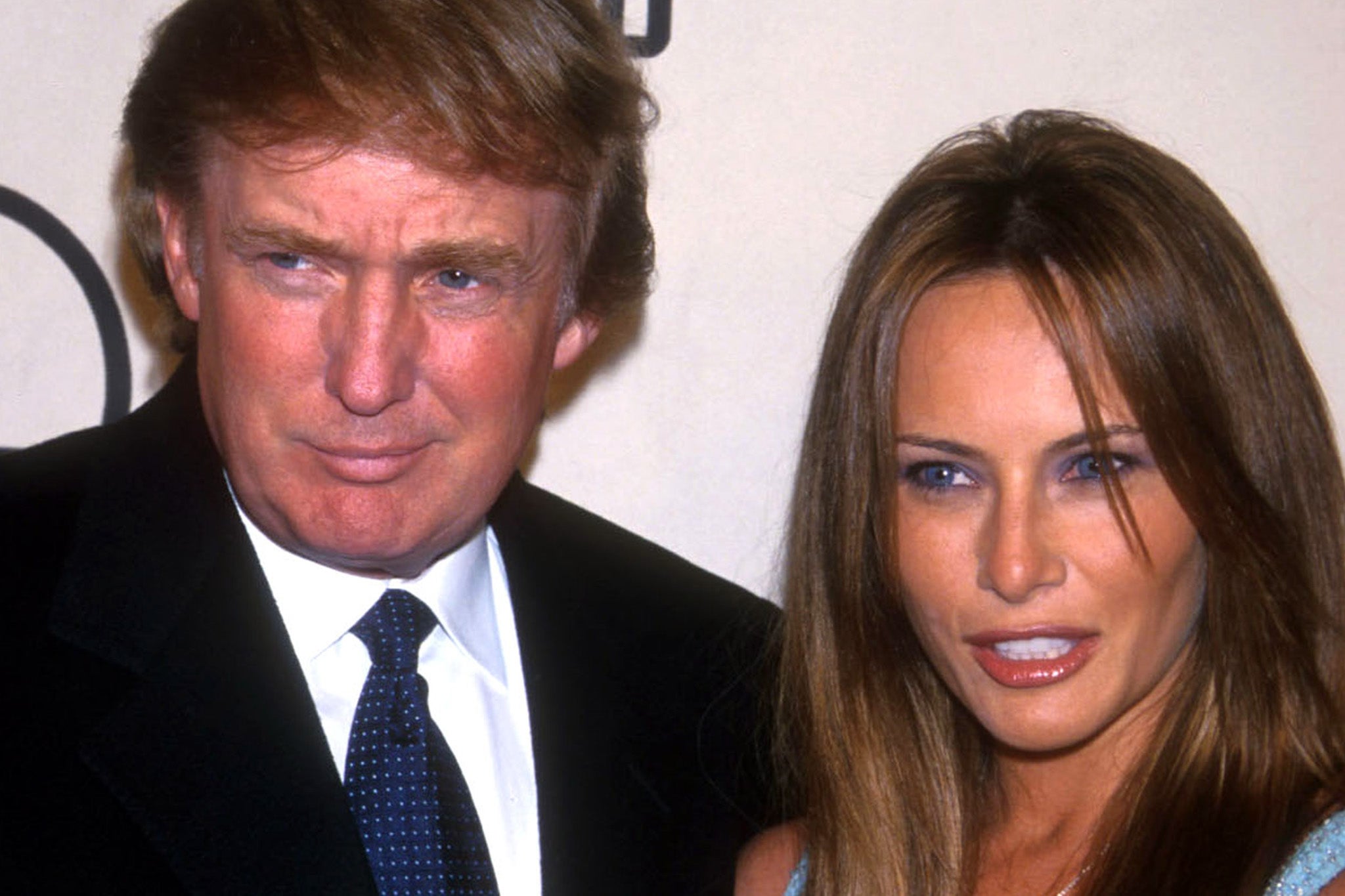
Power couple: Donald Trump and his then girlfriend Melania Knauss in 1999 (Getty)
There are conflicting reports about Melania’s current living situation. Has she moved back to 1600 Pennsylvania Avenue, or is the split time between DC, Trump Tower, and Mar-a-Lago just a polite way of saying she will remain as physically distant from her husband as the role allows? Burleigh tells me that her research and reporting “indicate she’s an introvert and not comfortable with the attention”, but that “the public body language over the years suggests a certain discomfort between them” too.
By some estimates, Amazon’s $40m (£29m) deal to produce the documentary, which focuses on just 20 days of Melania’s life leading up to Donald Trump’s second presidential inauguration, is roughly eight times what a top-tier documentary costs to make. This raises the question: Is this a legitimate media acquisition, or should we view it as a corporate protection fee paid by Jeff Bezos to ensure his business interests survive a second Trump term?
In her popular Substack newsletter, American Freakshow, Burleigh notes, “When Jeff Bezos ponied up $40m for a ‘documentary’ about Melania at a dinner with the president-elect, entertainment industry insiders were already laughing. The most expensive documentaries barely cost $5m; most are made for under a million.”
open image in gallery
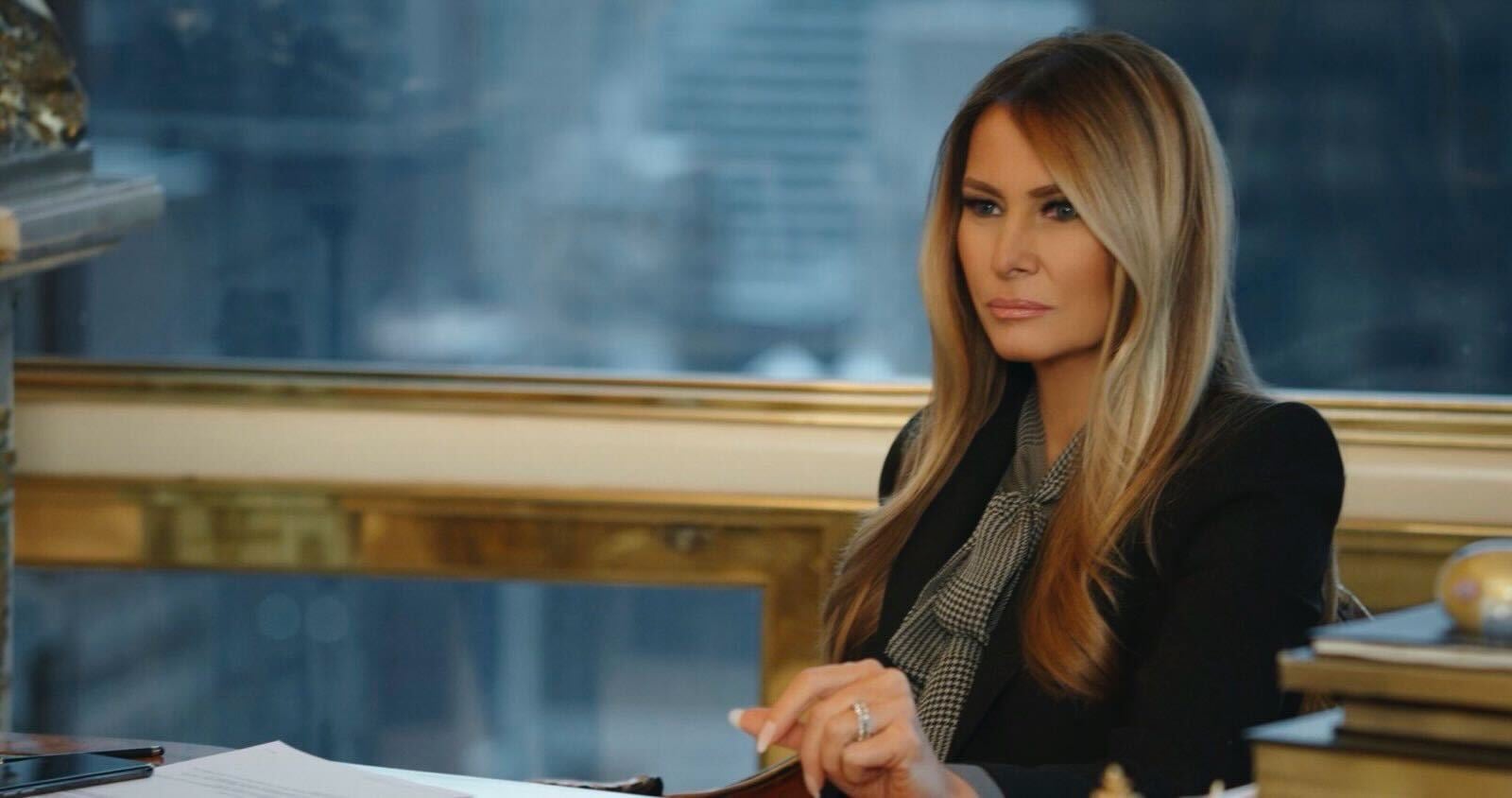
Melania Trump in her new documentary ‘Melania’ (Muse Films)
She goes on to say that the history of the production also “involves the (attempted) professional rehabilitation” of a man with a dubious reputation in Hollywood. That man is the documentary’s director, Brett Ratner, who in 2017 saw half a dozen women come forward to accuse him of sexual misconduct. The allegations, which Ratner denied, included claims that he had masturbated in front of actresses and forced one to perform oral sex on him. While the allegations led to the severing of his business ties with Warner Bros and effectively paused his career in Hollywood at the time, he has never faced any criminal charges.
So why would Melania, who is famously image-conscious, choose Ratner to helm her on-screen authorised biography? Burleigh thinks it is probably down to a “combination of [Ratner’s] connections to the peers around her husband and her proven record of trolling or ‘owning the libs’”. Burleigh points to the infamous footage of Melania wearing a jacket during a visit to a migrant child detention centre, on the back of which was scrawled in white: “I really don’t care, do you?”
As for whether Ratner directing her documentary is typical Trump-world defiance, or signals something deeper about Melania’s own views on the #MeToo movement, Burleigh says that, to her knowledge, Melania has never publicly objected “to her husband’s insults toward and treatment of women, nor expressed support for the Epstein victims”.
So what do we really know about the president’s wife? In the first 100-plus days of the second Trump administration, Melania reportedly spent fewer than 14 days at the White House. Some insiders called that estimate “generous”. Historians noted that such a low-profile residency has not been seen since Bess Truman, wife of President Harry S. Truman, nearly 80 years ago – a woman who hated the lack of privacy and the “formalities and pomp or the artificiality” that surrounded the presidency.
For Melania, eight decades later, Trump Tower in New York was apparently her chosen base of operations, where she wanted to stay close to their son Barron, then a freshman at New York University. Most of her social interactions appear formal rather than personal. Her close inner circle has always been family: her parents, Viktor and Amalija Knavs, who became US citizens in 2018 after being sponsored by Melania, and her sister, Ines Knauss, an artist who was last reported living in a $2m Trump-owned apartment on New York’s Upper East Side.
open image in gallery
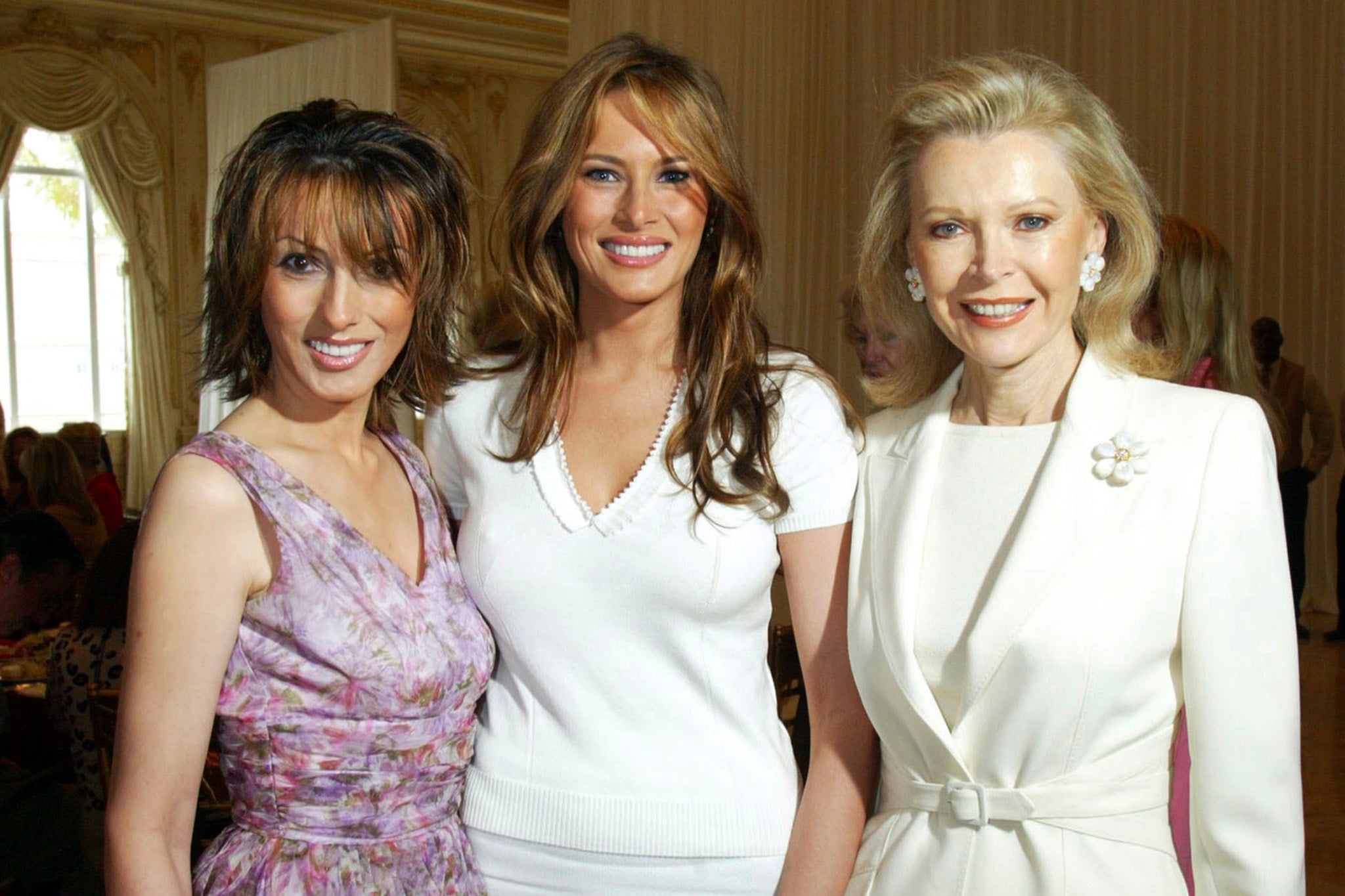
Ines Knauss, Melania Trump, and their mother Audrey Gruss at Mar-a-Lago February 4, 2005 (Getty)
Melania’s mother died in 2024 aged 78 and had been one of the most important people in her life; Barron reportedly spent so much time with Melania and his grandparents that he grew up with a distinct Slovenian accent.
While Melania has fulfilled ceremonial duties selectively, she has done so while maintaining strict personal boundaries, quite literally during Trump’s inauguration last year, when she wore a wide-brimmed hat that seemed to ensure a physical distance was kept between her and her husband. A few months later, Trump’s biographer Michael Wolff claimed on The Daily Beast podcast that the couple were effectively “leading separate lives”.
The White House communications team denied this, calling Wolff a “blithering idiot”, but Wolff said his reporting highlighted that the couple “do not in any way inhabit a marriage as we define marriage”, with little overlap in their daily personal routines.
open image in gallery
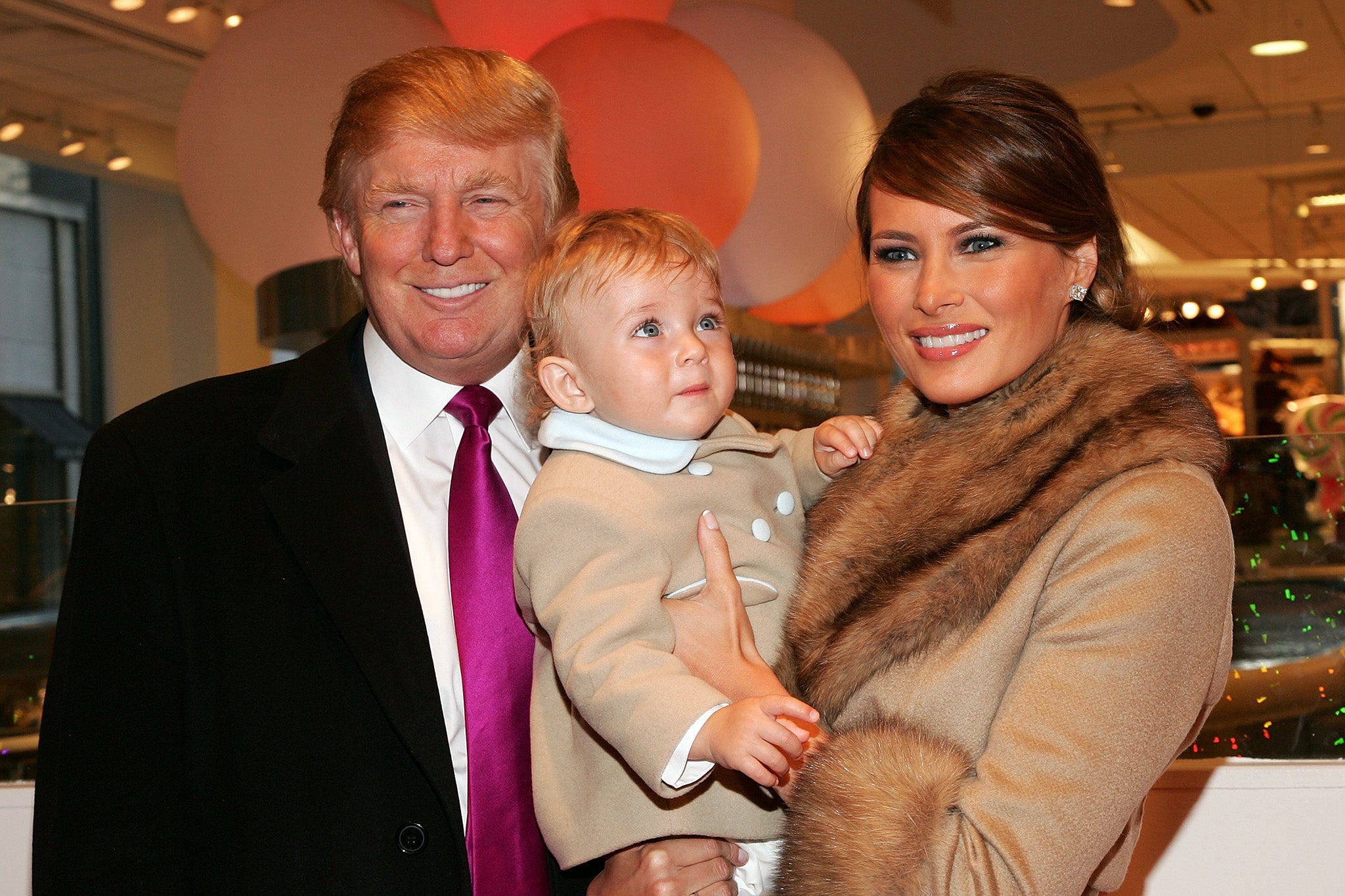
All smiles: Donald Trump, his wife Melania Trump and their son Barron in 2007 (Getty)
Bandy X Lee, a distinguished forensic psychiatrist who edited the 2017 New York Times bestseller The Dangerous Case of Donald Trump, has concluded that theirs is a union which serves specific needs. Based on her observations, Lee believes that Melania “would have been attracted to someone who could make her American, and rich, and elevate her social stature”.
She says human emotions are what make relationships rich and worthwhile, but that Donald Trump lacks many of those human emotions.
While not an “official” clinical diagnosis from a private examination, Lee’s book contains observations from 27 mental health professionals drawn from the president’s public behaviour. “A group of us evaluated him for levels of psychopathy,” she says, “and he scored very high.
open image in gallery
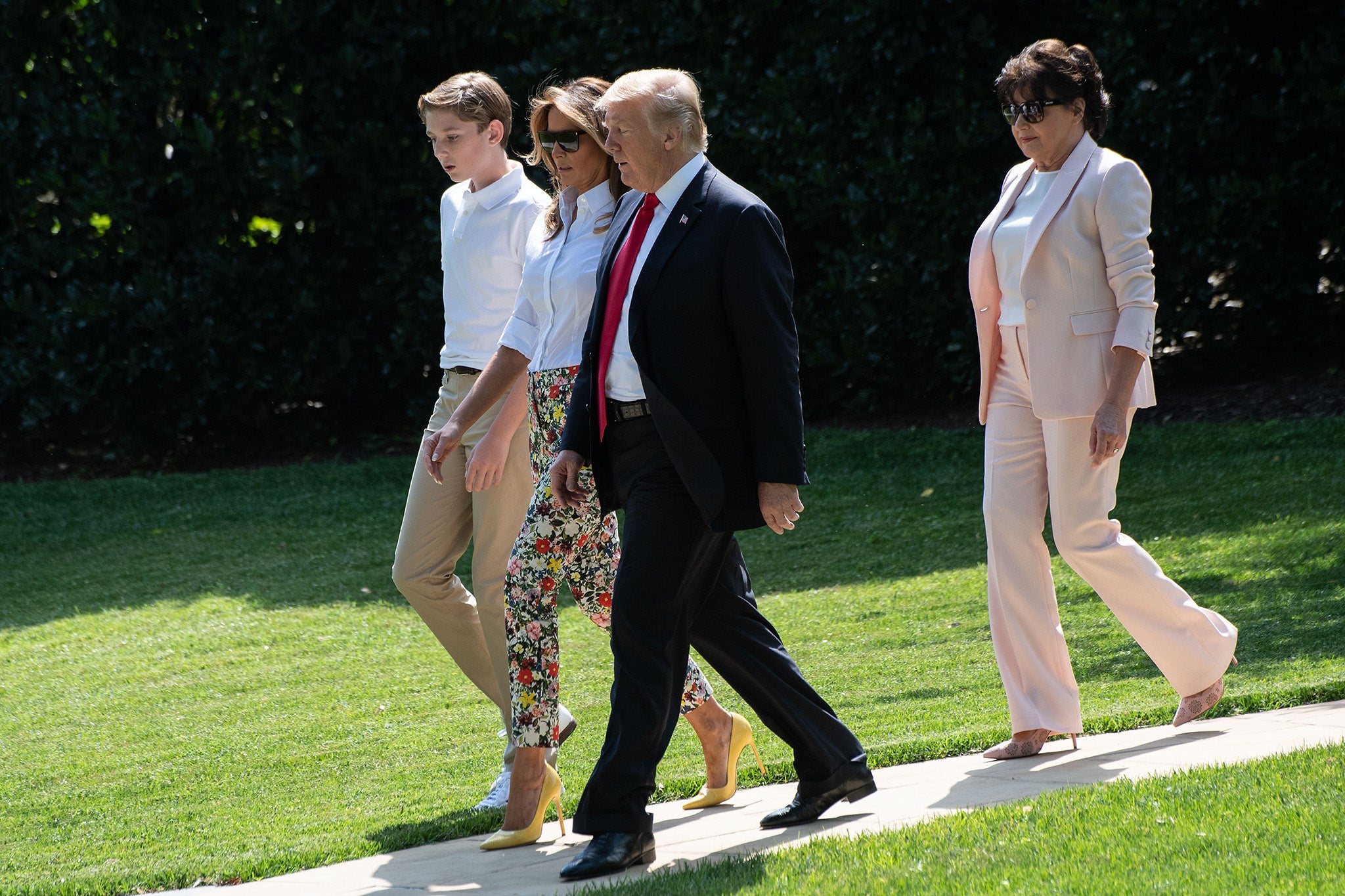
Family first: the Trumps with Melania’s mother Amalija Knavs and her son Barron in 2018 (AFP/Getty)
“Psychopathy is, by definition, someone who is incapable of love, incapable of compassion, and who does not have a conscience, and therefore is one of the most dangerous and destructive personality disorders known to psychiatry. But at the same time, they’re very deceptive and manipulative, so they can con people into believing the opposite about them.”
Lee says that this personality type is not usually drawn to others like itself in intimate relationships, “because their tendency is to exploit and make others into instruments of their own ends … and there’s very little you can exploit when the other person is exploiting you as well.”
Anyone who is more emotionally developed, she says, would, over time, find the relationship intolerable. If, as Lee suggests, such a personality is “incapable of love”, the separate-lives narrative takes on a more sombre tone, suggesting that Melania’s golden tower in New York has not been just a base for her son’s education, but perhaps a necessary fortress of emotional distance. A distance which, despite an autobiography, and now documentary about her life, the first lady has successfully maintained with us all.