
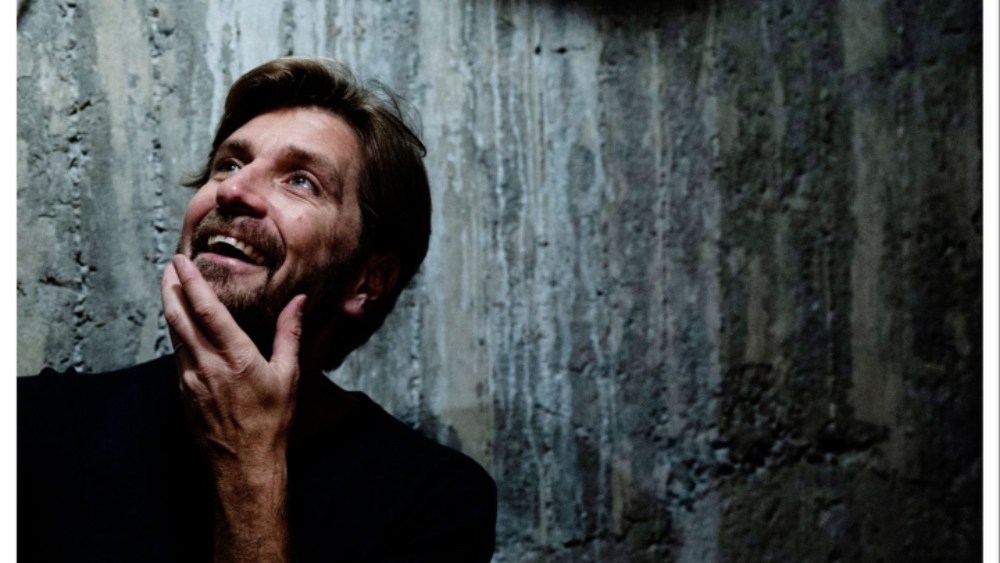
Oscar nominee Ruben Östlund opened up about his upcoming seventh feature “The Entertainment System Is Down.”
It follows passengers on a long-haul flight who are suddenly forced to confront their boredom when the entertainment system fails, as advertised by the title.
“Sometimes [the film] starts with a scene – like with ‘Force Majeure’ and that avalanche sequence. This time it started with a title. I was traveling a lot with ‘The Square,’ we were flying over the Atlantic and me and my wife were discussing that it would be an interesting set-up: What if all these screens stop working? Then we started to play around with it.”
“I would tell people about it and when you have a strong set-up, they share their stories. I stole them immediately – I don’t ask for permission. I didn’t know how it should stop working, though. One journalist told me about her flight: a man had a heart attack. They tried to save him and the defibrillator was connected to the system of the plane, and 80% of the screens shut down.”
“If someone dies, when they don’t manage to save his life, they continue flying. It’s not an emergency. And they have to keep him seated the whole time!”
As reported before, the film – which follows Palme d’Or award-winning “The Square” and “Triangle of Sadness” – stars Kirsten Dunst, Keanu Reeves, Daniel Brühl, Nicholas Braun and Samantha Morton.
“We are constantly distracting ourselves and it’s a certain kind of pleasure when you have to switch the phones off [when you fly]. The lack of screens can reflect our behavior. We are so obsessed with them,” he said at Göteborg Film Festival’s Nordic Film Market. Östlund is the Honorary President of the Swedish event.
“I checked if there was a similar experiment. There was one, so perfect I actually ended up shooting it – it’s one of the first scenes of the film. It’s called ‘the challenge of the disengaged mind’. It was done in 2014. Scientists asked people to go into a room, alone, and do nothing from 7 to 15 minutes. People had a hard time coping with that. They felt stressed and restless; some compared it to torture. After only 15 minutes?!”
“It’s a fundamental human state: we don’t like to do nothing. Then they added one thing: they gave people the option to push a button and give themselves an electric shock. Painful, but not harmful. Two-thirds of the men pushed the button of their own free will. One-fourth of the women did too.”
“We are harming ourselves and we know it, and we still push the button,” he said. Admitting that he also had given himself an electric shock as well. “One person pressed it 120 times.”
He wanted to make a film in only one setting.
“I don’t want to be disrespectful, but there are very few movies set on planes that are any good. It’s difficult to establish dynamics in a confined space like that. I said: ‘I want to have the whole airplane.’ We’ve been working with my producer Erik Hemmendorff for a long time, we knew we could get the financing, so we bought one: a Boeing 747. They are not super expensive.”
Östlund presented the behind-the-scenes footage during his talk and explained how the se – and the VR version of it – t was built. Hector Apelgren, who moderated the event, got to experience it via a VR set – much to audience’s delight.
The director also opened up about specific storylines.
“Airplane movies really don’t use the fact that you are surrounded by so many people. One man, Daniel Brühl, has his whole family there, but he falls asleep when the entertainment system breaks down. His wife, played by Kristen Dunst, is bored, and then she sees his phone. But he changed his code! She uses his face to unlock it, but his mouth is too open, and then finds out he has multiple affairs.”
“We thought: Let’s put them in a most painful place – in the middle of the ocean. And they have to deal with this conflict.”
“I put a young pregnant woman next to them, and a Muslim family in front of them to reflect on a different culture and what it means to be a Western man and a woman,” he added. He enjoys dealing with people’s shame because he’s dealing with his own shame, too.
“This is the human condition. I point fingers at everybody and at myself.”
Östlund also talked about some final scenes. (Warning: spoiler ahead)
“I didn’t know how to end it. I will tell you the ending now, because I have no problem with spoilers. We were working with these VR glasses and the idea came up: Maybe one passenger is completely immersed in this world? I knew the plane should crash in the Pacific Ocean. These technical issues become worse and worse, because of the human factor, which is how crashes happen.”
“Keanu Reeves is going to play an electrician, and then they tell him they can’t steer the plane anymore. He doesn’t want to be the hero, but he has to do the job. He’s trying to fix it, but it still goes down. It takes 15 minutes for this plane to go down. And then he fixes the entertainment system – by accident. I thought it was a beautiful image.”
Still, there was one thing missing.
“My wife said: ‘What if you put a VR person next to them?’ This guy, he misses out on everything. They have to wake him up during emergency landing but instead [of escaping], he looks around and decides to put them back on. And we follow him into that world. He’s playing a game called ‘Real VR Fishing’. This way, because he’s young, I could have an ending that talked about the future generation.”
He summed it up: “There is a conflict between humans and technology, which is very connected to my films and to the times we live in today.”
“I’m so curious what will happen when I’ll do the first test screenings of this film,” he said, admitting he’ll decide in February if the film will bow at Cannes in 2026 or in 2027.
“There’s this challenging aspect of it. All the distributors are so nervous.”