
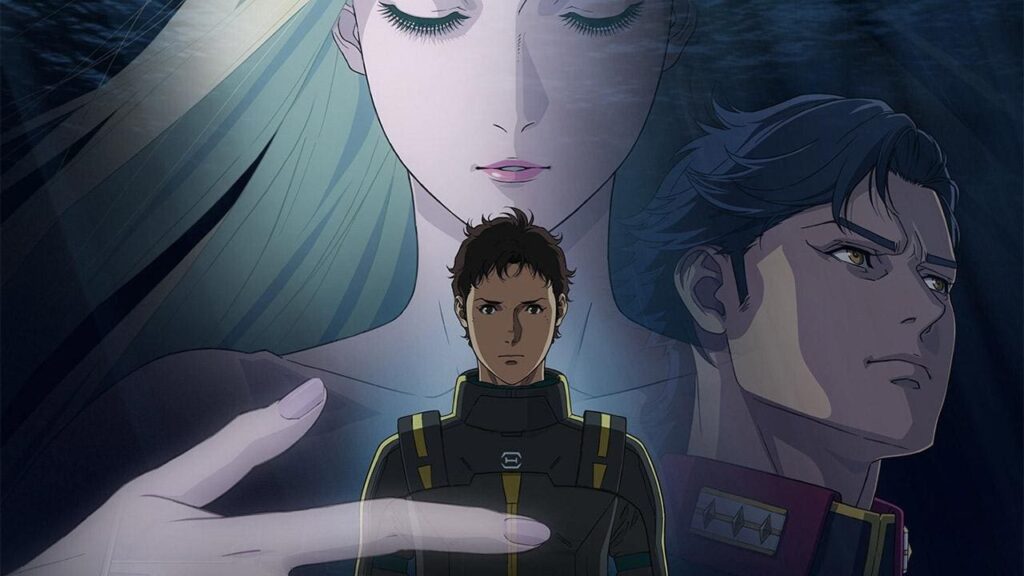
‘Gundam Hathaway: The Sorcery of Nymph Circe’ is a deftly directed anime.
© SOTSU • SUNRISE
Following the events of the first Gundam Hathaway movie, its sequel makes some interesting additions that are genuinely impactful.
While the first Gundam Hathaway movie was hampered by production issues caused by the COVID-19 pandemic, the sequel, The Sorcery of Nymph Circe, has had a significant amount of production time dedicated to it.
Following the events of the first film, the Federation’s Man Hunters are now portrayed more openly as the clear villains. Footage of Federation mobile suits forcibly quelling Earth-based dissent is something the movie opens with, to shocking effect.
This gives ample justification for Mafty’s actions, now that Hathaway Noa is somewhat unmasked as its leader.
Like the previous film, Shuko Murase’s direction is deft and very subtle, with character progression handled delicately. The build-up to each encounter is careful and thought-out, with each battle being strategic in its execution.
The Xi Gundam is also now more of an overt and mightier force than its brief appearance in the first film, and is clearly an integral part of Mafty’s resistance against Federation leadership.
That’s the key point here, as Mafty is an organization that’s aimed at severing the heads of the Federation from their engorged bodies. It’s a surgical instrument, but also one that has inspired broader and clumsier copycats.
The latter are something that Mafty wants to recruit, so the initial operation is part of that gambit, but by the end of the film, all bets are off, and the precarious abilities of Newtypes come to the fore.
The Sorcery of Nymph Circe is a unique film in the annals of anime. It’s not only wonderfully directed, but much of the backgrounds look photo-realistic, so having anime characters live in them is somewhat new.
The mobile suit combat is also unlike anything I’ve seen thus far in Gundam and really shows off what the advantages of Minovsky flight systems have within Earth’s atmosphere.
My only real criticism, and this is from someone who watched the film in IMAX, is that many of the important parts of it happen in very dimly lit environments.
For the first Gundam Hathaway movie, I assumed this was down to production limitations imposed by the pandemic, but it seems that with the sequel, this approach was actually a directorial choice.
Regardless, this is still a remarkable film, anime or otherwise, and also wonderfully dovetails elements from the narrative of Char’s Counterattack, which is definitely required viewing before you see this film.
Much of the latter part of the film is also expanded from the Hathaway’s Flash novels by Gundam creator Yoshiyuki Tomino, and gives much-needed context and justification for Hathaway’s actions as the leader of Mafty and the pilot of the Xi Gundam.
On the latter, the original design of the Xi Gundam was heavily weighted towards Moriki Yasuhiro’s unique design in the first movie, but by the end of this film, Kazumi Fujita’s influence is definitely felt a lot more.
The film also ends with the Guns N’ Roses song Sweet Child O’ Mine, and, much like its 1987 vintage, the song ties in wonderfully with Char’s Counterattack heritage, which now clearly underpins Gundam Hathaway.
Overall, this is a much more impressive and nuanced Gundam movie than the first Gundam Hathaway and fills my heart with hope that the finale to this movie trilogy may not be what any of us will expect.
Follow me on X, Facebook and YouTube. I also manage Mecha Damashii and am currently featured in the Giant Robots exhibition currently touring Japan.