
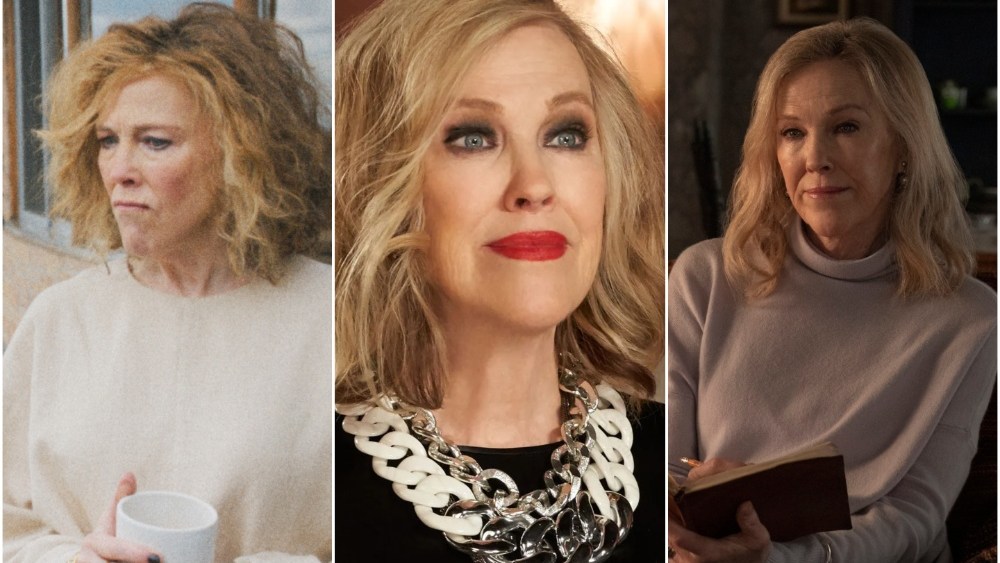
It’s always hard to believe a public figure is gone after their unexpected passing. But in the case of Catherine O’Hara, it’s especially difficult, because the actor and comedian remained such a vital and dynamic presence well into her later career.
For many fans, the Canadian performer was a justifiably nostalgic figure, with roles in beloved family movies like “Home Alone” and “Beetlejuice.” There’s a strong possibility you grew up watching O’Hara search frantically for Kevin McCallister every Christmas, or ward off ghosts on repeat via VHS. To legions of comedy lovers, her collaborations with Christopher Guest were a gateway drug to a wry, understated form of mockumentary satire, paving the way for spiritual successors like “The Office” down the line.
Yet O’Hara didn’t just influence the modern cultural landscape. She continued to play a vital part in it, a prominence facilitated by the breakout success of the sitcom “Schitt’s Creek” as well as the modern vogue for revisiting earlier classics like “Beetlejuice.” O’Hara then seized on the ensuing opportunities, becoming a dual Emmy nominee just last year for her roles in “The Studio” and “The Last of Us.” The two radically different series — one a free-wheeling Hollywood spoof, the other a harrowing post-apocalypse drama — produced a pair of performances that showcased O’Hara’s range and now add an extra bitterness to her loss. If O’Hara was still showing new sides of herself into her 70s, how much more did she have left to give?
On “Schitt’s Creek,” O’Hara reunited with her longtime collaborator and fellow countryman Eugene Levy to play Moira Rose, an instant calling card. A proudly out-of-touch lady of leisure forced to rub elbows with the hoi polloi, Moira’s impractical outfits and fish-out-of-water frenzy helped crystallize the comedic contrast that was the series’ creative engine. Recall Moira urging her adult son David, played by Levy’s son Dan in his breakout role, to “foooooold” in cheese as the pair scrambled to master the most basic of cooking tasks — the blind leading the blind into an enduring, much-memed setpiece.
In a more macro sense, the massive success of “Schitt’s Creek” on streaming (the show technically aired stateside on Pop TV, but most viewers found it on Netflix) brought O’Hara and her signature rasp to the forefront of the entertainment industry’s format revolution. Hundreds of millions of subscribers around the world could all laugh at Moira’s rocky adjustment to small-town life, and that new audience associated O’Hara with the present as well as the past. After the Emmys cemented her resurgence with an award for the series’ final season, O’Hara took advantage with a pair of supporting parts on two white-hot shows — plus Tim Burton’s hit revival “Beetlejuice Beetlejuice,” alongside fellow Netflix star Jenna Ortega.
Of all O’Hara’s recent roles, I’m most partial to her turn as a deposed gatekeeper on “The Studio,” a figure clearly inspired by the former Sony chief Amy Pascal. Patty Leigh may have shared Moira’s flamboyant sense of style, but she was also more capable, savvy and gracious about her reduced circumstances. Rather than resent Seth Rogen’s Matt Remick for taking over her old gig, Patty embraced the life of the producer, imbued by O’Hara with both worldly wisdom and thank-God-I-don’t-have-to-deal-with-this-shit-anymore glee. On “The Studio,” O’Hara’s Patty was treated with due respect as an elder stateswoman. But she also got to partake in the fun when a field trip to Las Vegas descended into druggy, ass-covering chaos. Patty wasn’t out of the game, and neither was the woman who played her.
Compared to “The Studio,” HBO’s elevated zombie drama “The Last of Us” isn’t exactly a barrel of laughs, and O’Hara’s grieving therapist Gail fit into the somber mood. (There’s something both eerie and apt in one of O’Hara’s final roles before her sudden loss being so concerned with loss itself.) Nevertheless, O’Hara’s natural humor bled into Gail enough to give the counselor an earthy, no-bullshit charm, giving credence to her candid advice for fellow survivors Joel (Pedro Pascal) and Ellie (Bella Ramsey). Drinking on the job and disregarding professional boundaries that hardly seem relevant at the end of the world, Gail had an irreverence that formed a natural continuity with O’Hara’s prior CV, even if she broke from it in others.
“The Last of Us” and “The Studio” completed their seasons less than a year ago, with “The Studio” honored at the Golden Globes just earlier this month. (Season 2 just began production, with no word as of yet on O’Hara’s planned involvement.) That O’Hara was such an active presence on our screens makes her abrupt absence all the more acutely felt. Most tributes involve looking far back into the past. To appreciate O’Hara, we only have to look in front of us.