
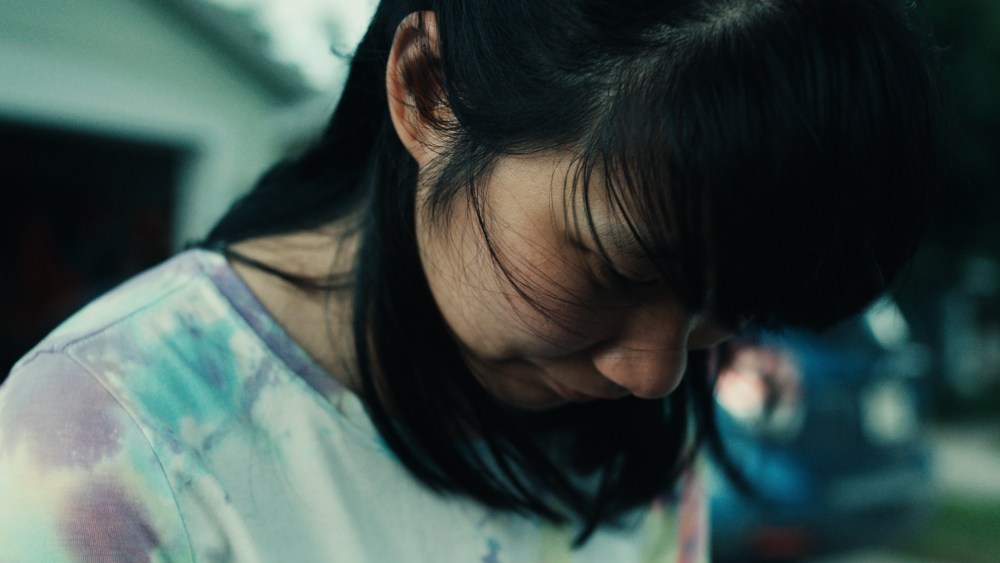
The family drama “Take Me Home” is a not an easy watch and (arguably harder than it needs to be). Yet, how could a film that takes such an intimate look at the fraying healthcare net through the story of a woman with a cognitive disability and her declining parents be otherwise? And yet, writer-director Liz Sargent’s debut feature — which premiered in the U.S. Dramatic competition at the Sundance Film Festival and won the Waldo Salt Screenwriting Award — is suffused with love: the director’s love for her own sibling, who stars in the film, but also the tenacious and so often under-appreciated love of caregiving.
That the trio’s affection often expresses itself in frustrated shouts, sighed exasperation or muted defeat, has become part of the bargain for 38-year-old Anna, who takes care of and is cared for by her parents (Victor Slezak as Dad and Marceline Hugot as Mom).
When we enter their cramped Florida home, this wee mutual aid society of three is in a brewing crisis. Acknowledging this on the parents’ part would signal a defeat. And, though able to navigate a great deal of the daily routine, Anna has gaps that will widen as her parents’ needs become more demanding.
“What are we doing today, Mom?” Anna asks as her mother sits in the bathtub on a stool shampooing her daughter’s hair. “We’re doing it,” she replies. She then leans on Anna in an unsteady effort to get over the bathtub rim. Yes, their lives have become this circumscribed. Later, a trip to the grocery store finds Dad staring at shelves of plastic-wrapped bread loaves. While this moment might offer a commentary on the weird plenty of the marketplace, Anna senses her father is lost an increasing haze and intervenes.
When in doubt, Anna’s likely to speed-dial her sister, Emily. Mom did the same thing and it’s clear that there’s been hurt feelings. As the sister who relocated to Brooklyn two years earlier, Ali Ahn carries the burden of being the one who escaped. We can hear in her voice, or see on a video call, that she worries about being dragged back in.
A tragedy forces her home, where the depth of familial decline startles and scares her. The looming challenges mute the grief. There’s so much to be done: financials, Social Security, disability and Medicaid benefits. Welcome to an increasingly common situation in which health concerns are swamped by economics. Call it “hanging on by a thread,” where any unexpected — or expected but unaffordable — setback will snip that thread.
It’s a lot, and Emily’s got a job back in New York that she not only will need to return to but wants to return to.
Early in “Take Me Home,” we learn that when they were children, Emily adored Anna. Those days aren’t gone but they’ve changed as one has gone into the world and the other has stayed at home. Anna, who lives in the now in many ways, doesn’t appear to feel resentment about this; Emily clearly has tinges of guilt. “Why did you adopt someone with a disability?” she asks her father.
When Anna heads over to the neighbor’s home, we learn that she hankers for social interaction. The viewer might wonder if the scene of Anna interacting with neighbor James (Shane Harper) and his drinking buddies, who are hanging out on lawn chairs in the drive, elicits more anxiety for her safety than the director intended. Or is this another example of how Anna’s capable and how her parents’ decisions have perhaps made her less equipped and more vulnerable in the world?
When Emily tells their father that they need to seek alternative living situations for him and Anna, he balks. On his own, he’ll learn just how out of reach something safe and suitable might be. Anna and Emily are the Korean adoptees of white parents. So are the director and her sister, but this is not an autobiography. “Take Me Home” is instead a deeply felt examination of the challenges so many face when familial love is swamped by economic reality. The director puts a lot on her characters’ shoulders to illustrate how unsupported and isolated illness and disability can be. She also tries to imagine an out. Note to us all: It’s not as sunny as it seems.