
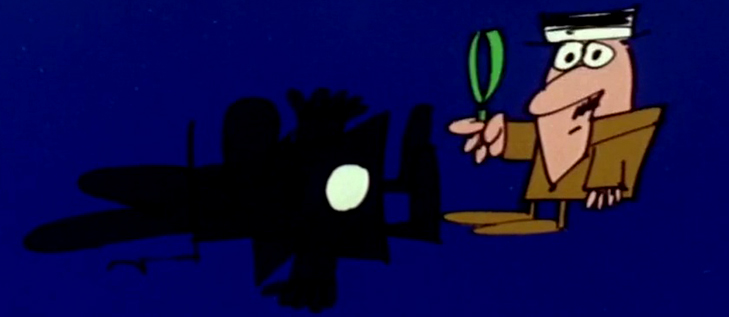
 A Shot in the Dark
1964 – 2.35:1
Kino Lorber – 4K Blu-ray
Starring Peter Sellers, Herbert Lom, Elke Sommer
Written by Blake Edwards, William Peter Blatty
Directed by Blake Edwards
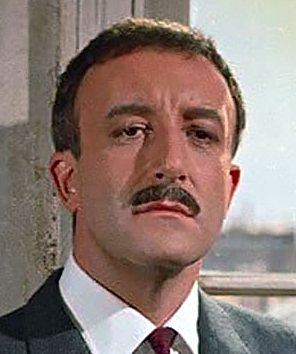 If a fountain is nearby he will fall into it, if a rake is close he will step on it, if an unloaded gun is tucked firmly in his holster, it will somehow go off. He has a French accent no Frenchman can understand. He is cosmically clumsy, each fumble igniting a chain reaction of disasters of Rube Goldbergian proportions. He is imperfect in every way except one; he is the perfect fool.
He is inspector Jacques Clouseau of the French Sûreté, an unremarkable looking man in mustache and trench coat yet responsible for a decades-long reign of error. Alan Arkin, Roberto Benigni, and Steve Martin each played the role but they are the tiniest of asterisks on the ledger—Peter Sellers is the quintessential Clouseau, past, present, and perhaps, god help us, in the AI future.
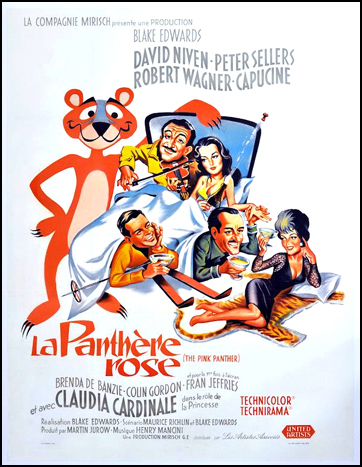 The detective first appeared in Blake Edwards’ The Pink Panther, the kind of colorful all-star cavalcade that was the rage in the early sixties—It’s a Mad, Mad, Mad, Mad World, What’s New Pussycat?, and Edwards’ own The Great Race come to mind. Though Panther was presented as a sophisticated affair filmed in an elegant widescreen format it is still a pretty square movie. It starred distinguished transatlantic mainstays like David Niven and Capucine, and up and comers like Claudia Cardinale and, lamentably, Robert Wagner.
The film is the cinematic equivalent of lounge music with Fernando Carrere’s overripe set decorations fit for the Mustang Ranch or the newly redecorated oval office. Henry Mancini’s music remains the go-to soundtrack for the “kind of man who reads Playboy.” The irony is that it was the defiantly clueless Clouseau who gave the movie its hipster cachet; the film rode his trench coat straight to the box office where The Pink Panther became an enormous success (apparently that success was foretold, its sequel went into production before The Pink Panther reached theaters).
Directed by Edwards, A Shot in the Dark was based on Marcel Achard’s L’Idiote, presented at the Théâtre Antoine in Paris in 1960 before moving to Broadway in 1961 where it starred Julie Harris, Walter Matthau, and William Shatner as Paul Sevigne, a bumbling Magistrate. The plot, involving a salacious murder, a frisky maid, and an accident-prone police inspector, was adapted for the screen by Edwards and a pre-Exorcist William Peter Blatty.
 A Shot in the Dark is more focused than its overcrowded predecessor and energized by the dry, prickly wit of indelible British farces like Sellers’ The Naked Truth and the bracing, distinctly American vulgarity of Edwards’ S.O.B. Sellers’ peculiar improvisational genius gave his vintage slapstick routines a modern edge—an unpredictable quality that could stand alongside the vanguards of 60s comedy, brainy neurotics like Nichols and May and Jules Feiffer. The supporting cast is a laundry list of superb comedians like Graham Stark (Clouseau’s long-suffering assistant) and André Maranne who ratchet up the humor by underplaying it, while George Sanders wallows in the icy superiority of a perennially bored monarch.
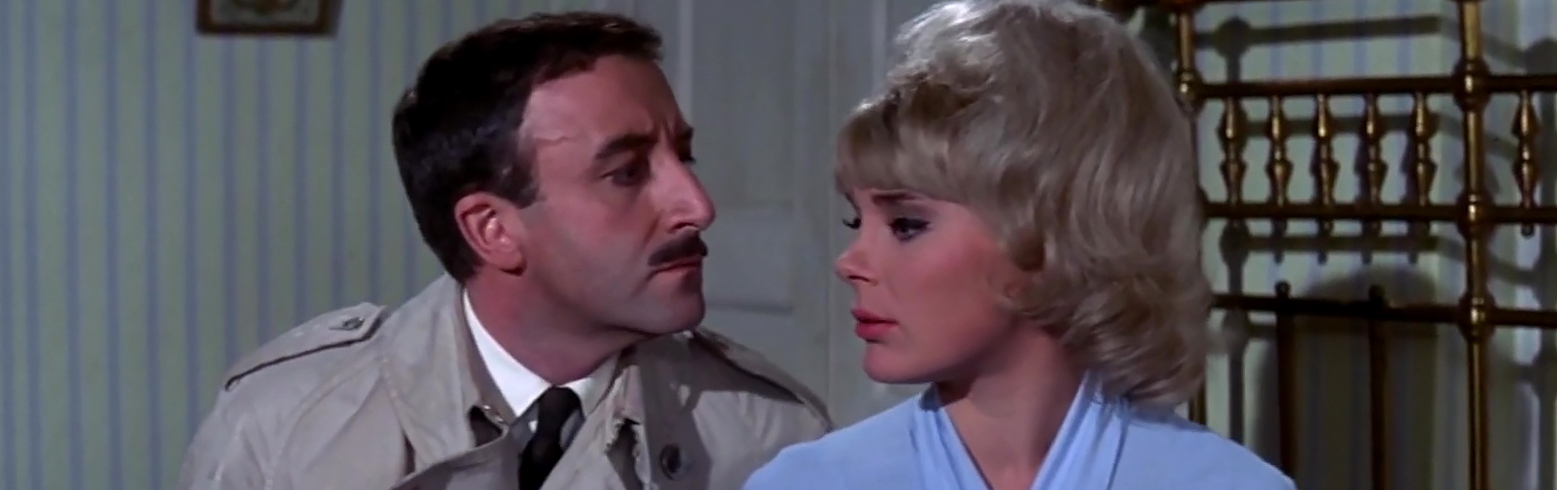
The filmmakers also made amends for a previous misstep: The Pink Panther ended on a sour note with Clouseau jailed for the crimes of Niven, Wagner, and Clouseau’s wife Capucine. Though the detective’s arrest as the daring jewel thief garnered him a squad of lovesick fan-girls, audiences still felt the poor inspector’s pain and did not enjoy seeing Clouseau humiliated (he may be a fool but he’s our fool). And It didn’t help that Capucine was the beautiful but frosty type, as calculating as a barracuda. Clouseau deserved better and A Shot in the Dark remedies that; the German actress/kewpie doll Elke Sommer was cast as Maria Gambrelli, Clouseau’s eager paramour, a maid always willing to lend a helping hand—or hands. If Capucine was cold-blooded, Sommer could burst a thermometer at 20 paces.
Sommer is the center of attention in the film’s opening sequence, a moonlit murder presented as a bedroom farce; with a small crowd of Romeos sneaking around to meet their Juliets, a shot rings out and one of the cheaters is dead. We don’t see the killer, and when they are revealed, it doesn’t matter: it’s Edwards’ own version of a MacGuffin, a contrivance to steer Clouseau through a series of investigations that he will bollox up without fail.
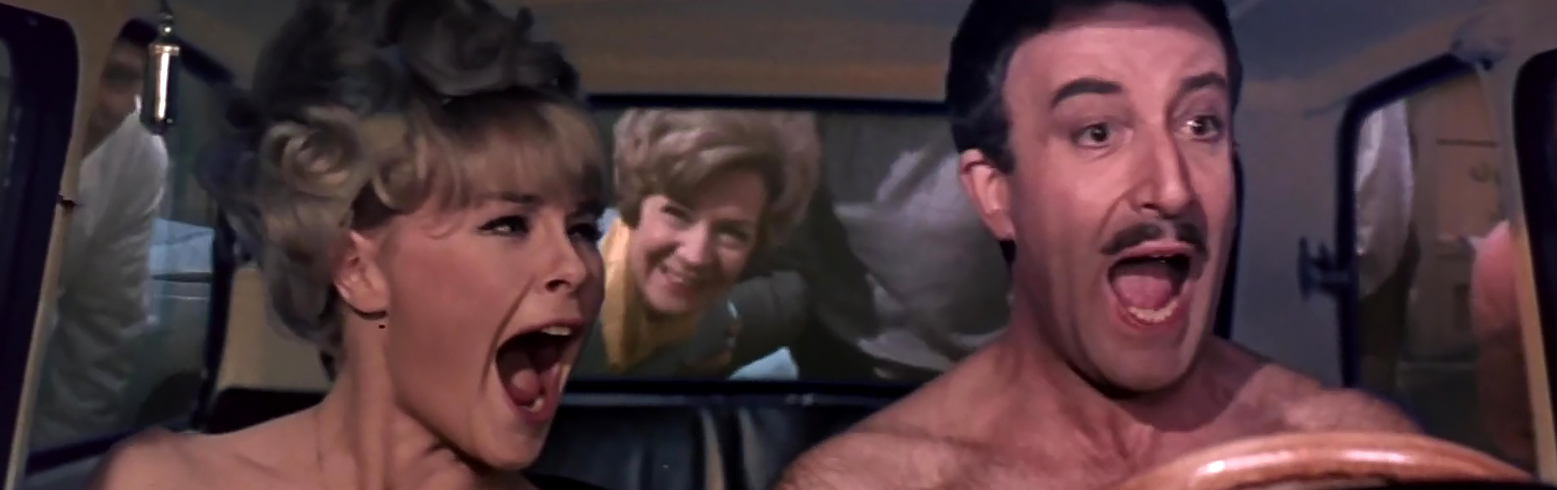
Those investigations are more like vaudeville routines; Sellers appears in one ridiculous disguise after another (balloon vendor, sidewalk artist) and the gags get funnier with each iteration—the topper is his nudist camp adventure which is particularly memorable for certain audience members hoping to see more of Elke. But clothes or no clothes, Clouseau cannot avoid tripping over his own two feet, inevitably landing in the office of Commissioner Charles Dreyfus, played by Herbert Lom.
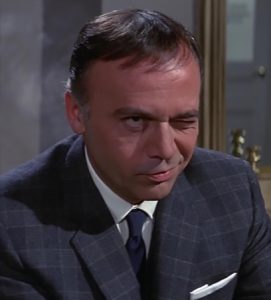 Born Herbert Charles Angelo Kuchačevič ze Schluderpacheru in Prague in 1917, Herbert Lom was as much the chameleon as Sellers, a formidable Nemo in Mysterious Island, a loathsome villain in The Ladykillers, and the poignant outcast of 1962’s The Phantom of the Opera. Though Clouseau is Dreyfus’s arch enemy the superintendent has his own warped respect for Clouseau’s near-supernatural powers: “If I had ten Clouseau’s I could destroy the world.”
The film ends as it began with Clouseau flailing in a fountain, but it is Dreyfus who is truly broken; devolved from the suave official we once knew to a barking mad wreck of a man. We last glimpse him down on all fours chewing on Clouseau’s leg and howling at the moon. Lom’s commitment to a part was always astonishing.
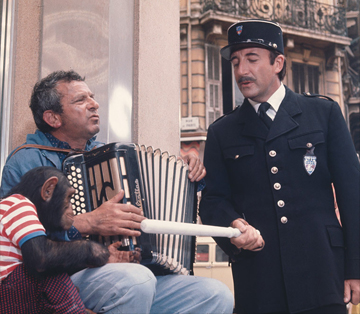 Clouseau and Dreyfus would reunite in 1975’s The Return of the Pink Panther—it was a more than satisfying entry that honored Clouseau’s legend while elevating it in memorable fashion (“Minky?” “What?” “You said ‘minky.’”) It too was a hit, in no small part because audiences were just happy to see their favorite imbecile in action again. It was such a success that the sequel machine went into full effect. And with each successive film Clouseau seemed to wither before our eyes in a series of increasingly joyless sequels. Apparently Sellers and crew became so tired they simply stopped. But in this world there is one thing that is as constant as a Northern star, and that is stupidity. As long as there are fountains, there will be a Clouseau to take the plunge. Vive l’Idiote.
Kino Lorber has released A Shot in the Dark (along with The Pink Panther and two of the sequels, The Pink Panther Strikes Again and Revenge of the Pink Panther) on 4K blu ray. It is a lovely presentation with a robust image that takes advantage of the UHD format, though it is not the great cinematographer Christopher Challis’s finest hour (The Tales of Hoffman and the glorious Genevieve are among his triumphs). The slightly drab look might not rest solely on the photographer’s shoulders: Challis also had to deal with the run-and-gun Edwards who cared not a whit about elegant mise en scène. What might be a deal-breaker are the high prices of the discs, but that is the world we live in. What is disappointing is the lack of extras, especially when so many little treasures, like behind the scenes footage of Sellers breaking up the cast (even Sanders!), are widely available.
Here’s Dan Ireland on A Shot in the Dark: