
Photo: Courtesy of Sundance Institute
The Korean-American director Kogonada took a startling turn for the sentimental last year with the hopelessly syrupy Colin Farrell-Margot Robbie studio romance A Big Bold Beautiful Journey. It was one of the bigger disappointments of 2025, especially when seen against the filmmaker’s previous features, which were models of independent-minded austerity, all subdued emotions and subtle compositions. With his latest, Zi, playing in Sundance’s Next section, it feels as if Kogonada has finally unleashed all his suppressed formalist energy. The movie feels like a release valve, an artiste’s penance.
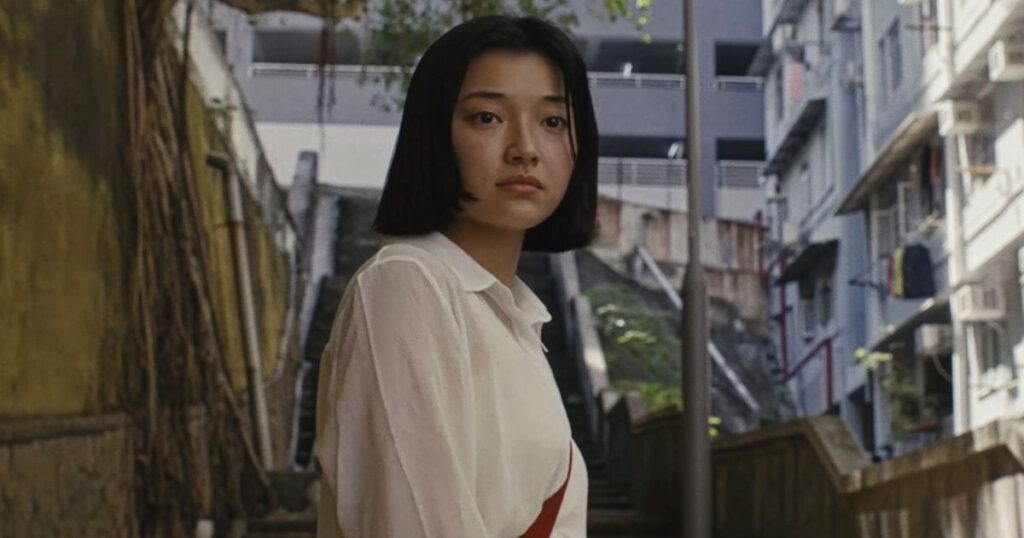
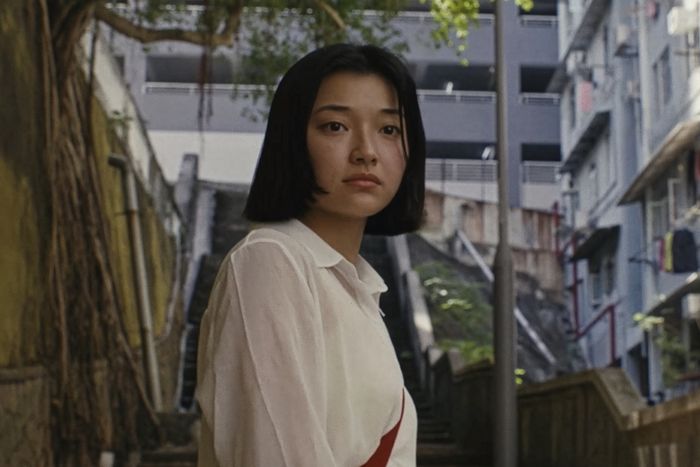
It’s a wisp of a thing, too, and I wouldn’t have been shocked to learn that it had been shot over a free weekend. (In actuality, the production reportedly lasted three weeks.) It plays like a travelogue of and a tribute to Hong Kong, with stolen shots of the city’s streets and markets and parks and trains, shaky images whose rough, mismatched qualities speak to the transitory nature of the characters. The extremely thin story follows Zi (Michelle Mao), a concert violinist wandering Hong Kong with an uncertain sense of where she is. A neurological condition, which may or may not be the result of a brain tumor, has her seeing visions of herself as well as indeterminate flashes of certain moments that could be from her past or her future. She explains some part of this to Elle (Haley Lu Richardson, who had her breakout performance in the director’s 2017 debut feature Columbus), an American stranger sporting a spectacularly bad wig who shows some concern for her. Watching them, meanwhile, is Min (Jin Ha), a man who is somehow connected to both of them.
That’s basically it. Oh, some emotional details do get filled in — Min and Elle were engaged for many years, it seems — but nothing that adds any genuine depth to the characters. Zi is at its weakest when it attempts conventional development and incident, and it doesn’t feel like Kogonada’s heart is in such exchanges either. At one point, Min kisses Elle, who recoils, and their ensuing awkward dialogue plays like a vague bit of improv, lacking anything resembling psychology or insight. (Richardson, ordinarily a fine performer, doesn’t seem to have been given much direction here.) Other revelations are either underplayed or waved away, as if the director can tell they’re meaningless as soon as they’re uttered.
And yet, Zi is fascinating, at times even rapturous. In the remarkable Columbus, architecture replaced emotion — the characters’ feelings were often expressed by the angles and facades and interruptions of the modernist spaces through which they moved in the town of Columbus, Indiana. Here, the film finds itself through texture: rushed shots of late-night alleyways, wide-angles of office buildings, city lights reflected through water onto the actors’ faces. Through Kogonada’s eyes, even after-hours piles of garbage become luminous. Shot partly on 16mm film, often at night, the heavy grain of the images begins to feel like a memory.
Much of Zi is set to music by the late Ryuichi Sakamoto, to whom the picture is dedicated, and here I think perhaps we can find a clue. Sakamoto was a performer who in later years, particularly after his cancer diagnosis, became fascinated by the way he could use his own fragility in his music — breaths, interruptions, a too-heavy press of a piano key, or maybe too light a one. The aesthetic impermanence of Zi is probably also intentional. “I’ve always felt untethered, detached, like I’ve been floating in this world,” Zi says at one point, and there is, believe it or not, a reason for her feeling this way (albeit an inexactly expressed one). Maybe that’s a cop-out — an excuse to not deliver the narrative oomph most features need to feel substantial, or worthwhile. Perhaps. And yet, even as I find myself scoffing at its inadequacies, at its sketchy insubstantiality, I can’t quite shake the memory of this delicate, disarming film. Kogonada wins.
See All