

Get the latest entertainment news, reviews and star-studded interviews with our Independent Culture emailGet the latest entertainment news with our free Culture newsletter Get the latest entertainment news with our free Culture newsletter
In February 2003, Martin Bashir’s notorious documentary Living with Michael Jackson aired. Coming 10 years after 13-year-old Jordan Chandler had accused Jackson of sexual abuse, the ITV film shocked viewers with a scene of Jackson holding hands with a 12-year-old cancer survivor, Gavin Arvizo, and admitting they’d shared a bed. “Why can’t you share your bed?” Jackson pleaded with Bashir. “The most loving thing to do is to share your bed with someone.” It was either staggering naivety on Jackson’s part, a failure to grasp reality, or a predator in plain sight.
Among the stunned viewers was Rabbi Shmuley Boteach, formerly a close friend-cum-spiritual adviser to Jackson, who appears in a new Channel 4 documentary series, Michael Jackson: The Trial. Meeting Jackson in 1999, Boteach had made it his personal mission to course-correct the King of Pop’s troubled life, to steer him away from self-destruction. Jackson was living a strange, lethargic existence – gobbling prescription drugs, crawling out of bed at 6pm, compulsively blowing millions of dollars, and struggling to finish his $30m, years-in-the-making album Invincible. By the time of the Bashir documentary, Boteach had parted ways with the singer. He battled against the “leeches, ass-kissers, bloodsuckers, and sycophants” in Jackson’s camp and was unwilling to watch Jackson kill himself. “I’m never gonna be a hanger-on. I love you, I’m your friend. But you are driving your life off a cliff and the drugs are going to kill you,” Boteach told him.
Boteach advised Jackson not to make the Bashir documentary; he also wanted to help change the perception of Jackson following the Chandler allegations, telling him, “You don’t work with children directly,” despite believing Jackson’s innocence. So, Boteach admits feeling sick when, in February 2003, he switched on the Bashir documentary at the exact moment Jackson was holding hands with Arvizo, telling the world they had shared a bed.
“I felt so physically ill,” Boteach tells me. “I can’t remember if I barfed or not, but I felt like I had to vomit. I said to myself, ‘You idiot.’”
Five months later, Arvizo told police that Jackson had molested him at the Neverland ranch, the singer’s home and personal funfair for entertaining children. A circus-like trial followed in 2005, and Jackson was found not guilty. Channel 4’s new documentary now delves into the accusations, the investigation, and the fallout. It also offers a new perspective on Jackson, with never-before-heard, often-uncomfortable audio (“The kids just wind up falling in love with my personality,” he says at one point. “Sometimes it gets me in trouble”) and never-before-seen footage. It also has interviews with people who have never publicly spoken – some from Jackson’s inner circle; others from the investigation.
“We wanted to feature people who could deliver an ‘insider’s account’ of events”, says executive producer Tom Anstiss. Anstiss and Wonderhood Studios spent two years developing the documentary and interviewing witnesses to create what Anstiss describes as “a vivid portrait of Michael Jackson as a troubled, reclusive, and psychologically complicated individual”.
open image in gallery
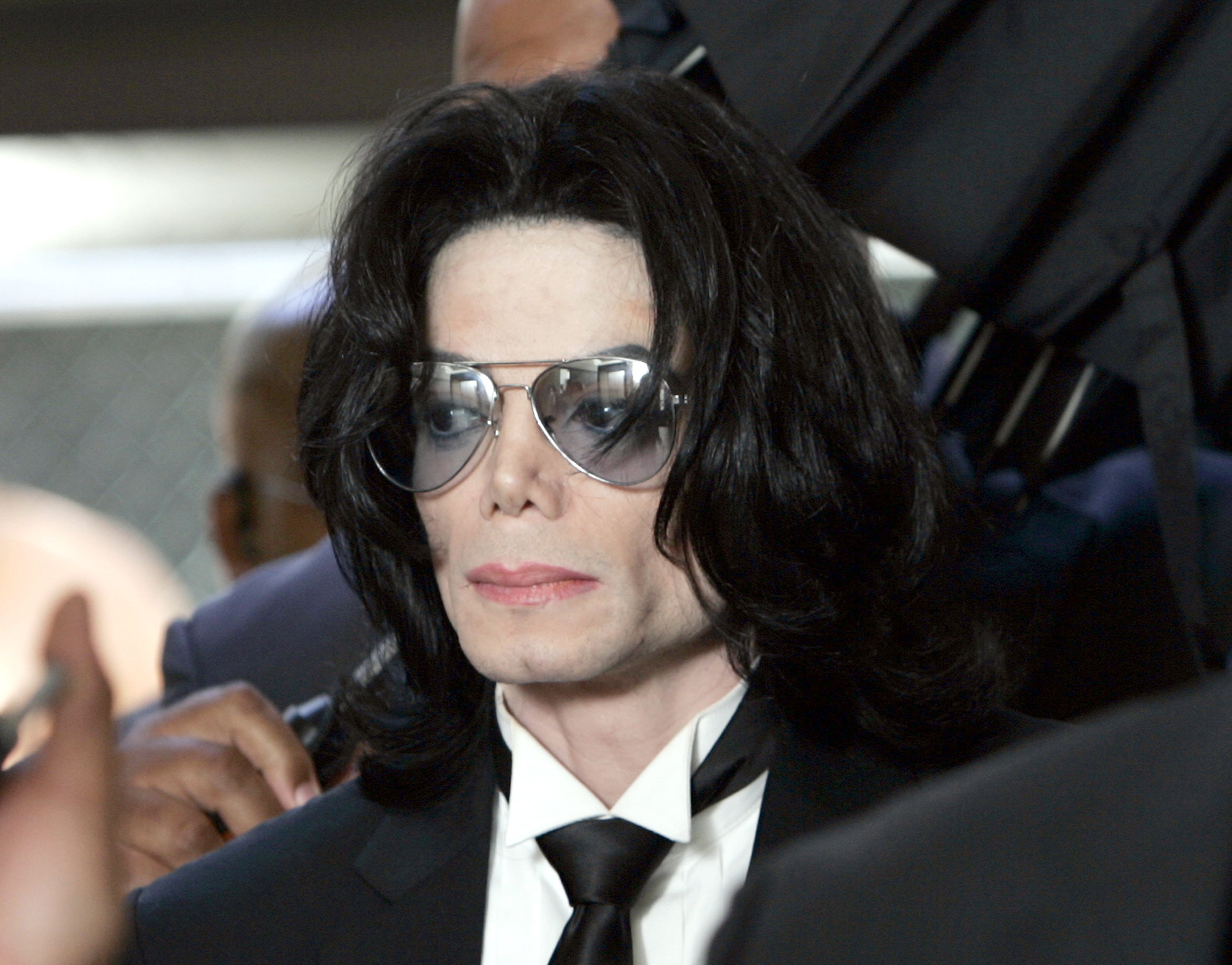
Jackson prepares to enter the Santa Barbara County Superior Court to hear the verdict read in his child molestation case on 13 June 2005 (Getty)
Asked about the impetus to make the documentary, Anstiss points to Jackson’s still towering presence in the cultural landscape: his music; his West End show; his upcoming movie biopic, Michael, signed off by the singer’s estate.
“His cultural legacy transcends generations,” says Anstiss. “But Michael Jackson has been surrounded by serious allegations of child sexual abuse for decades.” He adds: “We felt that it was very timely to take a forensic deep-dive and re-examine the 2005 trial, and explore how issues of race, fame and the media all impacted the American justice system.”
The four-part series details a lot of what we already know. Following the original 1993 allegations made by Jordan Chandler, Jackson paid a reported settlement of $23m. Ten years later, Arvizo told investigators – in upsetting interviews shown in the new documentary – that Jackson had given him alcohol, shown him pornography, and forcibly masturbated him. Jackson was indicted on nine counts of molestation and supplying alcohol, and a count of conspiracy to commit kidnapping and false imprisonment, relating to allegations that he trapped the Arvizo family at Neverland and attempted to remove them to Brazil. The trial was picketed by thousands of adoring – some might say hysterical – fans, while helicopters circled above and some 1,500 reporters descended on the scene. Even the Nation of Islam turned up in support of Jackson, who exhibited typically bizarre behaviour – arriving late to court in pyjamas, and clambering on top of a car to wave at the mob.
Until now, very few people will have heard him talking about the time he spent with Gavin Arvizo
Documentary producer Tom Anstiss
Other boys Jackson had befriended – including Macaulay Culkin and Wade Robson – testified that they had never been molested. That, along with Arvizo’s confusion over specific dates, and damaging testimony from his mother, Janet, contributed to Jackson’s acquittal. “The jury hated her,” says prosecutor Ron Zonen, who also speaks in the series. “That was exactly what the defence wanted – they wanted the jury to believe this was nothing but a woman scheming to get a huge amount of money.”
Zonen knew Janet was a bad witness, with a tough personality that he attributes to her having been the victim of an abusive relationship, but he didn’t believe Janet was motivated by money.
Jackson died from a drug overdose in 2009. Later, Robson, who had previously defended him, accused Jackson of abusing him as a boy. Robson and fellow accuser James Safechuck made their claims in the devastating 2019 documentary Leaving Neverland, a convincing account of trauma and grooming.
Among the most gripping new material in Michael Jackson: The Trial is the audio of Jackson, taken from 37 hours of conversations recorded between him and Boteach between 2000 and 2001. “If I had to guess, these tapes are arguably the most emotionally raw, self-revealing recordings ever made of a mega-star,” says Boteach.
In the featured clips, Jackson talks about abuse perpetrated by his father, Joe, and how he was exposed to strippers in nightclubs as a young child. He also talks about the Chandler case, and his friendship with Arvizo, about which he says: “If you told me, right now, that ‘Michael, you could never see another child,’ I would kill myself. And I swear to you, I do it because I have nothing else to live for.”
“It’s unique, emotionally charged, and extraordinary,” says Anstiss. “Michael Jackson was never called to testify during the 2005 trial, so until now, very few people will have heard him talking about the time he spent with Gavin Arvizo.”
open image in gallery
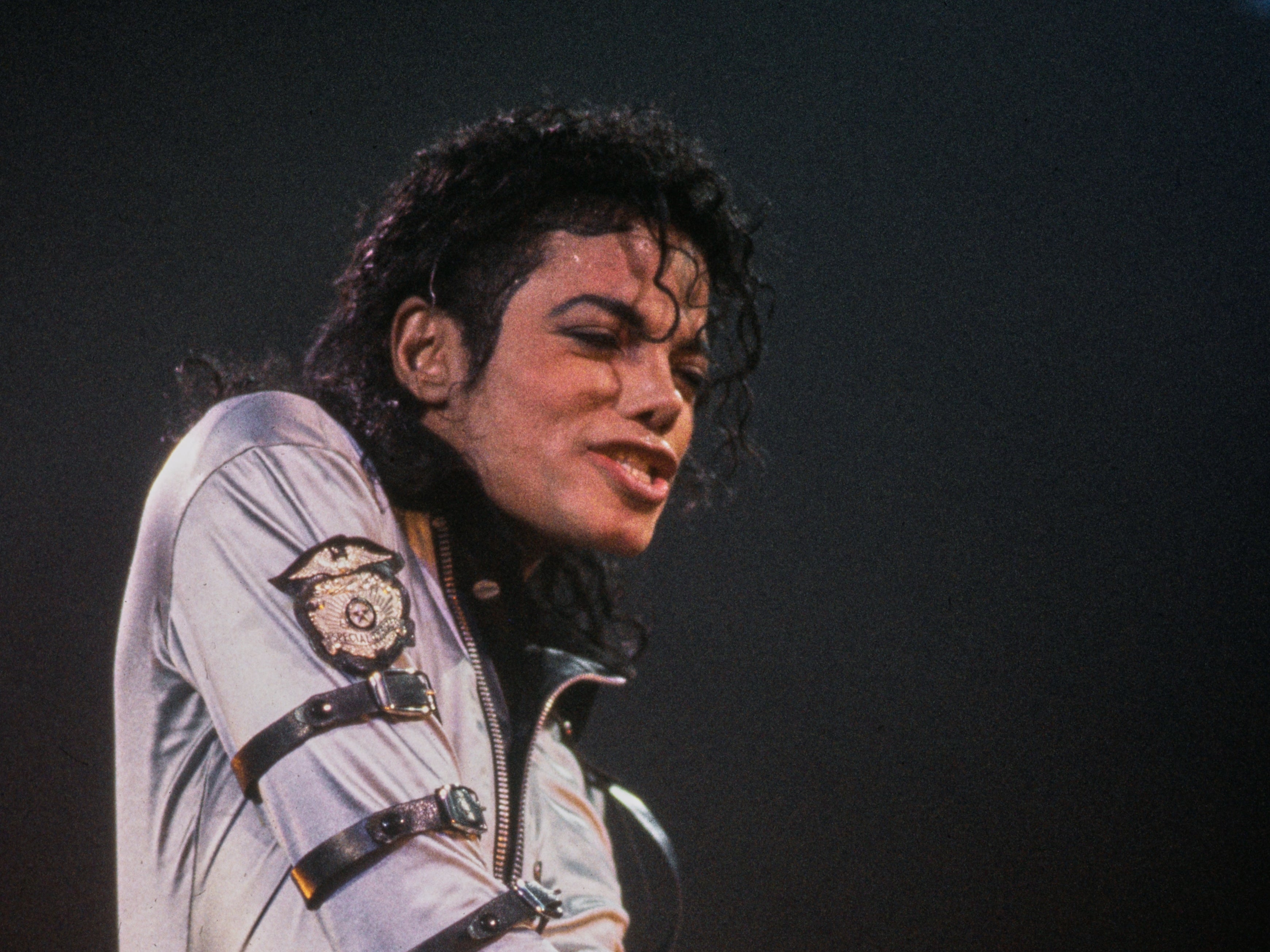
Michael Jackson in 1989, performing during his Bad tour in LA. (Photo by Vinnie Zuffante/Getty Images) (Getty Images)
Boteach knew Arvizo and does not believe the allegations. “There was a spark of the divine in Michael that was very luminous,” he says. “I miss him still today.”
He’s one of several people in the documentary who speak in defence of Jackson – along with the less-than-likeable former Jackson family lawyer, Brian Oxman – but Boteach did publicly condemn Jackson the day after the Bashir documentary was screened.
“Even if you never touch a child sexually, an adult can’t share a bed with a child who’s not their own,” he says now, looking back at the Bashir controversy. “Do I believe he was a molester? No. Do I think he crossed uncrossable lines – red lines – with children? Absolutely, of course.”
The documentary’s most chilling scenes arrive during the footage of Jackson and Arvizo wandering the grounds of Neverland together as if on a romantic day out. While snippets have been seen before, Anstiss and his team had access to the full rushes. The footage was originally edited for Jackson by videographer Christian Robinson, who now speaks on camera for the first time. At the time, Arvizo was still in cancer treatment and had lost his hair from chemotherapy. If you believe the allegations, those images – a cancer victim walking hand-in-hand with Jackson – are as dark as it gets.
Elsewhere, there’s a damning story about a Jackson associate who hid a naturist magazine from investigators. The magazine had pages of ads for mail-order videos featuring naked children – some of the videos have been circled “to be ordered”.
open image in gallery
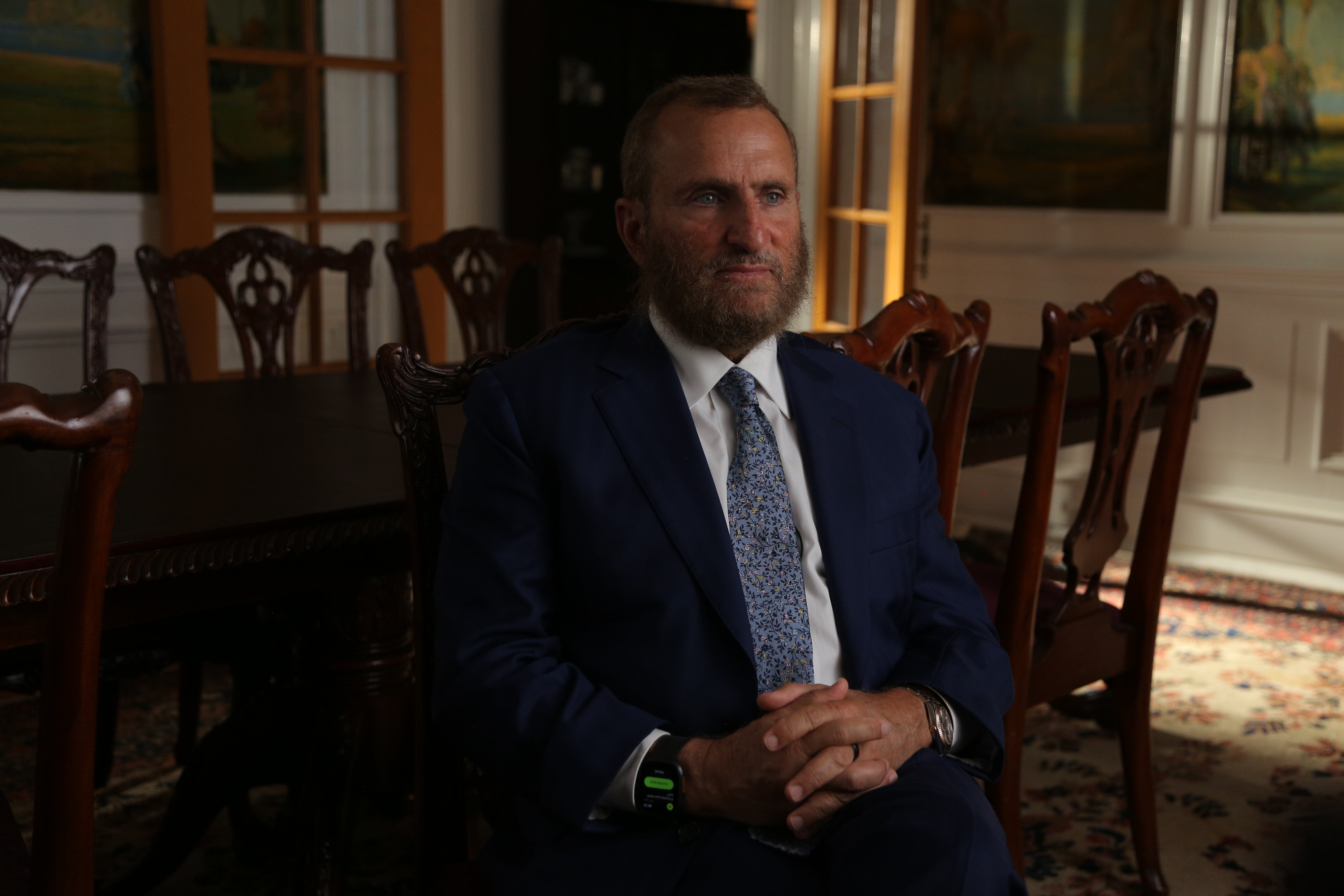
Jackson’s former ‘spiritual adviser’, Rabbi Shmuley Boteach (Channel 4)
One of the most compelling, matter-of-fact contributors is Zonen, who was a senior prosecutor in the Santa Barbara district attorney’s office.
Zonen had been there during the Chandler investigation; when Arvizo made his allegations against Michael, Zonen tells me he had “already formed a preconceived notion of him as a paedophile … He was pretty grotesquely, in our minds, in that category.” For Zonen, Arvizo was a credible, consistent witness. “He presented just like any other child who had been exposed to that behaviour. It never occurred to me he was fabricating.”
Particularly interesting is Zonen’s account of how Jackson’s stardom “changed the equation”. As the trial began, prospective jurors were starstruck; two women selected to sit on the jury seemed smitten. “They’d come into the courtroom and smile at him,” says Zonen. “He’d smile back. They were almost giggly!”
Zonen also paints a disturbing picture of the power and wealth wielded by Jackson, something that seems at odds with his image as a softly spoken man-child and perpetual victim.
“He had huge resources, and public support from very high-profile people,” explains Zonen. “We were outspent. They had more lawyers than we could count.”
According to Zonen, Jackson’s team dug deep into the Arvizos’ lives, obtaining all kinds of info. “Banking records, medical records, psych records, employment records, job applications,” says Zonen. “There’s nothing they weren’t able to get.” They even had the gynaecological records of Arvizo’s teenage sister. “Most of it was completely irrelevant, but there was a level of harassment that had a psychological consequence to it. Can you imagine if someone was going after you that way?”
Jackson’s team also subpoenaed Janet Arvizo on the day she was having a baby. “I had to go into court on a motion to quash the subpoena because she was giving birth! It was a scheduled delivery and they knew it.”
A question that lingers over the allegations is what to do with his music. It’s not possible to just cancel “Billie Jean” – it’s a foundational text.
Surprisingly, Zonen still enjoys it. “I’m not going to turn off the radio if a Michael Jackson song comes on,” he says. “I’m able to separate his accomplishments from who he was and what he did in the context of the criminal case.”
But Zonen rejects the notion that just because Jackson sang beautifully, he wasn’t capable of committing the crimes he was accused of.
Even people who loved him understand that the truth will likely always be a mystery.
“Do I believe that Michael Jackson ever sexually molested a child? I do not believe that,” says Boteach. “Although I have to admit, none of us will ever know.”
‘Michael Jackson: The Trial’ begins on Channel 4 at 9pm, Wednesday, 4 February
If you are a child and you need help because something has happened to you, you can call Childline free of charge on 0800 1111. You can also call the NSPCC if you are an adult and you are worried about a child, on 0808 800 5000. The National Association for People Abused in Childhood (Napac) offers support for adults on 0808 801 0331