
(Credit: Andwhatsnext)
Thu 5 February 2026 0:30, UK
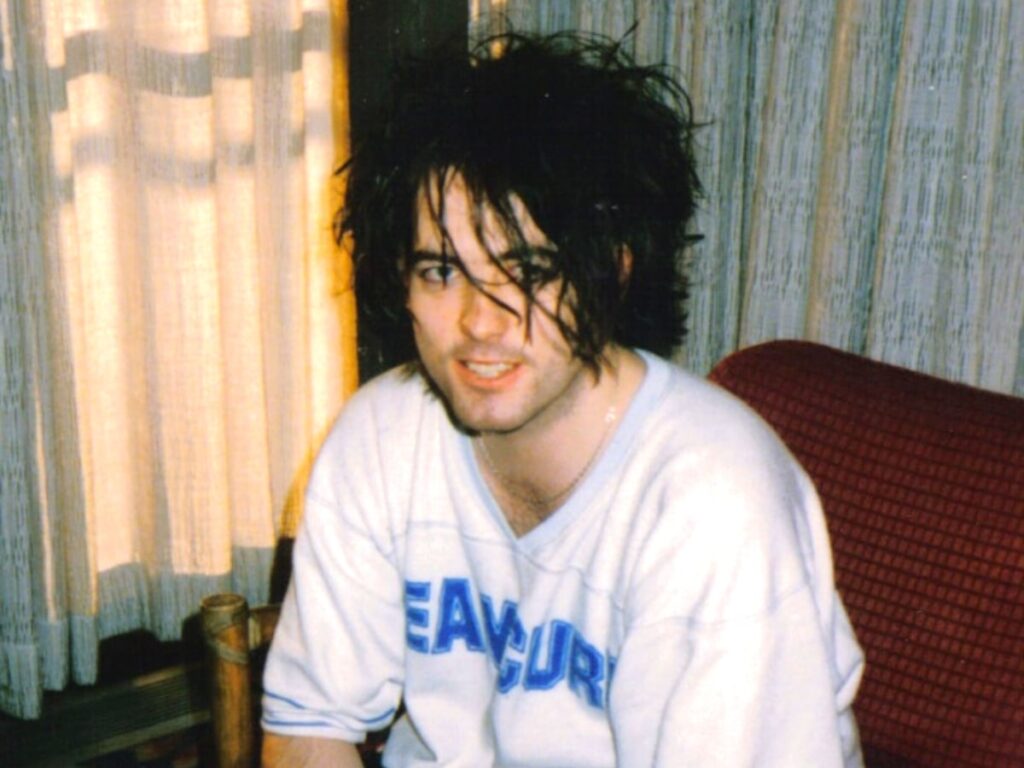
Robert Smith may be a post-punk icon in his own right, but he would have been nothing without Siouxsie and the Banshees helping him along the way.
After all, as much as The Cure had been rumbling away in some form ever since 1976, it was the seminal experience of getting up on stage and being able to stand beside Siouxsie Sioux, watching her beguile the audience in all her glory, that taught Smith more about the art of being a truly captivating frontperson than he ever would have learned in his own time.
As Steven Severin, the bassist of The Banshees, put it himself, “I think he [Smith] learnt how to be a front person, just by standing next to Siouxsie for a couple of months every night, I think he completely changed his persona on stage because of that; he came out of his shell… I think that he learnt how to be a bit more flamboyant, and how it was OK, and he saw how Siouxsie’s more ‘diva’ moments were kind of acceptable because they were the front person, and I think he learnt how to get away with stuff.”
There was no understating just how pivotal that time was for Smith in his younger years, even though he was undoubtedly an exciting talent without Sioux ever being in the picture. But under her wing, he truly honed the craft of how to be a rock star, cultivate a persona that was just endearing enough while possessing masses of intrigue and enigma, and how to paint an iconic face.
But eventually, as much as that tutoring period was the key to changing the trajectory of the rest of his life, there came a time when he was faced with no other choice but to fly the nest. You could hardly call Sioux’s environment a comfort zone, but with all its danger, speed, and confrontation, Smith knew he had to try it for himself.
What impact did The Banshees have on Robert Smith?
There was also the sheer fact that there are only so many hours that one man can possibly fit into a day, which was the main reason Smith cited for ultimately stepping back from The Banshees.
“I don’t actually spend more time with The Cure,” he explained in a 1984 interview, “It’s just that what would have been my free time had to become my time with The Banshees, and that just got a bit too much for me.”
Nevertheless, Smith was clear that the experience with the band was one he never regretted for a second, despite the time pressures it might have placed on him. “It was something that I really wanted to do because I wanted to step back from just being Robert Smith of The Cure,” he said, revealing that he needed a bit of breathing space in order to understand what he really wanted out of being a musician.
It was clear, both from his accounts and from others in the band, that the period spent with The Banshees was an utterly pivotal one, even if he didn’t quite realise the magnitude of it at the time. Without it, The Cure might have marched on, but possibly missing the magic of persona that Sioux taught its frontman.
Smith himself can never deny the legacy of that time in terms of what it did for him as a musician. The Banshees were his friends, but they fundamentally changed him and shaped his life into the titan of the alternative scene that he became. The post-punks showed him the path – but leaving them proved it was his time to walk it alone.
Related Topics