

 Getty Images/NBC/Ringer illustration
 By Ben LindberghFeb. 5, 3:41 pm UTC • 11 min
In Season 5, Episode 14 of 30 Rock, Kenneth the Page (Jack McBrayer) lists the rewards Tracy Jordan (Tracy Morgan) will reap from completing his quest for an EGOT: an Emmy, a Grammy, an Oscar, and a Tony. The Empire State Building will be lit in the color of his choosing. SeaWorld will let him borrow a killer whale for spring break. And Steven Spielberg wants him to star in his next movie.
“Kate Capshaw’s husband?” Jordan exclaims.
Jordan and Kate Capshaw’s husband now have something in common: Spielberg has EGOTed, too.
Spielberg completed his EGOT on Sunday at the Grammys, where he collected his “G” for producing the 2024 documentary Music by John Williams, which won Best Music Film. Spielberg has three Oscars (for directing Schindler’s List and Saving Private Ryan) and four Primetime Emmys (for executive producing Band of Brothers, Taken, The Pacific, and, of course, the classic A Pinky and the Brain Christmas), so the “O” and “E” were well in hand. What wasn’t widely known is that the 79-year-old Hollywood legend had the “T,” too. Unbeknownst to almost everyone, Spielberg secured a Tony for producing A Strange Loop, which won Best Musical at the Tony Awards in 2022.
When word went out in the trade publications that Spielberg had EGOTed, confusion ensued in some quarters of the internet: ’E got an EGOT? Granted, the Grammy win wasn’t exactly emblematic of the EGOT ideal of multifaceted creative expression: Spielberg, a movie maker, won the “music” award for helping make a movie. Plus, he was one of almost a dozen producers of the documentary, which wouldn’t have been eligible for the award if not for a rule change at the 2024 Grammys that removed the previous requirement that at least 51 percent of any film under consideration consist of “performance-based material.” But hey, who has done more to commission and popularize music by John Williams than Spielberg, the composer’s creative partner on 30 films? Thus, few would begrudge him his Grammy. But a Tony? How and when did he check off that box on his EGOT bingo card?
No formal body or committee bestows or certifies EGOT wins, so Wikipedia is as authoritative an arbiter as any. And initially, Wikipedians were divided on the matter of the mysterious Tony: Since Sunday’s ceremony, the entry for “EGOT” has received dozens of edits, most of them Spielberg-related. This encyclopedic dust-up isn’t one of Wikipedia’s wildest edit wars, but it has resulted in Spielberg being listed and delisted multiple times as the 22nd competitive EGOT awardee.
An extensive back-and-forth on the “Talk” page for “EGOT”—along with similar exchanges among dubious commenters on many a Reddit post—lays out the causes for skepticism. Spielberg’s Tony win wasn’t publicly reported prior to his Grammy win, which seems strange considering his fame. Although Spielberg is listed as a producer on A Strange Loop’s Internet Broadway Database page, he wasn’t added to it until June 2024, and he isn’t credited for producing the play on the page for 2022 nominations on the Tony Awards website. Nor was he listed in the Playbill for the award-winning production of A Strange Loop at the Lyceum Theatre, as he was for two other Tony-nominated musicals he subsequently produced, 2024’s Water for Elephants and Death Becomes Her. The Tony rules and regulations state, “The producers eligible for nomination for a Tony Award shall include those producers listed above the title in the opening night program for a production together with any other producers as may be approved by the Tony Awards Administration Committee consistent with its usual policies.”
One unnamed Wikipedia editor, who evidently felt strongly enough about Spielberg’s Tony to create an account for the sole purpose of policing the director’s presence on the EGOT entry, wrote, “it just feels like they’re trying to credit him with a Tony to make him an EGOT winner after the Grammy win.” Was Spielberg’s supposed Tony one more manifestation of a societal assault on truth? Most editors weren’t so conspiracy-minded. They just wanted to ensure that Spielberg’s inclusion cleared the site’s standard for proof, and probe what his previously unsuspected Tony might signify for the page’s accuracy. After all, in the wake of an announcement that threw EGOT talliers for a (strange) loop, who’s to say which other EGO winners might have a secret T to their name? “I don’t oppose it, I just don’t understand it!,” editor eeveeman said about Spielberg’s EGOT designation. Multiple editors expressed a desire for some source aside from a Variety report that appeared to provide the only corroboration from the Tonys that Spielberg had actually won one.
Well, here’s a second source: Reached by The Ringer, reps for Spielberg and for the Tonys confirmed his win for A Strange Loop. Spielberg’s rep referenced a photo of the award on Spielberg’s mantle; the Tony reps didn’t respond to a request for further information about Spielberg’s eligibility, but they told Variety that “he did receive a statuette as part of the production’s credited producer group, listed under the ‘et al’ designation.” This was enough for eeveeman, who ultimately concluded, “Lots of discussion elsewhere on the merits of the various awards and winning for being a producer but its [sic] not really for us to debate the minutiae—seems he definitely has one of each, so an EGOT winner he is!”
So yes, Spielberg definitely did win a Tony, and, by extension, complete the EGOT. But the minutiae are still debatable. The question isn’t whether Spielberg EGOTed; it’s what his win says about the process and prestige of obtaining the EGOT title. Has the EGOT lost the plot?
Although the lead paragraph of Spielberg’s Wikipedia entry now culminates in the sentence, “He is one of 22 people to achieve EGOT status,” the stakes for Spielberg himself seem low. The popular appeal, critical acclaim, and creative legacy of the highest-grossing director of all time—who, in addition to making the movies that earned him Academy awards, has helmed beloved blockbusters Jaws, Close Encounters of the Third Kind, E.T. the Extra-Terrestrial, the original Indiana Jones trilogy, and Jurassic Park—hardly hinge on whether he holds a distinction that’s even more made up than most artistic honors. The man has a Presidential Medal of Freedom, a National Medal of Arts, and a Kennedy Center Honor from when it was still called the Kennedy Center, not to mention a Forbes post that says he’s the world’s wealthiest celebrity.
At first glance, the ramifications for the EGOT as a status symbol may seem marginal also. Spielberg’s standing as an honoree does nothing to diminish the collective reputation of the EGOT elite; it’s not as if some unaccomplished charlatan qualified for the club on a technicality. By any measure, Spielberg is an undisputed titan in his field.
But EGOTs are (or, perhaps, seem like they should be) reserved for titans of multiple fields. An EGOT isn’t just a marker of greatness, but of range. And in the popular imagination—the only place the EGOT exists—it has to be hard-earned. As EGOT winner Whoopi Goldberg tells Tracy Jordan on 30 Rock, “You cannot fake your way to an EGOT, fool.”
Of course, Jordan does; upon learning about EGOTing, he immediately dubs it “a life goal” and starts scheming to win with help from entourage members Dot Com and Grizz, who notice that composers seem overrepresented among EGOT getters. As Kenneth concludes, “Mr. Jordan, you need to write one great song, a song whose success will get it featured on a TV show, and then a movie based on that TV show. And then a Broadway play based on that movie.” That’s not quite how he does it—in fact, the nature of his Emmy and Grammy wins is never totally clear—but he definitely doesn’t follow Goldberg’s advice that “it’s gotta come from the heart, and then the awards will follow.” Jordan’s Tony comes from repeatedly reading the phonebook in a one-man show, which is inexplicably hailed as award-worthy.
As a 2019 oral history published by The Ringer documents, the EGOT—a concept coined by Miami Vice actor Philip Michael Thomas in 1984—didn’t enter the cultural lexicon until a Season 4 episode of 30 Rock revived it in December 2009.
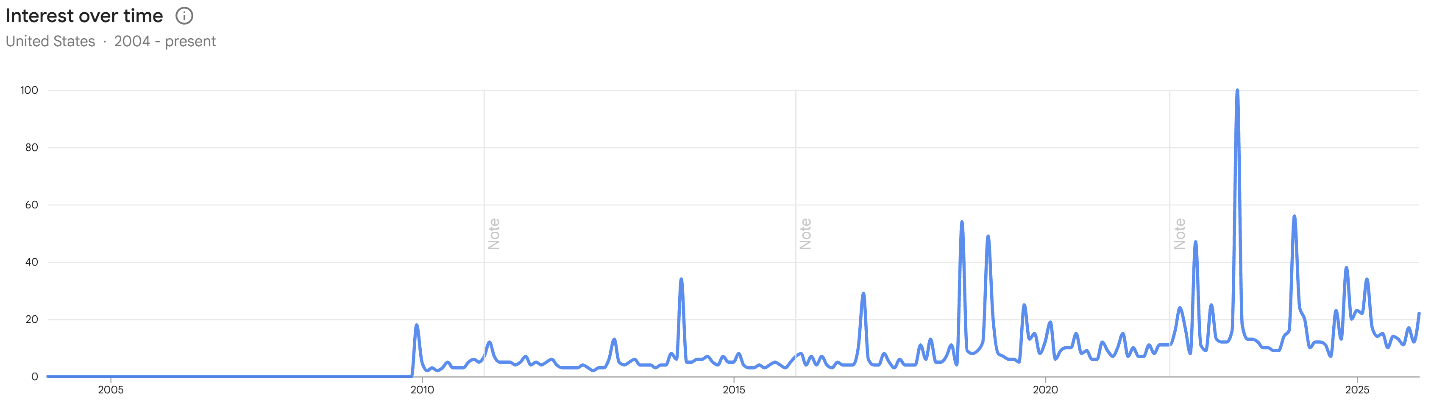
Jordan’s EGOT arc continued for more than a year, well into the sitcom’s fifth season. And as it raised awareness of the EGOT as an artistic aspiration, it may also have cemented the conception of the exploit as something that could conceivably be, well, exploited. It seems suggestive that of those 22 EGOT holders—the first of whom, Richard Rodgers, unwittingly inaugurated the feat in 1962—12 have been anointed since 2012, which was two years after Jordan’s EGOT came to fictional fruition.
As 30 Rock director and producer Dan Scardino said in that 2019 piece, “Now the EGOT has become suddenly a goal that people want to pursue.” Take Viola Davis, who EGOTed in 2023. “I don’t sing, I mean I really don’t sing,” the actress said in 2017, when she was a Grammy short of an EGOT. “Well, maybe I’ll do a spoken word thing with Kanye West or something like that!” Instead, she went on to win for narrating the audiobook of her 2022 memoir Finding Me, which prompted her to proclaim in her acceptance speech, “I just EGOT!”
Scardino continued, “If wanting to be an EGOT inspires people to try and do their best work, then I suppose it’s a good thing.” But what if it inspires people to do whatever work—or cut whichever corner—could engineer an EGOT? In that case, the EGOT could become the latest illustration of Goodhart’s law, which is sometimes expressed as, “When a measure becomes a target, it ceases to be a good measure.” In other words, once an accomplishment becomes so coveted that people start trying to achieve it, it tends to lose the value that made it desirable in the first place. It’s corrupted by its own cachet.
As The New York Times noted on Sunday, “The not-so-quiet secret is that when you’re close to an EGOT, it is possible to game the system.” EGOTer Andrew Lloyd Webber has admitted as much; in 2024, he recalled his own response when another musician asked him how to add a Tony to his Grammys and Emmys: “I said, ‘Well, one way you could do that is become a producer, put some money into a few shows. Every show seems to have 20 producers these days.’”
Twenty might be a conservative estimate. In January 2023, David Gordon, editor-in-chief of TheaterMania, predicted that “celebrities will try to get closer to an EGOT by producing Broadway shows.” As Gordon acknowledged, he wasn’t going out on a limb: This had happened a few times already (including Whoopi’s win in 2002 for producing Thoroughly Modern Millie). Later in 2023, TheaterMania’s chief critic, Zachary Stewart, decried the practice at greater length, writing, “It’s an open secret that, for many Broadway shows, producer credits are for sale. … It is an incontrovertible truth that you can be billed as a ‘producer’ on a Broadway show without ever offering any creative input—and most lead producers prefer that you don’t.”
In 2014, Joey Parnes, the lead producer of that year’s Tony winner for Best Musical, A Gentleman’s Guide to Love and Murder, admitted to selling above-the-title production slots to people who invested as little as $35,000 in the play. (As of 2013, it cost an extra $2,500 for the graduate of a Tony mill to order an actual trophy; a nonexistent EGOT trophy can’t be bought.) “With the exploding population of producers on Broadway, it’s never been easier to win a Tony Award and get 25 percent of the way to EGOT,” Stewart said. Or, perhaps, 100 percent of the way, if you’ve already taken care of the other 75 percent. Stewart concluded, “In the future, when we speak of EGOT recipients, some of the names on that ever-expanding roster ought to have an asterisk explaining how they got their Tonys.”
The play that prompted Stewart’s diatribe was none other than A Strange Loop, which, as he observed, listed several celebrities among its 40-plus producers—a total that omitted the then-unspecified Spielberg. “Just how many producers did A Strange Loop have to be the reason that *5* people on this page are listed as EGOT winners?” asked Wikipedia editor FOARP on the “EGOT” Talk page, alluding to Spielberg, Jennifer Hudson (who EGOTed for producing the play), producer Frank Marshall (one of six Wikipedia-classified “non-competitive EGOT awardees”), and composers Justin Paul and Benj Pasek. Answer: a lot. It’s not that producing can’t be a creative endeavor that’s worthy of awards and EGOT stature. It’s that it’s sometimes difficult to tell how productive “producers” really are.
Via email, Stewart said this week that Spielberg’s award “does seem pretty flimsy.” Stewart went on:
[blockquote]Honestly, this is why I find all awards to be bullshit. So much of the criteria is arbitrary and malleable, depending on who will show up to your party. It gets even more suspect when these events are televised and the producers have an interest in showing CBS that they can put big names and faces in front of the cameras.
In our allegedly meritocratic republic, is the EGOT just a rebranded version of the Order of the Golden Fleece—bestowed on the great and the good of the empire, even as tectonic technological shifts (social media, film studios in our pockets) betray these old traditions as hopelessly passé?[/blockquote]
It would probably be silly to get exercised about something as inherently contrived as this fairly recent institution, which EGOTer Alan Menken described to The Times as “a random assortment of honors.” It’s not really random, but it is arbitrary. For one thing, it excludes some esteemed awards: Some people have proposed a “PEGOT,” but not everyone agrees on whether the “P” should be the Peabody or the Pulitzer. For another, it lumps together awards of varying rarity: There are 96 competitive Grammy Award categories, compared to only 24 competitive Oscar categories. It also draws distinctions between competitive and non-competitive awards, and between Primetime Emmys and Daytime Emmys. And it doesn’t truly test versatility, because artists often win multiple kinds of qualifying hardware in essentially the same discipline.
Awards offer only as much value as cultural tastemakers and consumers ascribe to them. Maybe the EGOT—the artificial, unofficial, whimsical creation of an actor who was shut out in the EGOT categories, and a concept that didn’t catch on until a satirical comedy turned it into a bit—was always overrated. Although the EGOT roster boasts a lot of luminaries, not all of its members sport Spielbergian CVs. Most household names aren’t EGOTers, and not all EGOTers are household names. Even those who are don’t always gain admission thanks to their most memorable projects: In 2024, Elton John EGOTed when his livestreamed special Elton John Live: Farewell From Dodger Stadium won an Emmy for Outstanding Variety Special (Live).On 30 Rock, Jordan properly pegs the EGOT as soon as it’s explained to him: “That’s a good goal for a talented crazy person,” he says. If it’s true that all artists, like Jordan, are a little mad, then the EGOT may be with us for a while—unless it loses its luster as it starts to seem ill-(e)gotten.

Ben Lindbergh
Ben is a writer, podcaster, and editor who covers culture and sports. He hosts ‘Effectively Wild’ at FanGraphs and previously wrote for FiveThirtyEight and Grantland, served as editor-in-chief of Baseball Prospectus, and authored ‘The MVP Machine’ and ‘The Only Rule Is It Has to Work.’