
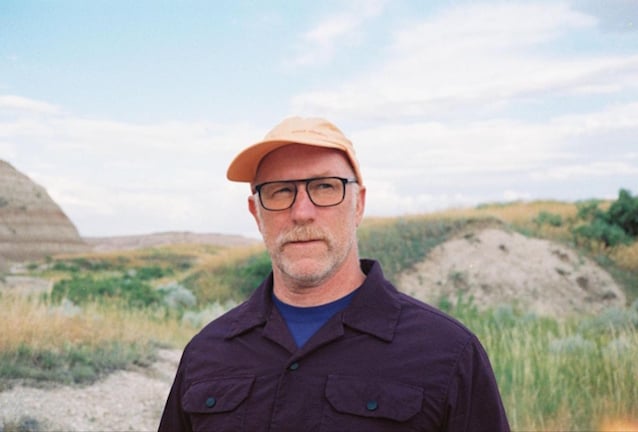
During an appearance on the latest episode of the “Beardo & Weirdo” podcast, hosted by FIVE FINGER DEATH PUNCH bassist Chris Kael and comedian Craig Gass, FAITH NO MORE co-founder, musical trailblazer, and queer icon Roddy Bottum — who is promoting the recent release of his memoir “The Royal We” — discussed growing up gay in the 1980s while being surrounded by hair-metal bands who teased their hair, wore makeup, and squeezed into tight, flashy costumes. He said in part (as transcribed by BLABBERMOUTH.NET): “Yeah, it was the era. It was the ’80s, ’90s. I don’t know how old you guys are, but when GUNS N’ ROSES came out, just the sort of look of those bands and sort of the hair metal vibe that was going on, it was a really intense, kind of a funny juxtaposition because those guys, even GUNS N’ ROSES or POISON or WARRANT or whoever, they were very feminine. I mean, teased hair and a lot of makeup and costuming, but super, super misogynistic. And it was a really weird world to be in at that time, and it was just sort of taken for granted. MTV and the videos that we watched were really just so over the top, misogynistic like crazy. It was ugly to women. We can say that now and we can recognize it now but when we were in the thick of it, we just kind of took it for granted. Like, ‘Oh, this is what people, and this is what sort of gets people off.’ Slutty girls and just so many levels of it. But it was an intense place to be for a gay man in that world. ‘Cause we didn’t start off as that kind of a band. But at one point we got kind of lumped into sort of those kinds of bands, and that was a hard place to navigate.”
Roddy went on to say that FAITH NO MORE’s combination of funk, alternative rock and metal “confused people, for sure. People didn’t really know what to do with it,” he explained. “We had this guitar player at the time who had sort of long hair and he played a flying V guitar. And he was really good friends with METALLICA. So METALLICA kind of like took us under their wings in some way at that time and wore a FAITH NO MORE shirt on a METALLICA record. They were wearing FAITH NO MORE shirts, so suddenly it was, like, ‘Oh, that’s how we market this band. They’re a metal band. That’s what they are.’ Which wasn’t really the case, but it opened up our band to a whole new realm of fanbase that we hadn’t had before. We were really like a weird freakout band and we could have just as easily been marketed kind of in a pop way or in a more traditional rock way, but I think that with that connection with METALLICA, we sort of got sidelined into this world of metal, which was odd too. We weren’t really that kind of a band, and we didn’t go over well in those kinds of scenarios. METALLICA and GUNS N’ ROSES would take us on tour and we’d play and we’d open up and people were just, like, ‘What is this?’ It never worked.”
Roddy also talked about finding himself in the spotlight in July 1993 as the rock world’s first openly gay star. Asked if there was anyone else who also came out and owned it who was an inspiration to him, Bottum said: “Not really. I really feel like I was a pioneer in that regard. Really, honestly, [JUDAS PRIEST’s] Rob Halford did not come out of the closet until a couple of years after I had. QUEEN, Freddie Mercury never publicly even came out and said — albeit he’s in a band that sings opera music and they wear tight clothes and long hair and they’re called QUEEN. So many examples. Elton John too. But I remember when I was little, I was a fan of Elton John and I remember hearing him on the radio and he was talking about his wife. And I was, like, ‘Wait. What?’ As a young kid, I was looking for anyone that I could relate to in that way, but there really wasn’t. And then even sort of as time passed, I remember R.E.M. — ‘Oh, I heard Michael Stipe is gay,’ but he wasn’t out of the closet and didn’t talk about it. Bob Mould, I remember, HÜSKER DÜ, or whatever, but people just didn’t talk about it. The first person that I met, who’s still a really good friend of mine, who was kind of out and open about it, was Patty Schemel who was in HOLE; she was the drummer of HOLE. And she’s a really good friend of mine still. But we kind of had that bond, that we were both open about being gay and in that world of rock. It’s kind of funny for kids to sort of hear this now and imagine that, but it wasn’t done. It was kept quiet.”
Roddy previously discussed coming out gay in the 1990s with no role models to look up to last November in an interview with Australia’s Wall Of Sound. He said at the time: “Yeah. It was a difficult time. Looking back on it and what that attitude was about, it’s kind of hard to imagine, that people were that phobic back then about gay people, but the world was really like that. And a lot of the book is about that, about the judgment of great culture on gay men and the reaction from gay men, and how do we deal with that? And particularly my generation, yeah, like you said, there weren’t a lot of role models for me, and it was a clunky time as a kid to not have that. And what I was talking before about secrets, there’s no other option from my generation, speaking from where I was coming from, there wasn’t any other option but to be secretive and hide things, because, yeah, like you were saying, and I’ve said in my book a lot, there weren’t a lot of role models. There was no one I could look up to, especially in the world of music. When I started coming out back in the ’90s, there was really no one in my world that had a gay voice. The only person that I kind of knew, while we got to become really close, and she’s one of my best friends 1770479170, was Patty Schemel from HOLE. Besides Patty, I really didn’t know queer people in rock; there just wasn’t that in my world. When I was super young, I remember even — Elton John I was a big fan of, and I remember listening to him on the radio at one point and he was talking about getting married and stuff. It was that phase when he was really hiding his sexuality. And as a kid, as a young kid, I knew he was gay, but then seeing him sort of hide that or having that prospect of, like, ‘Oh, here’s an icon that I can latch on to,’ taken away from me in that way and him shutting down and sort of doubling down and saying, ‘No, I’m straight. I’m getting married to a woman’ was, like, ‘Oh my God.’ It was such a slap in the face for me as a young kid. All I wanted was a direction and a person that would say, ‘Yeah, this is okay. You can be this way.’ But there just wasn’t that. Even QUEEN, I talk about in my book, too — I remember QUEEN, they wouldn’t come out and talk about being gay. I remember there was a reference at one point, I remember reading somewhere, and it was, like, ‘Our band is called QUEEN and we basically sing opera music. So you do the math.’ Okay, they were saying they were gay, but they weren’t saying it. Everything that was even said in those regards was sort of guarded and cloaked and sort of fed in such a shameful way. It was hard to get on board with that. Even THE VILLAGE PEOPLE, I remember them speaking. As a kid, oh, clearly, oh, here’s a gay representation, but I remember them saying, ‘Well, we don’t really wanna say if we’re gay or we’re straight ’cause we don’t wanna lose any of our audience.’ And what does that say to a young kid? That means, like, okay, say you’re gay and people are gonna not like you. That’s the exact statement it was. So coming from that world, it was definitely a hard place. Then even as I got older too, like I always say, [R.E.M. frontman] Michael Stipe was not gay when I was coming out of the closet. That wasn’t a direction I could look. Even Bob Mould, who’s very outwardly gay now, was, like, that wasn’t sort of… Those two voices, which are pretty strong in queer right now, those weren’t options for me. So it felt very alone to come out in that environment, in that crew of people when there weren’t voices like that.”
Roddy went on to say that the perception of HIV as a “gay disease” fueled the fire of homophobia, violence and intolerance in the 1980s. “For sure — [there were] a lot of levels in which it was difficult,” he noted. “And that was for sure a whole tableau of humiliation and shame, was HIV and AIDS. At that point, it reinforced the notion that gay is bad. Not only is gay bad, it’s toxic. It’s not only toxic, it’s poisonous, it’s deadly. And if you’re gay, you’re gonna die. So, yeah, it was a lot as a young kid to deal with. But at the same time, that said, I don’t mean to be sort of ‘boohoo’ about it. It created a really specific kind of person that I am, and I’m kind of thankful for that. It was hard to go through that generational weirdness, but at the same time it’s a strength that I have that a lot of gay people who weren’t in my generation don’t necessarily tap in to.”
Asked if his sexuality was an issue within FAITH NO MORE and whether that was what kept him from coming out sooner, Roddy said: “I don’t think [so]. I think it was just an inherent thing. If you had asked me or asked any of the members of the band, like, ‘Is it a deal at all that Roddy is gay?’, it was so not a deal. We lived in San Francisco. All of the people in the band were so open-minded, they were all encouraging, but in my head it was something different and I just wasn’t willing to go there. And that’s on me. I talk that about that a lot in the book. Billy [Gould, FAITH NO MORE bassist] and I were best friends since the time we were very young, really young kids. Billy’s the bass player of FAITH NO MORE. And, yeah, the fact that I wasn’t able to be open with him about my sexuality, it still is something that’s kind of a weird rub for me. It’s not cool. I wish I would’ve had the wherewithal to be open. I mean, he was one of my best friends. So, amongst the band, it wasn’t on them, it was on me. I just wasn’t willing to go there with them based on the childhood that I had and the culture that we lived in. It was really difficult. But definitely they’ve only been supportive and understanding in that plight of mine.”
“The Royal We” was released on November 4, 2025 via Akashic Books.
Photo credit: Joey Holman