
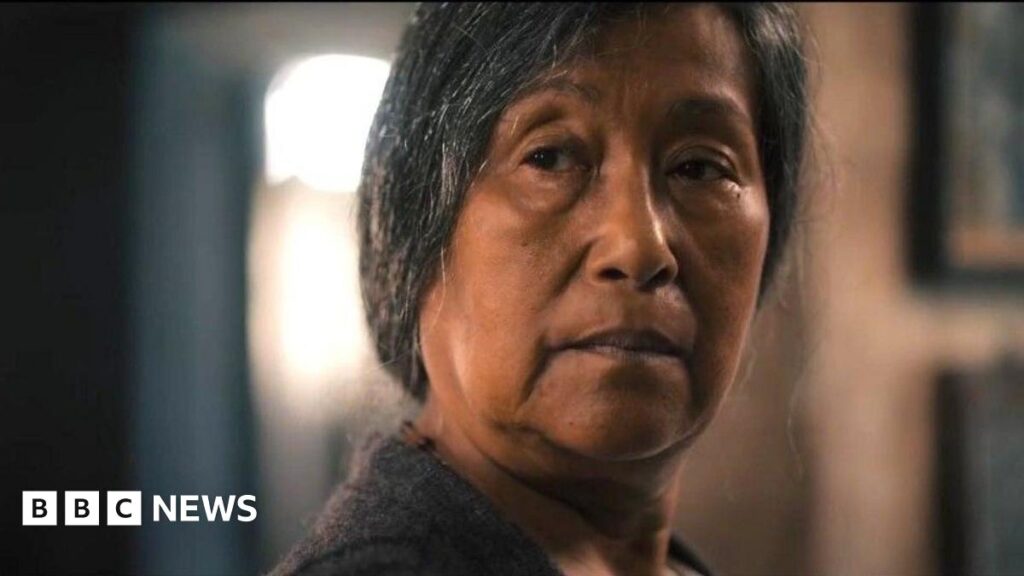
At 70, Biana Watre Momin took a leap far from home.
The retired college teacher left the Garo Hills in north-eastern India’s Meghalaya state, where she led a quiet family life – caring for four dogs and doting on her grandchildren – and travelled more than 3,000km (1,864 miles) south to Kerala to act in a film.
She was dealing with a language she did not understand, embracing a role whose meaning would only reveal itself once the camera began to roll.
The film was Eko, a Malayalam-language film that would change the course of her life.
For Momin, a member of the Garo tribe – one of the indigenous communities of Meghalaya, a largely tribal state – acting had never been an ambition, or even a distant curiosity.
“Growing up, my town did not have a cinema or theatre,” she told the BBC. She was never trained in the performing arts, “unless you’d call teaching in a classroom a kind of performance”, she adds with a laugh.
A retired English literature teacher from Tura Government College, with a fondness for Romantic poetry, Momin had little reason to believe that a camera would one day frame her face. Yet when Eko entered her life, it offered an unexpected adventure.
“I was initially hesitant as I had no experience in acting and was concerned about the long travel from home,” she says. “But my daughter nudged me, saying, ‘Have faith in yourself and try something new.'”