
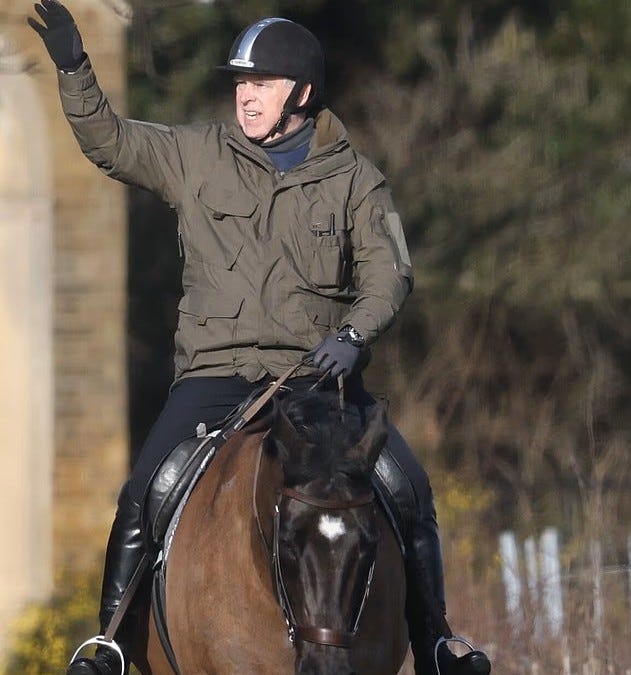
 Former Prince Andrew smiling and waving at passersby in Windsor Great Park on Sunday February 1, one day before King Charles evicted him from his home at Royal Lodge
Andrew Mountbatten-Windsor’s late mother and father would have been heartbroken and appalled by the revelations about the former prince’s unsavory relationship with the convicted American pedophile, Jeffrey Epstein. With the latest tranche of increasingly sordid correspondence and photographs of Andrew this past week, the King evicted his younger brother from Royal Lodge, the 30-room home near Windsor Castle where he had lived for the past 23 years. Andrew’s departure ahead of schedule was prompted by photographs of him on horseback smiling and waving at passersby in Windsor Great Park. Five months earlier, Charles had stripped Andrew of his Duke of York and prince titles.
 Andrew on the floor with a woman or girl in an undated photograph from the Epstein files released on January 30, 2026
Andrew is temporarily in seclusion at Wood Farm on the King’s 20,000-acre Sandringham Estate in Norfolk until renovations are completed on his new home at Sandringham’s Marsh Farm, a modest brick house that is worlds removed from the faded elegance of Royal Lodge.
Were it not for the shame surrounding Andrew and blighting the royal family, Wood Farm might have been the best place for him. I wrote about its suitability compared to alternate Sandringham properties in Royals Extra last November 1: Neither Prince Nor Duke: Andrew Hits Rock Bottom. Friends tell me that other royal family members had their own objections to him living at Wood Farm. During pheasant and partridge shooting season, they enjoy staying there and hosting lunches.
Suffering, compassion, and humility
Wood Farm’s compelling history might teach Andrew something about suffering, compassion, and humility. Its story began more than a century ago when the youngest of King George V and Queen Mary’s six children, Prince John—known in the family as “Johnnie”— lived there for two years until he died at age 13 in January 1919 after a violent epileptic seizure. He has often been described as the “Lost Prince,” abandoned by his family at Wood Farm because of his disabilities. But documents from the Royal Archives tell a different tale, along with photographs published after his death.