
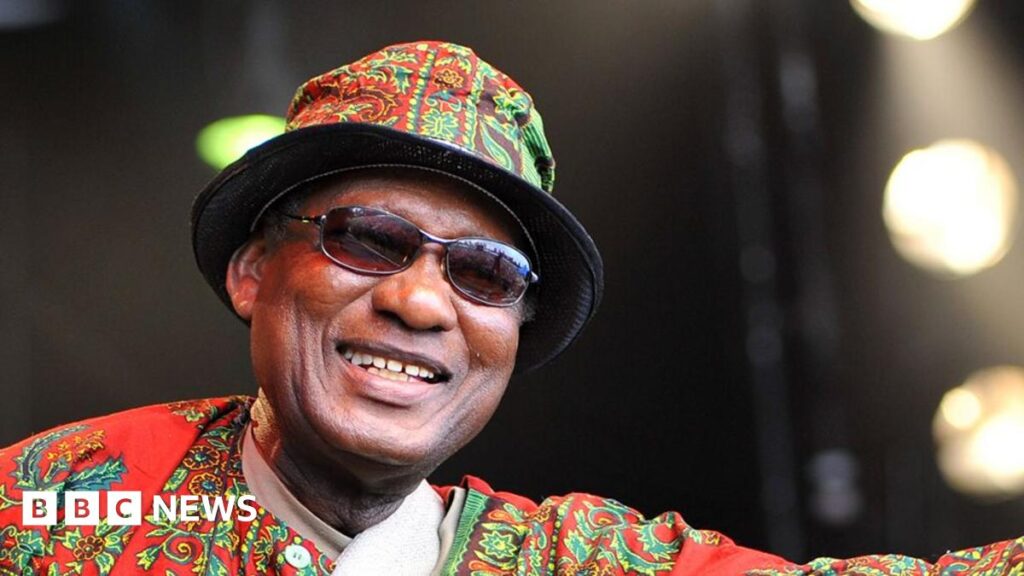
But he then returned to the studio and his new recordings began to attract attention well into later life, with albums such as Love & Death, Appia Kwa Bridge and Yen Ara reinforcing his standing as one of Ghana’s most important musical figures.
Taylor’s influence extended far beyond highlife.
In recent decades, his work has been taken up by international audiences through sampling, with elements of his recordings appearing in songs by artists across hip-hop and R&B.
Tracks including Heaven, Odofo Nyi Akyiri Biara and Love & Death have been sampled by performers including Usher, the Black Eyed Peas, Kelly Rowland, Jidenna, Vic Mensa and Rapsody, introducing his music to new listeners worldwide.
Talking about achieving wider recognition in his 70s he said: “I think I’ve had my day, though it came much later.”
In his tribute, top Ghanaian music producer Panji Anoff remembered how everybody used to call him “Uncle Ebo” but he treated everyone as an equal.
“He would sit with us, eat with us, drink and chill with us, some nearly 50 years his junior, as though we were all peers. He could relate with everybody, and if anybody ever needed a melody, Uncle Ebo would just plug in a guitar and show them the way,” Anoff told the BBC.
“We lost a legend whose contribution to music has created worldwide ripples. I take solace in the fact that I witnessed greatness in Uncle Ebo Taylor’s art form. Rest In Power!” singer and rapper Black Sherif said.
Across Ghana and the wider African diaspora, Taylor is recognised as a foundational figure whose work helped bridge traditional and modern sounds.
By grounding innovation in cultural continuity, he left behind a body of music that continues to inform contemporary styles, including afrobeats, and remains central to the story of African popular music.