
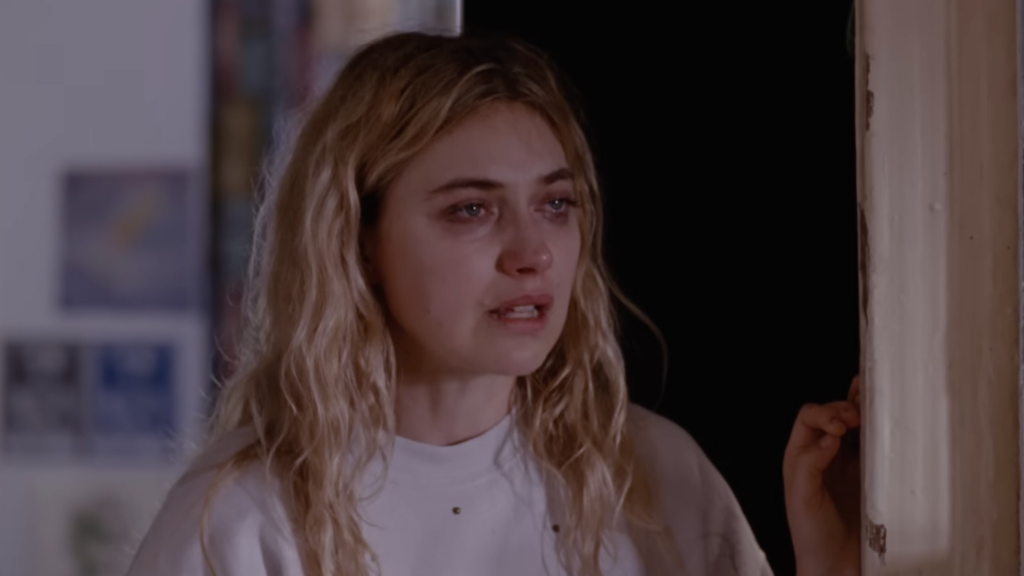
Gifted swimmer Lidia Yuknavitch (Imogen Poots) grows up in an abusive household, and later finds herself through writing.
The Chronology Of Water has been a long time coming. Kristen Stewart announced her plans to make her directorial debut as far as back as 2018. By 2022, the actor admitted that she would “die” if she couldn’t make the film. The years of hard work behind her adaptation of Lidia Yuknavitch’s titular memoir can be felt in every single frame — covered, quite literally, in blood, sweat and tears.
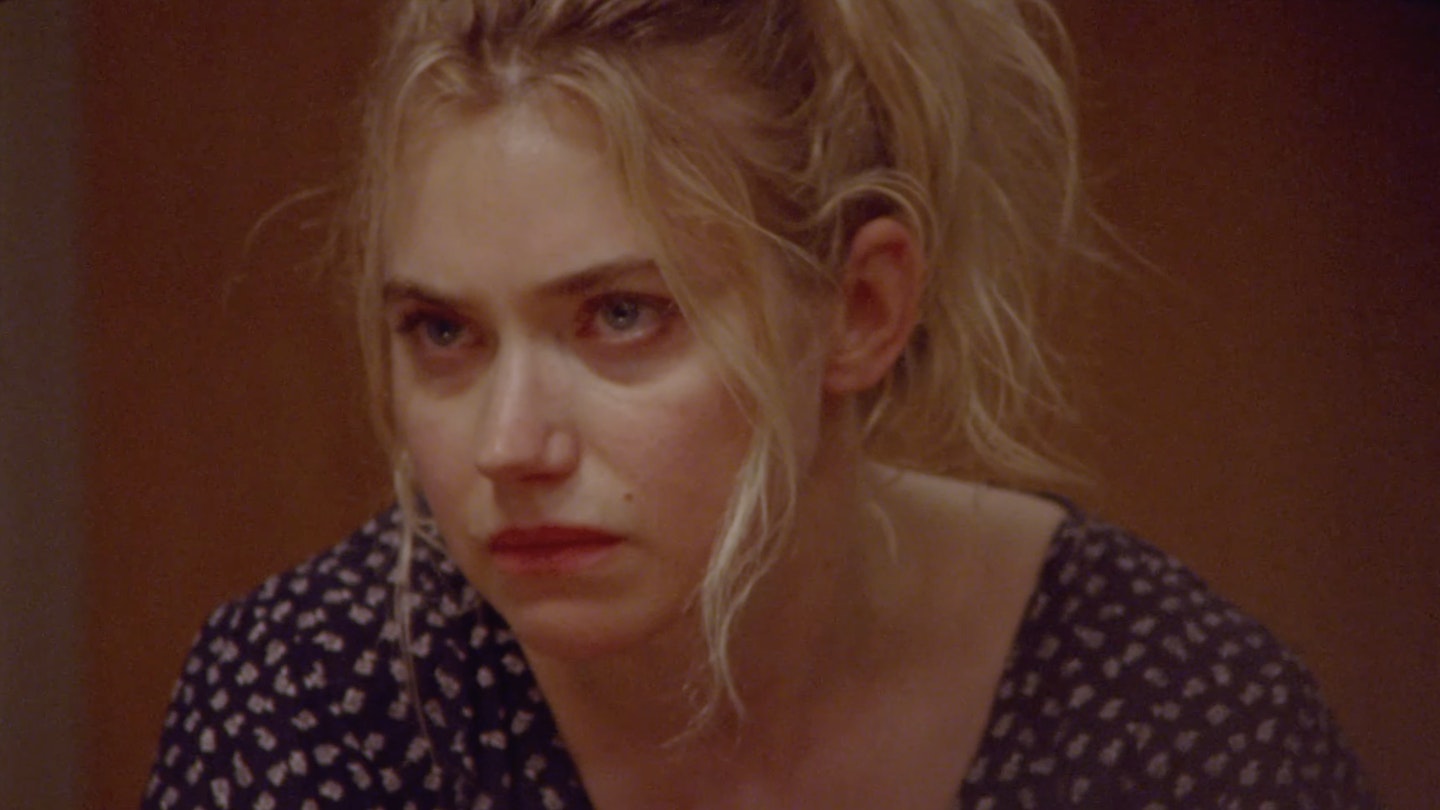
If it were possible to crack open Yuknavitch’s brain and project all the thoughts and messy feelings inside, The Chronology Of Water is what it might look like: fragmented and divorced from linear time. There’s a story that eventually takes shape, though Stewart’s bold avoidance of traditional narrative structure makes it tricky to parse at first. An exhilarating Imogen Poots plays Lidia throughout her life, from a teenage competitive swimmer tormented by her abusive father, through to adulthood, when writing becomes her salvation from addiction, grief and lifelong pain.
It’s not so much the course of events that make Lidia’s memories perennially stick in her mind, but the sensory experience: the cacophonic sounds of a swimming pool, the smell of sex, the aching sensations on her skin.
Give credit where it’s due to editor Olivia Neergaard-Holm, who pieces together the film’s rapid succession of intense close-ups and context-free vignettes into a memory poem that makes sense of the chaos. Cuts between the past and present detail how moments in Lidia’s life seem to rhyme with one another. In one scene, an invitation to perform a live reading of her writing conjures up memories of the letters regarding the college scholarships she failed to acquire after high school. Trauma acts like a hidden thorn waiting to puncture Lidia’s joy at a moment’s notice. The unorthodox editing also dismantles the reliability of the film’s narrator. Was an argument between Lidia and her first boyfriend laced with humour or malice? She remembers both.
It’s not so much the course of events that make Lidia’s memories perennially stick in her mind, but the sensory experience: the cacophonic sounds of a swimming pool, the smell of sex, the aching sensations on her skin. Shooting on 16mm film, Stewart displays a sharp eye for colour and texture. Lidia’s hazy recollections begin with blood pooling on a bathroom floor, and the criss-cross pattern of the tile branded on her knee.
After conquering the arthouse with the likes of Kelly Reichardt (Certain Women), Olivier Assayas (Clouds Of Sils Marina), Pablo Larraín (Spencer), and David Cronenberg (Crimes Of The Future), Stewart was never going to be a traditional filmmaker. And as disorientating as it may be, her first outing is an expansive, lyrical tapestry, in which she bravely leaves the viewer to make sense of its aquatic imagery. As a director, you can either sink or swim, and Stewart readily takes to these waters.
An uncompromising debut that weaves Lidia Yuknavitch’s rich but troubled life into hypnotic poetry. Kristen Stewart reintroduces herself as an exciting filmmaker who’s out to make a splash