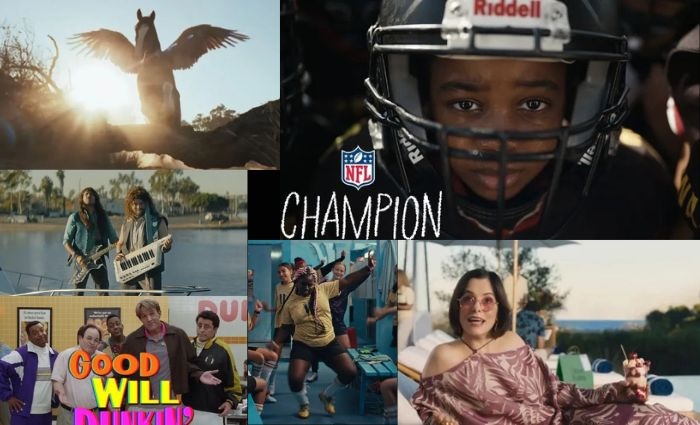

Every Super Bowl, without fail, the same complaint pops up: “Too many celebrities.” And every year, it misses the real point. If you’re spending $8 million for 30 seconds, the first job of that spot isn’t to be clever. It’s to be noticed. That’s the brutal math of the Super Bowl.
You’re competing with toilets that sing, hair that dances, Clydesdales, explosions, and the biggest cultural moment television still has. Unless your idea is instantly legible and impossible to ignore, you’re toast.
Celebrities may help with that. Period.
And before the ad world starts clutching its pearls, let’s be honest about something: this isn’t new, and it isn’t lazy. It’s a strategy.
As a filmmaker, I understand this concept deeply. Film festivals love to pretend they’re purely about art, but festivals are businesses. They want asses in seats. The more recognizable the actor, the better the odds your film gets programmed. That doesn’t mean the work isn’t good. It means someone understands the ecosystem.
Commercials work the same way.
Take Sabrina Carpenter building a man out of Pringles. That’s not random celebrity casting. She’s publicly associated with boy trouble, relationship humor, and self-aware pop culture chaos. That spot works because of who she is.
Kendall Jenner poking fun at her dating history for Fanatics Sportsbook isn’t a reach either. It’s on-brand, self-aware, and leaning into the conversation people are already having about her. That’s not selling out. That’s understanding the audience.
People also seem to forget something basic: celebrities are actors. This is THEIR job. Even someone like George Clooney doesn’t get a lifetime guarantee that the phone will always ring. With another possible SAG-AFTRA strike looming, the idea that people should be shamed for taking commercial work is absurd. People need to work. If the actor happens to be an A-lister, so what?
And here’s where the argument really falls apart.
No one complains about star athletes in commercials.
I’ve been lucky enough to work with Michael Jordan, Derek Jeter, Mia Hamm, and others on Gatorade. No one ever said, “I wish they used fewer famous athletes.” Of course not. It made perfect sense. Gatorade is about performance, greatness, and pushing limits. Those athletes were the message. Their presence wasn’t a shortcut; it was credibility.
When was the last time someone complained about A-listers in movies? Audiences don’t sit down in a theater and wish the cast were less famous. Star power has always been part of how films are financed, marketed, and distributed, especially at scale. The Super Bowl is no different. It’s the biggest stage with the smallest window, and recognizable faces help viewers instantly understand tone, stakes, and intent before the joke even lands.
So why is it suddenly a problem when brands apply the same logic with actors?
What’s even funnier is how selective this outrage is. No one complains about A-list directors. When Taika Waititi or Yorgos Lanthimos directs a Super Bowl spot, the industry applauds the ambition. Back in the day, Michael Bay brought scale and spectacle to commercials, and no one accused brands of “cheating.” The conversation shifts to craft, vision, and execution.
Same playbook. Different double standard.
And let’s address the loudest refrain: “I wish there were fewer celebrities in commercials.” That’s an easy thing for advertising people to say to other advertising people. But you’re not talking to yourselves. You’re talking to 135 million viewers who don’t care about internal purity tests. They care about being entertained, surprised, or emotionally pulled in.
The data backs this up, too. Our favorite Super Bowl spot this year didn’t feature a single A-lister. Yes, we had them in our Top 10, but that was also based on context and entertainment value.
Meanwhile, USA Today’s Ad Meter only had four celebrity-driven spots in the top tier: Bud Light, Dunkin’, Jurassic Park, and Michelob ULTRA. The takeaway isn’t “celebrities always win.” It’s that celebrities don’t automatically save bad ideas or sink good ones.
Execution still rules.
Celebrities are tools, not crutches. Sometimes they’re essential. Sometimes they’re unnecessary. The real failure isn’t using a famous face, it’s using one without purpose.
So maybe instead of complaining about celebrities, we should be asking a better question: Did the spot earn its 30 seconds? Because at eight million dollars a pop, that’s the only standard that actually matters.
For more Super Bowl coverage, click here.

Colin Costello is the West Coast Editor of Reel 360 News. Contact him at colin@reel360.com or follow him on LinkedIn.

REELated:
Reel 360’s Top 10 Super Bowl LX spots