
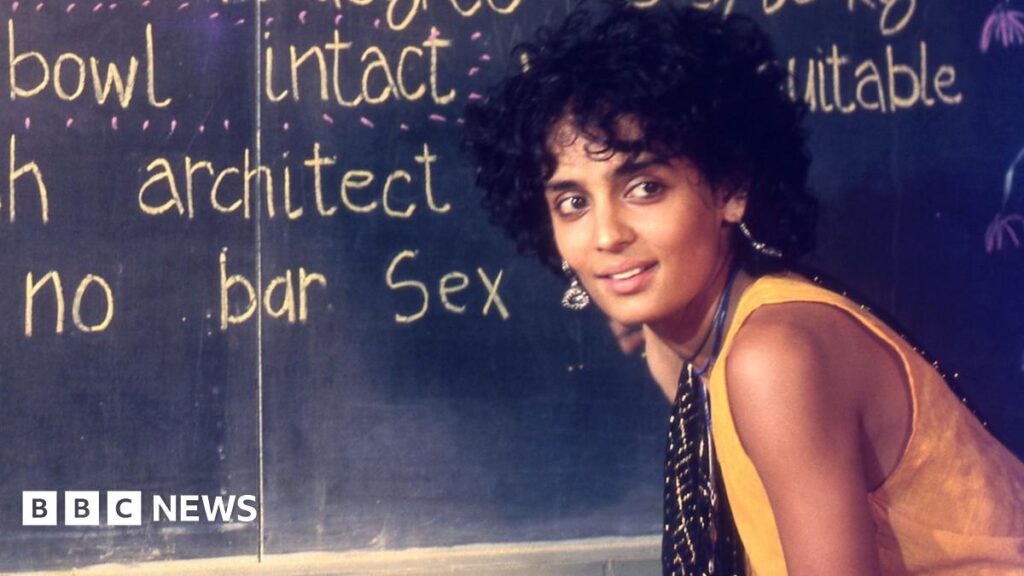
On a sticky Delhi afternoon in the late 1980s, a group of architecture students loiter, argue and dream their way through a city that seems permanently unfinished.
They are idealistic and impatient, fluent in slogans and sarcasm, and astutely aware that the system they are training to enter may have no particular use for them.
This is the world of In Which Annie Gives It Those Ones, the 1989 television film written by Booker Prize-winning author Arundhati Roy and directed by Pradip Krishen.
Nearly four decades after it first aired on India’s state broadcaster Doordarshan, a restored version of the film is set to receive its world premiere in the Berlinale Classics section of the 2026 Berlin International Film Festival.
The Film Heritage Foundation, which initiated its restoration, will also release the film in select theatres across India in March, pricing tickets low to attract younger viewers.
“We wanted it to be accessible,” said Shivendra Singh Dungarpur, filmmaker and Director at Film Heritage Foundation. “It’s a significant film. In its dialogue, in its portrayal of college life, in the kinds of characters it foregrounded – it achieved something unusual.”
Often described as India’s first English-language feature, Annie occupies a singular place in the country’s cinema history: local in texture yet cosmopolitan in voice; modest in scale yet exacting in its writing.
Made on a modest budget, the film follows a ragtag group of final-year students at Delhi’s School of Planning and Architecture as they drift, stall and inch toward graduation.
Its title comes from a Delhi University slang: to “give it those ones” is to perform one’s usual act – bungles included.
At its centre is Anand “Annie” Grover, an endearing fifth-year student suspended between idealism and chronic distraction.
He keeps hens in his hostel room and dreams up improbable schemes to transform India – including planting trees along railway tracks, fertilised by waste from passing trains. Four years earlier, he scrawled a crude joke about the dean in the men’s toilet; he has failed every exam since.