
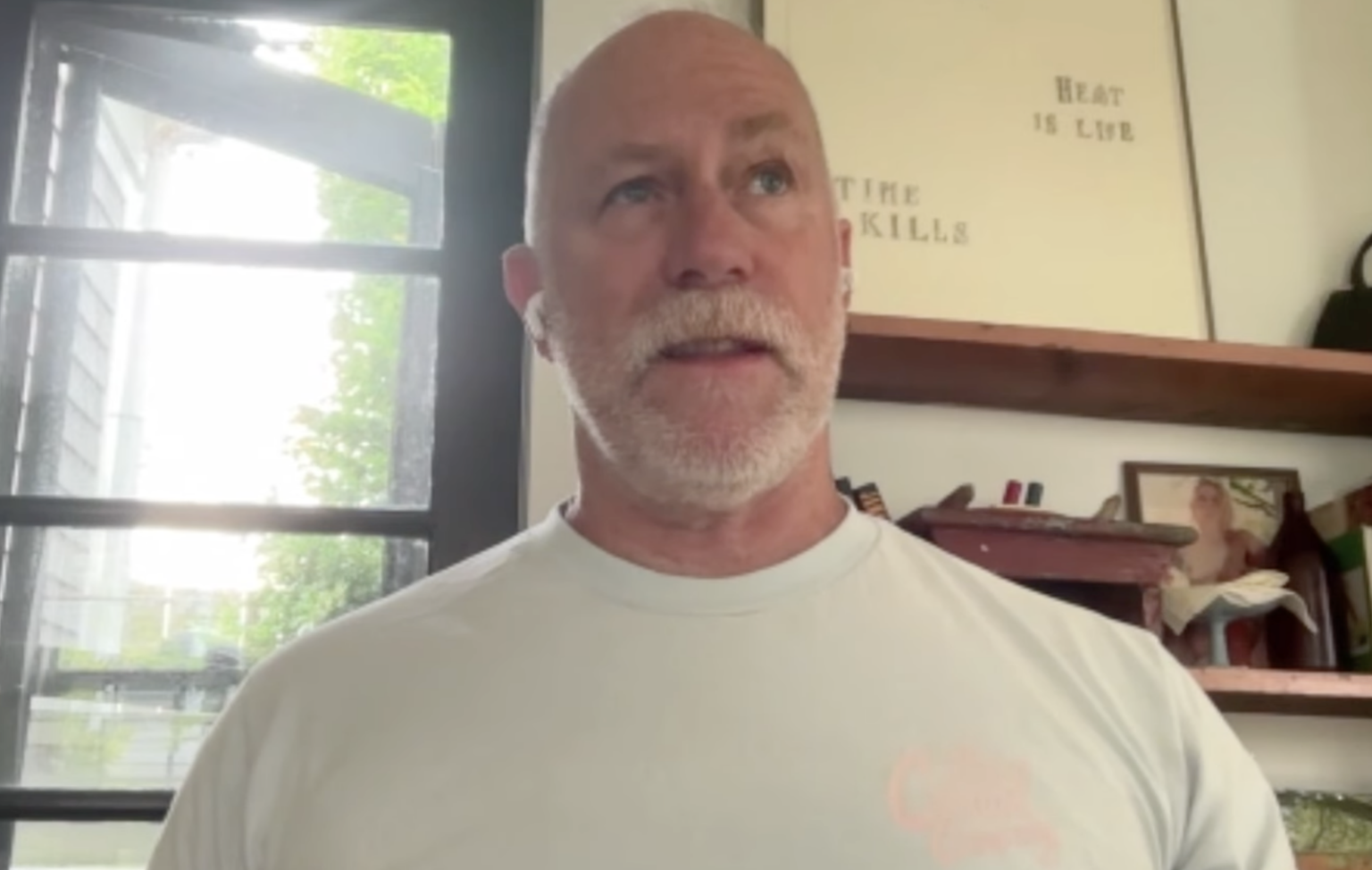
During a recent appearance on the Beardo & Weirdo podcast — hosted by Five Finger Death Punch bassist Chris Kael and comedian Craig Gass — Faith No More co-founder Roddy Bottum opened up about growing up gay in the 1980s music scene, an era dominated by flamboyant yet deeply misogynistic hair-metal bands.
Bottum, who is currently promoting his newly released memoir The Royal We, described the contradiction at the heart of the era’s dominant rock culture.
“It was the ’80s, ’90s,” Bottum said. “When Guns N’ Roses came out… the look of those bands and the hair-metal vibe — it was a really intense, kind of funny juxtaposition. Those guys were very feminine. Teased hair, a lot of makeup and costuming, but super, super misogynistic.”
He added that the hyper-sexualized imagery pushed by MTV and rock videos at the time was simply accepted as normal, despite its ugliness.
“MTV and the videos that we watched were so over the top, misogynistic like crazy,” he said. “It was ugly to women. We can say that now and recognize it now, but when we were in the thick of it, we just kind of took it for granted. Like, ‘Oh, this is what people want.’ Slutty girls — just so many levels of it.”
For Bottum, existing as a gay man within that environment was especially difficult. “It was an intense place to be for a gay man in that world,” he said. “We didn’t start off as that kind of band, but at one point we got lumped into those kinds of bands, and that was a hard place to navigate.”
Bottum also discussed how Faith No More’s genre-blurring mix of funk, alternative rock, and metal left audiences and industry figures unsure how to categorize the band. “People didn’t really know what to do with it,” he explained.
He recalled how early associations — including a guitarist who was friends with Metallica — led to the band being marketed as metal after Metallica members began wearing Faith No More shirts publicly.
“Suddenly it was like, ‘Oh, that’s how we market this band. They’re a metal band,'” Bottum said. “Which wasn’t really the case. It opened us up to a whole new fanbase, but it sidelined us into this world of metal, which was odd too.”
That misalignment became clear on tour. Metallica and Guns N’ Roses would take us on tour and we’d play, and people were just like, ‘What is this?'” he said. “It never worked.”
Bottum also reflected on coming out publicly in July 1993, effectively becoming rock music’s first openly gay star — a position he says came without many visible role models.
“Not really,” he said when asked if anyone inspired him. “I really feel like I was a pioneer in that regard. Rob Halford didn’t come out until a couple of years after I had. Freddie Mercury never publicly came out. Elton John — I remember hearing him talk about his wife and being like, ‘Wait, what?'”
As a young fan, Bottum said he searched for someone he could relate to but found very few artists who were openly gay. “You’d hear rumors — ‘Michael Stipe is gay,’ Bob Mould — but people didn’t talk about it,” he said. “It was kept quiet.”
The first openly gay musician he personally connected with was Patty Schemel, former drummer of Hole, a friendship that remains strong to this day. “We had that bond,” Bottum said. “We were both open about being gay and in that world of rock. It’s funny for kids to imagine this now, but it wasn’t done back then.”
Looking back, Bottum’s reflections underscore just how much the culture has shifted — and how isolating it once was to exist openly and authentically in a scene that thrived on contradiction, silence, and spectacle.
Want More Metal? Subscribe To Our Daily Newsletter
Enter your information below to get a daily update with all of our headlines and receive The Orchard Metal newsletter.