

During Brazil’s military dictatorship in 1977, tech researcher Marcelo (Wagner Moura) evades the target on his back by taking refuge in a vibrant city.
Set in director Kleber Mendonça Filho’s Brazilian hometown of Recife, the slyly titled The Secret Agent is a major work composed in a minor key. It follows an ordinary father and widower forced into extraordinary circumstances, a tale it metes out to its audience with caution, as though trading in state secrets. The flow of information is pivotal: the premise fades into view no sooner than an hour into the movie’s 161-minute runtime, but it unfolds in inviting fashion, guided by Wagner Moura’s withheld but emotionally vivid embodiment of a political refugee.
He plays Armando, also known as Marcelo: a man shouldering the weight of the world as he remains trapped between escaping Brazil with his infant son, and digging up long-buried details about his own late mother. This makes him a transfixing centrepiece in a story of rumours, uncertainties, and histories long-buried.
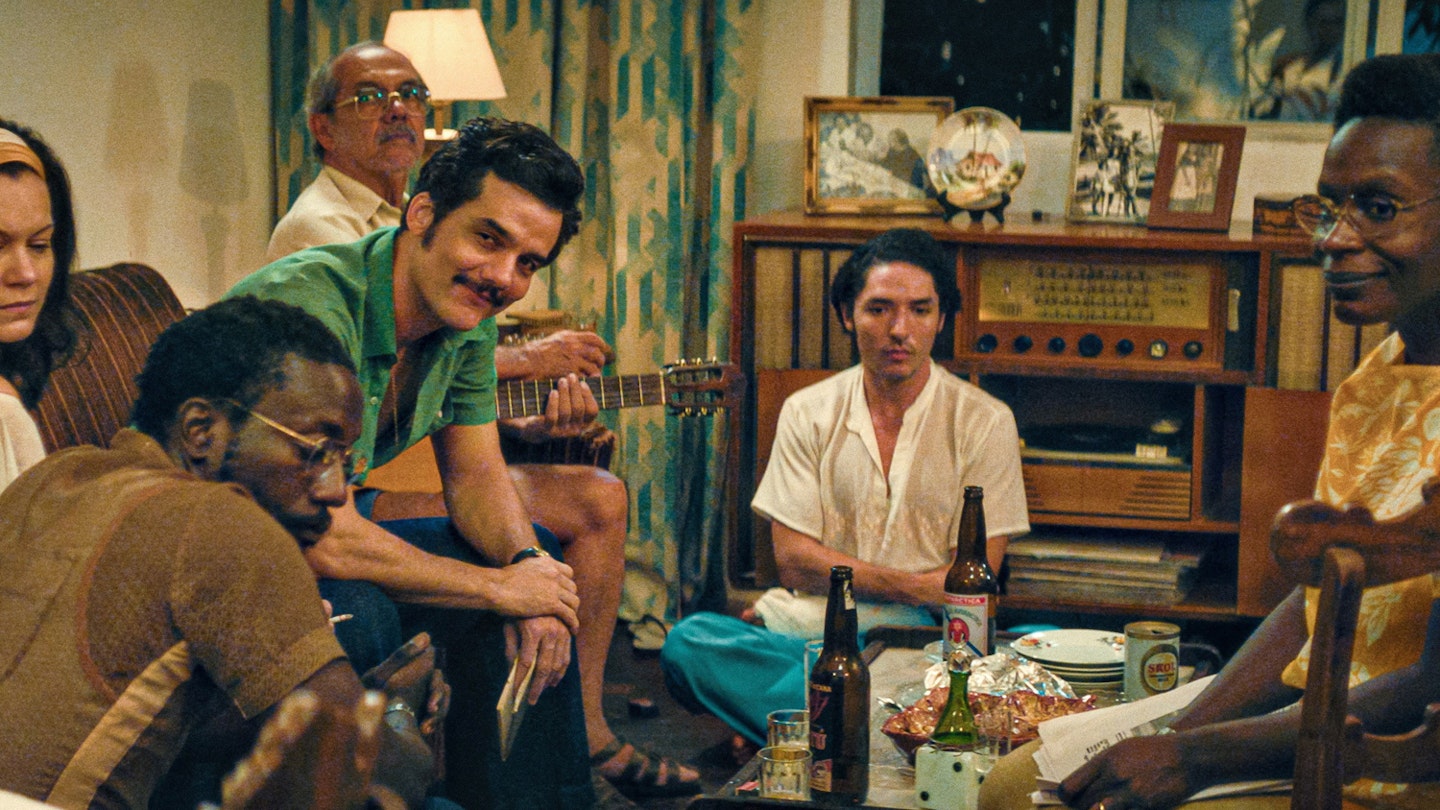
The 1970s-set film is rife with period-appropriate details that breathe life into its beautiful, brutal setting. Cinematographer Evgenia Alexandrova makes the characters’ skin glisten, as frayed fabrics cling to their torsos in familiar ways. There is a cavalcade of rich characters here, with whom Marcelo crosses paths while on the run from government forces. When he is thrust into anonymity in a new apartment building, his neighbours — each of whom are similarly in hiding — act as reminders of vivid, resplendent lives lived in secret.
Chief among these supporting players is the kindly and mischievous matriarch/refugee shepherdess Dona Sebastiana, played by the nearly 80-year-old Tânia Maria. It’s only the actor’s second screen appearance, but you’d never guess it from her assured conception of the aged matriarch, a role she approaches with the wisdom and graceful wit of a lifelong star. Just as important, in a small but powerful part, is the late German legend Udo Kier, in one of his final appearances as a local tailor whose own painful story puts Marcelo’s present (and Brazil’s past) into stark perspective.
Remains consistently approachable, rooting its story in deeply human dilemmas.
These interactions flesh out the contours of a country shaped by authoritarianism, and by its citizens’ defiant need to live joyfully anyway. Everyone Marcelo meets, whether members belonging to dissident networks or a corrupt regime, represents a kind of Brazilian living memory: set nearly 50 years ago, the story is structurally positioned as an act of academic research conducted by students in the present day. This framing device appears only briefly, but it makes The Secret Agent feel like a dramatic extension of Mendonça Filho’s 2023 documentary Pictures Of Ghosts.
However, as personal as the film may be to its director, it’s about how the past still echoes in the present, and how events set in motion decades ago cast lengthy shadows over an entire culture. The film was conceived during former Brazilian president Jair Bolsonaro’s autocratic rule, and its director and lead actor have spoken of the harassment they both faced as outspoken critics of the right-wing strongman, making The Secret Agent a work of shared defiance.
Despite its sombre origins, the movie runs the tonal gamut. Its introductory scenes take a wry approach to grisly violence, treating it as matter-of-fact; for characters under military rule, death is a way of life. A key subplot is even kicked off by the absurdity of an unidentifiable human leg being discovered in the belly of a shark, perplexing local authorities. This leads not only to a trio of bumbling policemen crossing paths with Marcelo, but to surrealist detours, as the severed appendage becomes the basis of folktales and news stories about a sentient “hairy leg” attacking unsuspecting bystanders — preposterous scenes that Mendonça Filho films like a hilarious, low-budget monster flick.
However, these and other segues aren’t as random as they might initially seem. During the era in which the film is set, the phrase “hairy leg” was used as a clandestine warning code to report on and alert citizens to violent police and military patrols. At every turn, The Secret Agent tells its story in the form of ciphers. Yet it remains consistently approachable, rooting its story in deeply human dilemmas.
Thanks to its soundscape, which veers between upbeat rhythms and reflective silences, the movie expertly captures the feeling of not just being alive during periods of despotism, but the sensation of truly living. Marcelo may seem like the strong-and-silent type, but thanks to Moura’s careful, wordless introspections, he becomes a living monument to necessary resilience in the face of historical fascism, and the way its ripple effects still linger unchallenged.
With images of violence brushing against understated strength — amid a search for love, safety and self-actualisation — this is an astonishing cinematic experience that lures the past into the present.