
Photo: ATS Production LLC
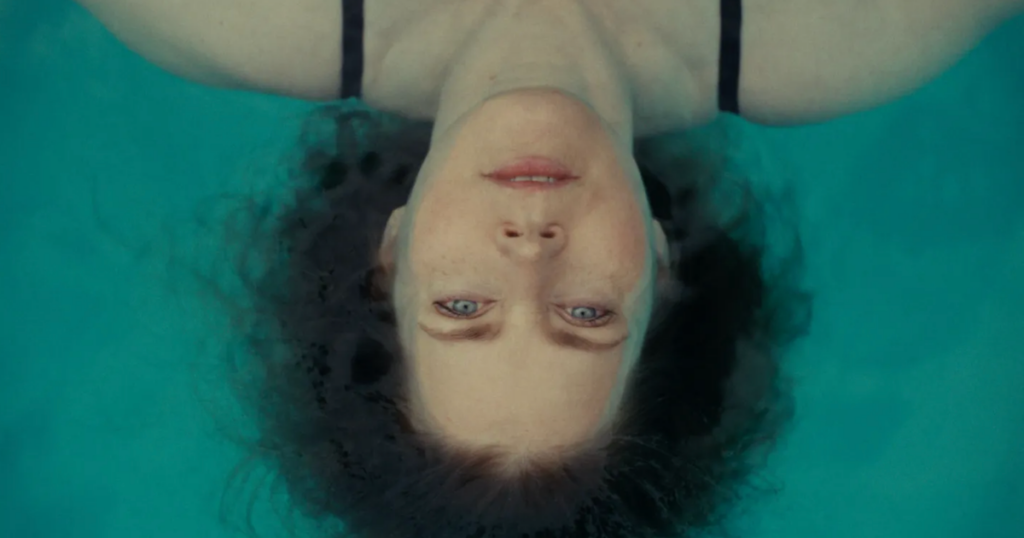
Starring Amy Adams as a woman trying to put her life back together after a long stint in rehab, At the Sea is a weird movie that should have been a lot weirder. Directed by Kornél Mundruczó (White God, Pieces of a Woman) and premiering at the Berlin Film Festival, it’s filled with brief flashbacks and fleeting bursts of dance, all of which feel like they belong to a more interesting picture. Even Adams, who is at the center of the movie and as a performer has often transcended middling material (see also: Nightbitch), feels like she’s been cast adrift.
This is shocking, since the role at times seems like it was created for her. The actress trained as a ballerina in her youth, and her character, Laura Baum, is the head of a dance company founded by her late, domineering father. When the film opens, Laura is returning from a six-month recovery program that has been kept secret from the rest of the company with the rather absurd cover story of an expedition to Bali. Her husband, Martin (Murray Bartlett), is eager to sell their beachside home, and the company’s future is in doubt because her chief partner, George (Rainn Wilson), is contemplating withdrawing his funding. Meanwhile, both her daughter Josie (Chloe East), and her young son Felix (Redding L. Munsell) aren’t quite sure how to react to mom finally being home again.
Neither Laura’s family dynamics nor the backstage shenanigans of her dance company are explored in any detail, which would be okay if the film didn’t keep returning to them. Instead, Kata Wéber’s script leans on clunkily written, facile confrontations: People hurl accusations at each other, often with odd bits of exposition thrown in. (“I’ve always put this company first! It’s all about the dance!” “You didn’t know shit about dance when I first hired you as my assistant!”) But we don’t see the work, the community, the art. Maybe that’s the point — but if so, why does the movie itself exist?
As a marital drama, the film also falls hopelessly flat. Laura and Martin’s heated conversations are strictly amateur hour, mainly because we get no sense of what’s at stake in their arguments. At one point, in the middle of a shouting match, they start laughing, almost as if the actors have broken character and realized how ridiculous this all is. But that quick thrill dissipates when we see just how forced the laughter is. This is a decidedly ungenerous reading, but it feels more like a subconscious acknowledgement by the filmmakers that they don’t know how to end the scene.
Laura is attached to the family house, which was where she grew up. She’s also attached to the company, which is her father’s legacy. We are told these things, but we are not shown these things. We do get bits and pieces of flashbacks to Laura as a young child with her father, but they’re mostly abstract, blink-and-you’ll-miss-it detours. The whole film is series of fragments, and not particularly good ones: As George’s ex-wife, Jenny Slate gives a drunken speech that provides more meaningless drama; Brett Goldstein shows up as a hunky, recovering smack addict who delivers a tortured metaphor involving kites and using the energy of the wind to live your life, and then promptly disappears, never to be heard from again. The most charming moment of the picture was seeing my friend and former Vulture colleague David Edelstein appear in one scene, playing a critic. (When the credits rolled, I saw that David also shares a story credit on the film; I sure hope we’re still friends after this review.)
Every once in a while, At the Sea threatens to come to life, with moments of dance that break through the fragmented rhythms of the narrative. Angry at her parents, Josie retreats to their home’s dance studio and begins doing falls, throwing herself to the floor. Suddenly, the film begins to feel like it’s about to enter strange, exciting new territory. But the scene doesn’t last long. Neither do our later glimpses of Laura’s dancing. A couple of flashbacks do suddenly become dance sequences, but again, they’re way too brief.
These sequences and their frustrating interruptions come off like the film trying to become something else — perhaps what it was meant to be all along. Mundruczó is an intriguing artist who’s done good work in the past, a challenging director unafraid of arty indulgences and high symbolism. It’s what often divides critics over his work. Along with his increasingly mainstream filmmaking career, he’s also known for his acclaimed, offbeat international stage productions. Watching At the Sea’s occasional forays into something more symbolic and visionary, I kept wondering if the initial idea for it was bolder, crazier, more experimental; driven less by clumsy, conventional dialogue and more by movement and energy, like those kites Goldstein was talking about. I would gladly watch the dance movie version of this story. At least it would be something.
See All