

Lucasfilm
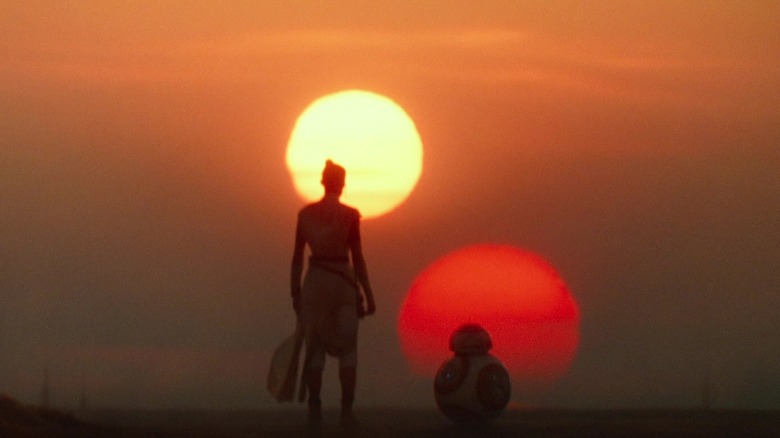
Brace yourselves, “Star Wars” fans, as the era of sequel trilogy nostalgia is upon us. It’s not as though Lucasfilm or Disney has officially announced an official campaign to capitalize on fondness for “The Force Awakens,” “The Last Jedi,” and “The Rise of Skywalker,” but the latest fun new trailer for “The Mandalorian and Grogu” includes a shot that serves as a bit of a marker for a turning point within this storied franchise. Like it or not, we’re about to enter a period of nostalgia for some of the most controversial blockbusters in recent memory.
 Lucasfilm
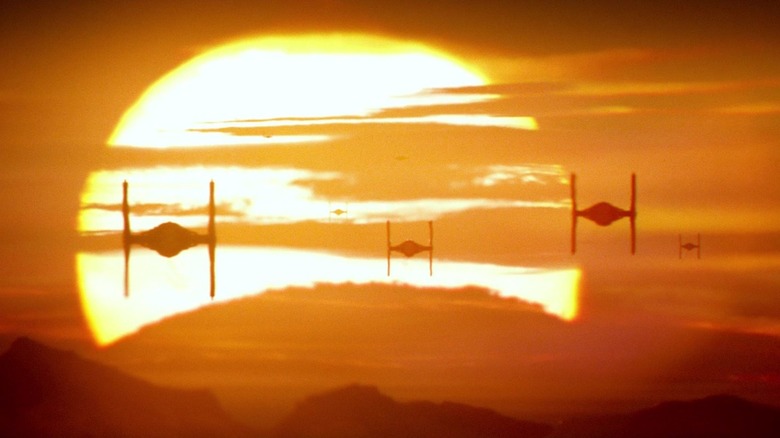
As quite a few people have pointed out online, the opening shot of the new trailer (above) features some X-wings flying through a rather orange sky. This is very reminiscent of a shot from “The Force Awakens” that sees some TIE fighters flying against an orange sky on the way to Maz Kanata’s palace. That shot is, itself, something of an homage by J.J. Abrams to “Apocalypse Now.” Whether director Jon Favreau is referencing Episode VII or “Apocalypse Now” is somewhat irrelevant.
What is relevant is the fact that this does evoke a connection to “The Force Awakens,” which is now a decade old. To many, it may feel like just yesterday, but in terms of nostalgia cycles, a decade isn’t far off from how these things often run. The “Star Wars” Special Editions turned generational nostalgia into box office gold in 1997. That was just 14 years after “Return of the Jedi” wrapped up the original trilogy and 20 years after “A New Hope” kicked off the entire enterprise.
Love it or hate it, sequel trilogy nostalgia was always going to come for us. But at the end of the day, it’s difficult to argue that this is inherently a bad thing.
The nostalgia cycle has caught up to Star Wars: The Force Awakens
Lucasfilm
Let’s rewind the clock a bit. George Lucas literally ignored warnings about the “Star Wars” prequels destroying the franchise. “The Phantom Menace” was a gigantic hit in 1999, but 2002’s “Attack of the Clones” was less so and remains one of the worst-reviewed movies in the series all these years later. At the time, 2005’s “Revenge of the Sith” was widely regarded as a big step up but still nowhere near the originals.
It’s impossible to deny that, in their day, the prequels were maligned. There’s no two ways about it. Then something started to happen. The animated series “Star Wars: The Clone Wars” premiered in 2008. Even though Lucas had a hard time selling “The Clone Wars” to Cartoon Network, it became a cornerstone of the fandom as it rolled on. By the time Disney purchased Lucasfilm in 2012, it wouldn’t have been difficult to argue that “The Clone Wars” was a crown jewel of the purchase, adding a lot of value to the franchise.
For a certain generation of fans, this became “Star Wars.” For that generation, viewing these movies as maligned “lesser than” entries in the canon of a galaxy far, far away is nothing shy of blasphemy. That’s a big reason why “Revenge of the Sith” became a box office hit all over again last year with the 20th anniversary re-release. For those younger fans, it was a big deal. “The Phantom Menace” had a similarly big 25th anniversary re-release in 2024.
By 2015, when “The Force Awakens” was coming out, we were already seeing plenty of signs of nostalgia for the prequel trilogy, just a decade and change after the release of “Revenge of the Sith.” Does that timeline sound familiar?
The Star Wars sequel trilogy belongs to a different generation
Lucasfilm
The “Star Wars” prequel trilogy redemption arc is complete at this point. It was driven by fans who grew up with those movies. They became adults who felt nostalgic for the characters and stories they grew up with. Similarly, we now have people who are firmly in their 20s who were much younger when the sequel trilogy first came out. After all, it’s been nearly seven years since “The Rise of Skywalker” delivered the most complicated $1 billion hit in history.
The complication stems from the fact that it was a hit but had to serve as a response to the divisive nature of “The Last Jedi.” Setting all of that aside, those twentysomethings are now going to be looking at any new “Star Wars” movies through a certain nostalgic lens. Just as we shouldn’t judge the prequel era fandom, it feels wrong to judge any legitimate fandom that arises from inevitable sequel era nostalgia.
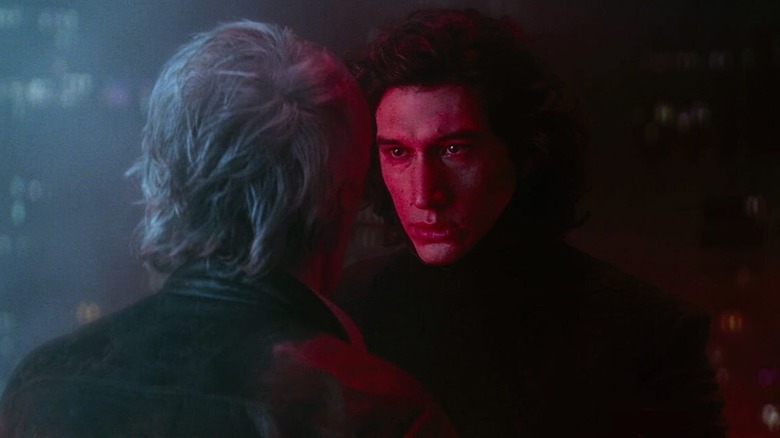
Disney scrapped a “Star Wars” movie centered on Kylo Ren titled “The Hunt for Ben Solo.” Fans later campaigned to get it made, even going so far as to take out billboards. There are very real, very devoted fans of the sequels and the characters at the center of those movies. People love Rey. People love Kylo Ren. People love Finn.
“The Force Awakens” and the rest of the sequel trilogy belong to a different generation. For filmmakers like Jon Favreau to harken back to them in the here and now only makes sense. Certain fans will moan and groan about it, but we can’t pretend like it’s too soon or totally out of bounds. It is unavoidable. It is destiny.
“The Mandalorian and Grogu” hits theaters on May 22, 2026.