
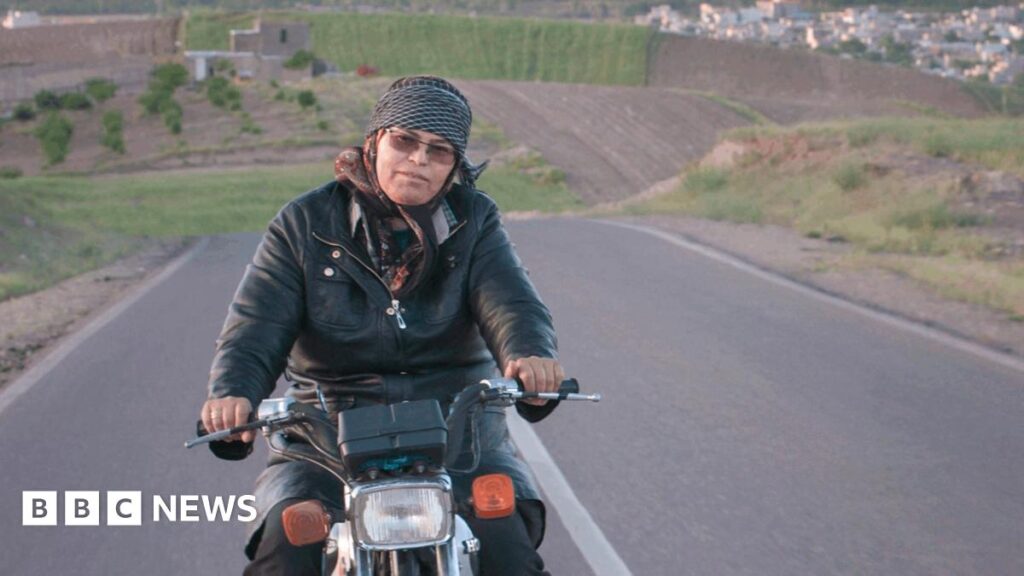
In one scene we see Shahverdi take into her home – with parental permission -Fereshteh, a teenager seeking a divorce from her husband whom she married at 12. He is 35, the same age as her father.
We see Fereshteh in a court hearing as she explains to the judge her reasons for wanting a divorce. “I wouldn’t want my child’s future to turn out like mine,” she says.
She is advised by the judge to make the situation work and later returns to her parents. The filmmakers were granted permission to film 40 minutes of the court hearing, which allowed them to capture the exchange.
In a turn of events later on in the film, Shahverdi is summoned to court herself following a complaint about her “operating a dishonourable house”. She recalls her interrogator asking: why do women visit your home? Why do you wear men’s clothing? Why isn’t your voice feminine?
She is instructed to see a medical expert witness to determine whether she needs a sex change operation. Shahverdi insists she is comfortable with her gender.
We don’t see the man conducting the tests, but we hear his advice: “Look, if you are really a woman, you should be considerate of the rules and traditions. In our society, a woman can’t just do anything she wants.”
The judge ultimately decides against surgery and closes Shahverdi’s case – but he advises Shahverdi to stop helping women so much and to mind her own business.
The filmmakers supported Shahverdi throughout the case.
Behind the camera, filming in Iran came with its challenges – Khaki and Eyni say they faced delays obtaining permits from local authorities, interrogations and had their hard drives confiscated.
At one point, the duo, who are based between Iran and the United States, were banned from leaving Iran for a year.