
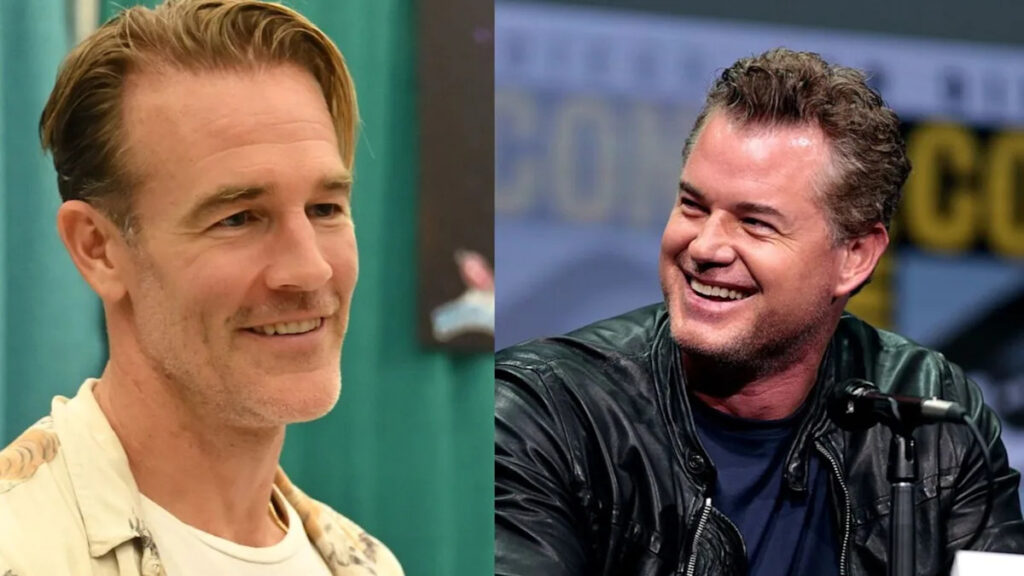
James Van Der Beek and Eric Dane both died in February. Within 24 hours, “friends” launched fundraisers. The pattern is a system, not a coincidence.
Hollywood has a new protocol for celebrity death, and it runs like clockwork.
James Van Der Beek died on Feb 11. A GoFundMe appears the same day, organized under the label “Friends of the Van Der Beek family,” with his widow, Kimberly, listed as the beneficiary. By Sunday, Feb 22, the page showed over $2.7 million raised toward a $1.5 million goal from more than 50,000 donations.
Eight days later, Eric Dane died on February 19. A GoFundMe appears on February 20, attributed to “Friends of the Dane Family.” It launched with a $250,000 goal that was later raised to $500,000. As of 8:00 a.m. ET Sunday, Feb 22, it showed $281,169 raised from 2,247 donations.
Both campaigns are framed the same way. Support the family. Protect the kids. Stability now, uncertainty later. Both launched quickly, with “friends” in the driver’s seat rather than the family owning the ask directly.
That’s the part people are reacting to. Not the grief. The mechanics.
The Timeline That Makes This Hard To Ignore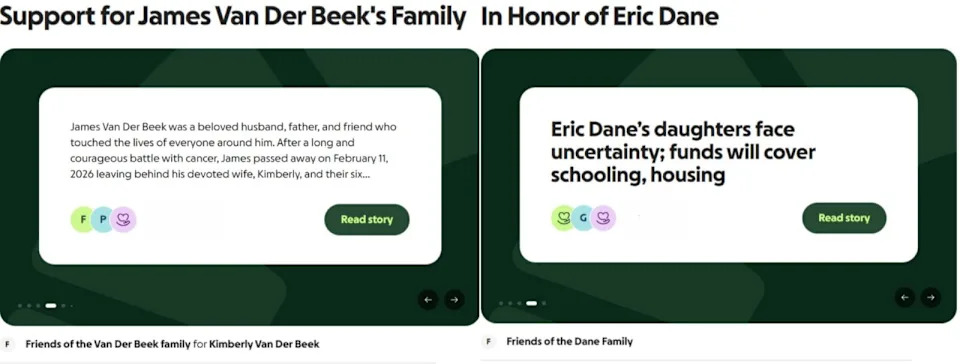
Both campaigns used nearly identical language and were attributed to anonymous ‘friends’ rather than family members. Screenshots: GoFundMe
Here’s what stands out. The execution is too fast, too familiar, and too polished to feel purely spontaneous.
Van Der Beek:
He dies February 11. The GoFundMe pitches financial strain due to medical care, bills, staying in the home, and maintaining the children’s education. Entertainment Weekly then reported the family had purchased a 36-acre ranch outside Austin for $4.76 million, with a spokesperson saying Van Der Beek secured the down payment “with the help of friends through a trust.”
Dane:
He dies February 19. The GoFundMe goes live on February 20. The page says his daughters “face uncertainty” and notes that the funds will cover schooling and housing, as well as broader “future needs” and “stability.” TMZ also noted a $27,000 donation from Euphoria creator Sam Levinson.
Two deaths. Two fundraisers were launched within roughly a day of each death. Two “friends of the family” organizer labels. Two kid-forward pitches, heavy on emotion and light on numbers. Celebrity tributes flooded social media—Shonda Rhimes, Ashton Kutcher, and Sharon Stone all posted heartfelt messages. But public donation records show few of them contributed. The emotional labor went public. The financial support stayed private.”
You can call it community. You can call it love. You can also call it a template.
The “Friends” Who Always Appear on Cue
This is the part that doesn’t sit right with critics.
When most non-famous families get crushed by medical bills, they set up their own campaign. They attach names. They answer questions. Accountability is part of the bargain.
When a celebrity dies, a different structure shows up. “Friends” appear instantly. The family stays emotionally present while remaining one step removed from the financial ask. If anyone gets mad, the family didn’t “do” anything. Their friends did. Plausible deniability.
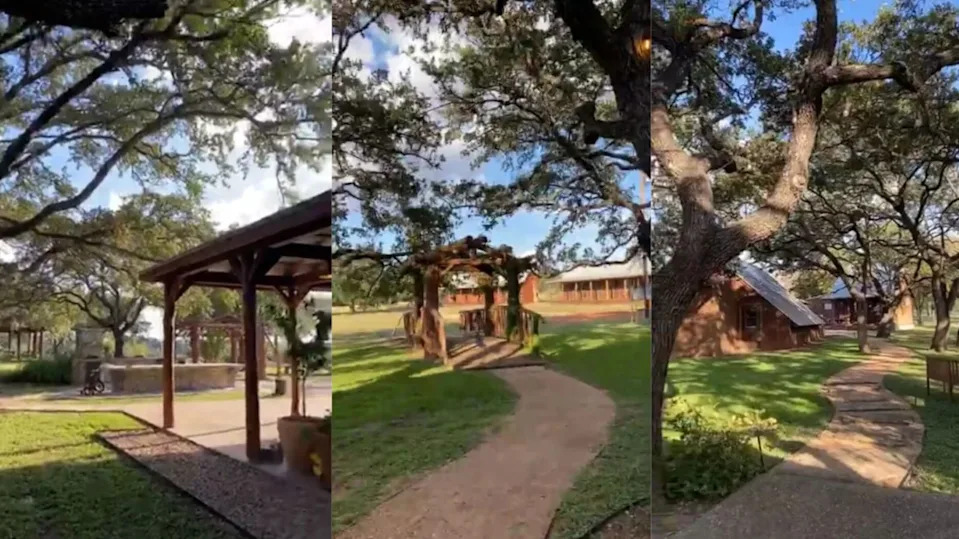
The Van Der Beek family purchased this $4.76M Texas ranch in January 2026, weeks before James’ death. Despite the asset, ‘friends’ asked the public for $1.5M. Credit: Kimberly Van Der Beek/Instagram.
That distance is powerful. It also changes the ethics of the pitch. The public is being asked to give without knowing who’s steering, why this route was chosen, or what level of private support is already in place.
Maybe these really are just friends moving quickly and doing their best. But the uniformity is what creates suspicion. “Friends” starts to feel less like a relationship and more like a role.
When Did GoFundMe Become the Default?
Celebrity deaths used to come with charity drives, memorial funds, and “donate to a cause he loved” messaging. Now it’s GoFundMe within hours, aimed directly at private family needs. A platform makes giving frictionless. It also makes scrutiny frictionless. When the ask is big, fast, and broad, the internet does what it always does. It audits the story.
The Van Der Beek campaign exploding past its goal turns a one-off into a model. If millions can show up in days, the next circle around the next tragedy has a clear incentive to reach for the same lever.
Not Everyone Accepts the Model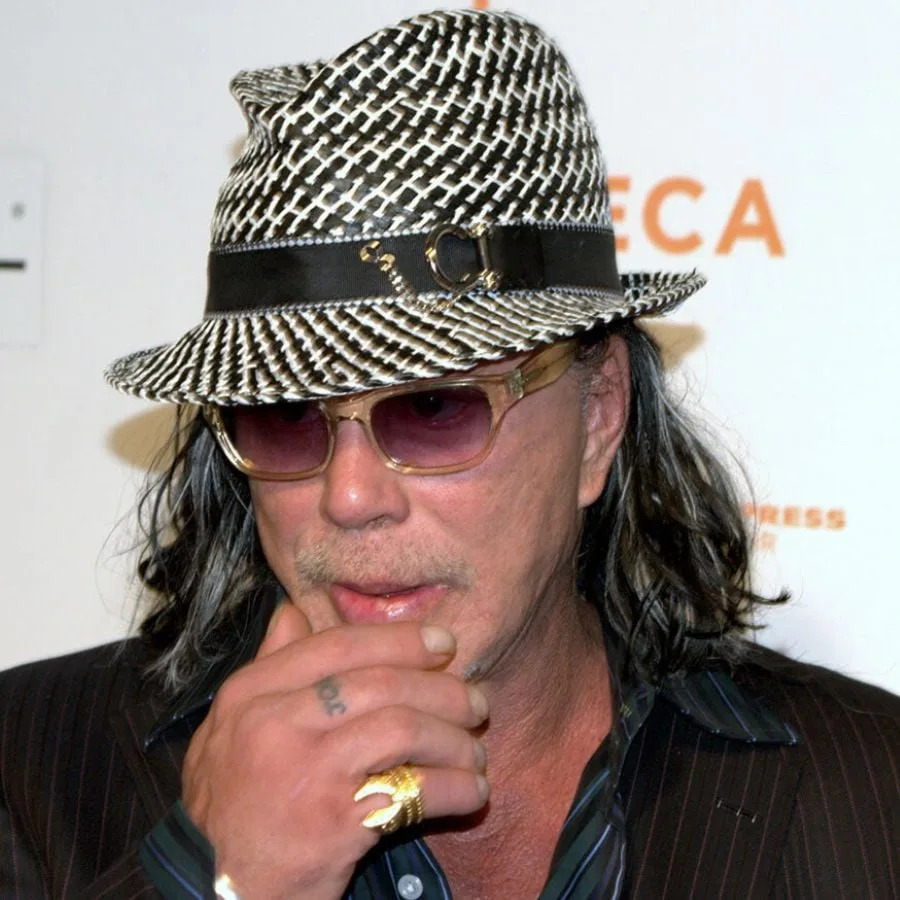
Mickey Rourke publicly rejected a GoFundMe created in his name and pushed for refunds. Credit: David Shankbone via Wikimedia Commons.
The practice was already controversial before these two February deaths.
In January, Mickey Rourke publicly denounced a GoFundMe campaign created in his name, calling it a “scam” and pushing for refunds. The Los Angeles Times reported the fundraiser had been created to help him avoid eviction, but Rourke rejected it and said he wanted the money returned.
The Real Cost of the New Normal
Here’s what gets lost. Families facing ALS, cancer, and catastrophic care costs without famous last names do not get 50,000 donors, celebrity amplification, or instant credibility. They get a fundraiser that stalls, or nothing at all.
So when celebrity circles treat public crowdfunding as the default instead of the last resort, it creates a hierarchy of grief. Not because those kids don’t deserve stability. They do. But because the system rewards access more than need, and it does it in public.
So Who Are the “Friends,” Really?
We still don’t know, and that may be the point.
The label protects everyone. The family doesn’t have to fully own the ask. The organizers don’t have to answer hard questions. Donors don’t have to think too long before clicking “donate.”
Two celebrity deaths. Two fast GoFundMes. Eight days apart. Same structure, same language, same “friends” label.
That’s not just a coincidence. That’s a playbook.
And the question isn’t whether it works. It obviously works. The question is, when did we decide this should be normal?