
There is a moment in Channel 4’s drama Dirty Business when Julie Maughan holds the body of her dead child and lets out an anguished cry. It is as brutal as it is compelling.
Her eight-year-old daughter Heather had just died in hospital, two weeks after playing in the sea on the beach at Dawlish Warren in Devon, where she contracted E coli O157, a bug which comes from raw sewage. She became ill with diarrhoea and blood loss. Transferred to Bristol children’s hospital, her parents agreed to switch off her life-support machine after she suffered kidney failure and brain damage.
The cause of her infection was not identified, and a jury ultimately returned a verdict of misadventure. At her inquest the coroner led calls for action to tackle sewage pollution on England’s beaches.
It is a shocking scene in the drama broadcast on Monday, which skilfully steers the viewer through what its writer and director, Joe Bullman, believes is the biggest corporate scandal in British history.
The shock is compounded because Heather died in 1999, 10 years after Margaret Thatcher privatised the water industry, promising increased investment, greater efficiency, lower consumer bills and better service.
Yet today, 27 years after Heather’s death, as the Guardian has revealed, the privatised water industry is owned by a medley of private hedge funds, sovereign wealth funds and pension funds. Sewage pollution is at record levels, companies are staggering under debts of £60bn accrued in part to pay shareholder dividends of £78bn and infrastructure has been left to rot.
In the late 90s when Heather died, Surfers Against Sewage had been fighting to clean up Britain’s seas, which water companies were polluting with hundreds of millions of gallons of raw sewage a day in what was termed “pump and dump”.
The surfers, who frequently paddled out wearing gas masks through faeces, condoms and sanitary products, made T-shirts that read “sick of being sick” and adopted combative tactics to take on the water industry.
Improvements slowly came with adoption of the EU-derived urban wastewater directive, which brought full sewage treatment around the coastline of England and Wales.
Rivers, however, were not part of the cleanup. Raw sewage continued to pour into once crystal-clear chalk streams, mighty tidal rivers and ambling local watercourses in the decades after the EU directive came in.
Sewage floats on the River Thames at Datchet in Berkshire in April 2024. Photograph: Maureen McLean/Alamy
When the Guardian started to expose the shocking state of England’s rivers as a result of raw sewage pollution, the retort from the regulator, the Environment Agency, was: “Well, no one swims in rivers.”
Never mind the wilful disregard for the wildlife and habitats in and around our rivers, the apathy was astonishing.
Just as in the 90s, it took local activists and campaigners who saw clear evidence that water companies were treating rivers as open sewers to force the EA, the water industry regulator, Ofwat, and politicians, to take notice of the evidence they were uncovering.
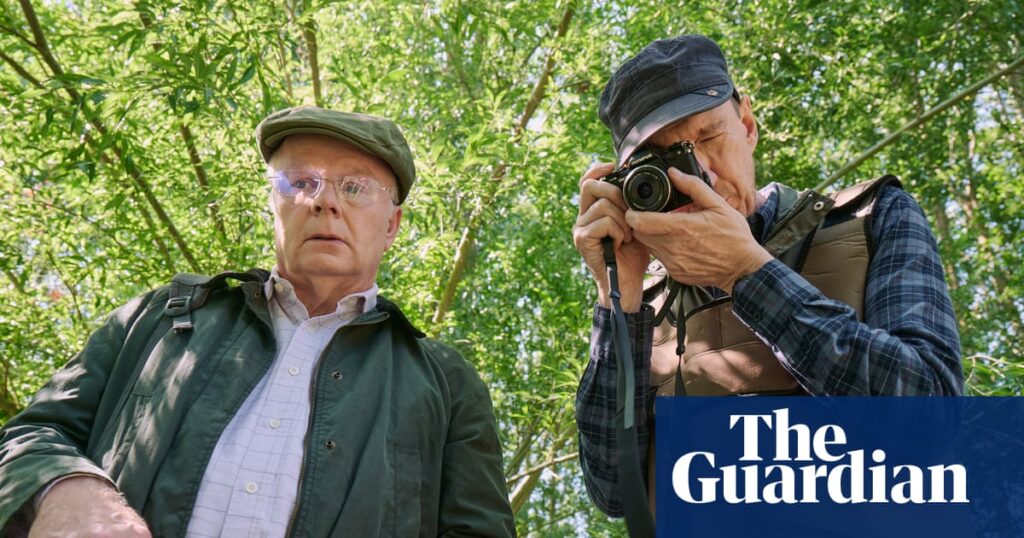
Two of those campaigners – Peter Hammond, a retired professor of computational biology, and Ash Smith, a retired police detective – carry the narrative of Dirty Business.
Faced with an alarming falloff in fish in their local river, the Windrush in Witney, Oxfordshire, the two men embark on some detective work.
It leads them into the murky depths of Thames Water’s decades-long failure to invest in its treatment plants, pipes and pumping stations. It takes them into the heart of Westminster with evidence that illegal sewage dumping was at least 10 times higher than the regulator believed, and to the high court where they fight for the public to have a say in the future of struggling Thames Water.
Today they are still fighting.
Surfers Against Sewage, whose members took part in an event in Falmouth, Cornwall, in May 2025, continues to campaign against the pollution of English and Welsh waterways. Photograph: Hugh R Hastings/Getty Images
As Thames Water teeters on the edge of financial collapse, Hammond and Smith are pushing, alongside other campaigners, for the company to be put into special administration, a form of temporary public control.
But ministers in the Labour government have so far refused to take that step. Instead their vision for water in a draft white paper prefers to rely – as previous governments have – on private equity and foreign investors to get Thames and other companies out of the mess they are in.
In their desperation not to spook the private sector, ministers are seriously considering allowing companies such as Thames – which was fined £104m for sewage dumping last year – to be let off future fines for polluting our seas and rivers, citing the need to give investors stability.
One definition of insanity is doing the same thing repeatedly and expecting different results. But for Heather’s mother, Hammond, Smith and the other tenacious campaigners the Guardian has worked with who do not get a mention in the drama, the madness has to stop.
“This is our water industry, we pay the bills,” said Chris Hinds, the founder of Surfers Against Sewage, who supported Julie 27 years ago. “The drive for profit from our water has to stop. It needs to come back into public ownership.”