
Photo: Balazs Gardi for New York Magazine
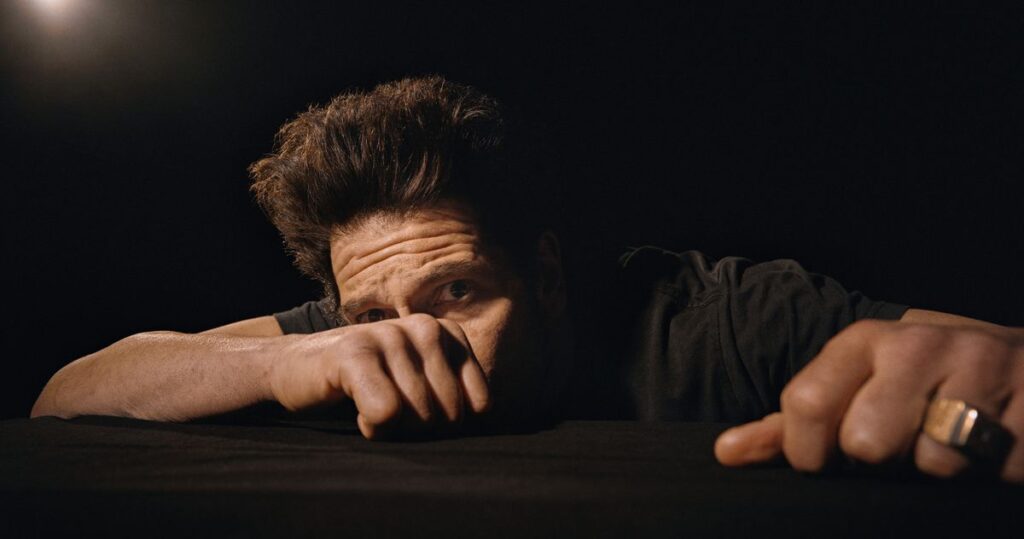
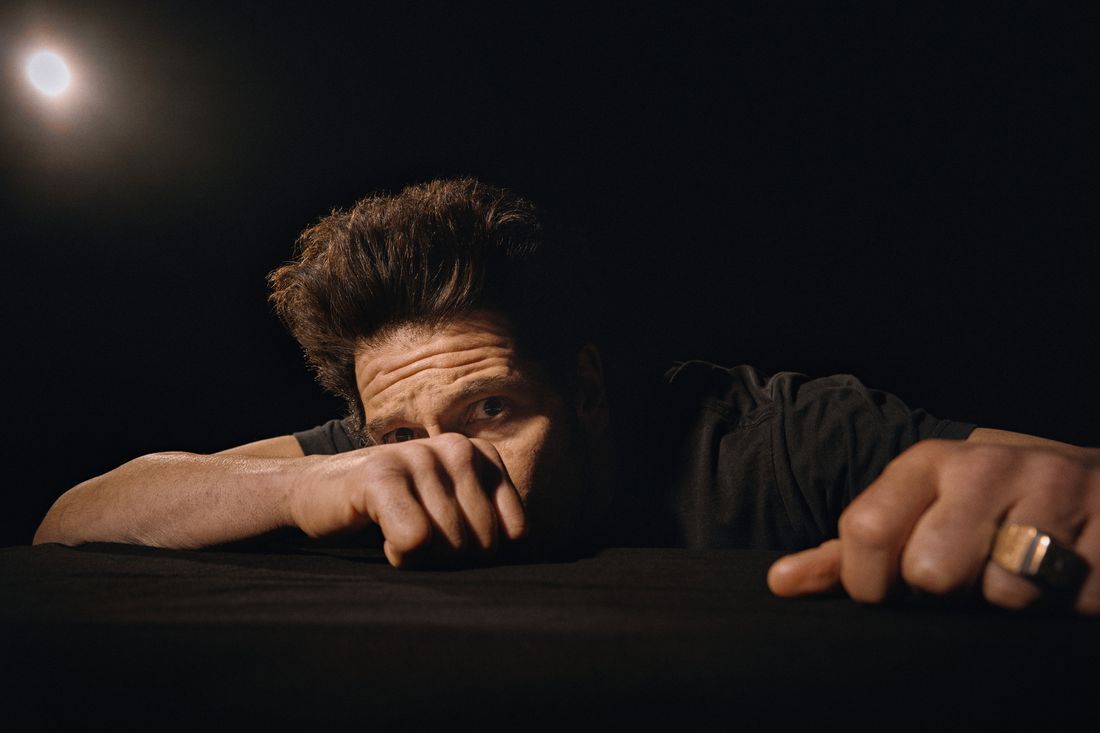
For Jon Bernthal & Co., getting this play to the stage will be a lot like pulling off a bank heist. The 49-year-old actor is in only his second week of rehearsals for his Broadway debut, the first theatrical adaptation of Dog Day Afternoon, and the show is scheduled for technical rehearsals the following week. He’s blocking out scenes from this sweaty powder keg of a story in a rehearsal space downtown during one of the coldest winters in New York memory. “It takes me back to living here in the early 2000s,” he tells me during a brief break, “where times were tough and all I wanted was to be onstage.”
Bernthal plays Sonny, the character made famous by Al Pacino in Sidney Lumet’s seminal 1975 film, based on the true story of a failed bank robbery in Brooklyn in 1972 by former teller John Wojtowicz. The project is in Bernthal’s wheelhouse in the sense that he exudes the brooding machismo that defined the New Hollywood; the play’s director, Rupert Goold (2019’s Judy with Reneé Zellweger and 2024’s ill-fated Tammy Faye on Broadway) compares him to Marlon Brando. “He brings a sort of bruised masculinity,” Goold says. Bernthal has built a reputation over the past decade playing tough guys: assassins, dirty cops, soldiers. Most famous among his characters is Marvel’s Punisher, the high-kill-count vigilante “anti-hero ” whose skull insignia has been adopted by some police as an aggro logo.
Sonny feels like a departure; unlike Bernthal’s mercenaries, Sonny fumbles with his gun, has a bleeding heart, and lays his vulnerabilities bare. He is also one of cinema’s first great queer characters; the film reveals he is robbing a bank for his partner’s gender-affirming surgery. “It’s a queer story,” Bernthal says. “It’s an absolute celebration of love that knows no boundaries. And it will always be that, but I think it’s also an examination of masculinity. It is an unbelievable mirror of what happened in Minneapolis and with armed confrontations with both federal and local troops: How mob mentality can effect real-life violence on the streets and stoke their fears and bring people together as much as it can completely divide people.”
It is hard to believe this is the first time the story has been adapted for the stage, given how perfectly suited it is to the confines of the theater, concentrated in one location and told in tension-ratcheting, near real time. For an actor like Bernthal, the film’s legacy as a complicated classic of American cinema is a lot to shoulder. “It’s not lost on me how just incredibly audacious this task is, to touch material that’s so deeply sacred,” he says. “Lumet’s film is one of the most treasured pieces of art our country’s ever made.” He cautions that this telling of the story, by playwright Stephen Adly Guirgis, is not just a straight adaptation of the film. “This is a Stephen Adly Guirgis version of this story. There’s no one, in my opinion, who tells New York stories like Stephen does. He sees New York through a lens that’s so unique, so specific, so singular.” Guirgis grew up in the city in the 1970s, and his plays, including 2014’s Pulitzer winner Between Riverside and Crazy, involve characters at the fringes of city life, including convicts, addicts, and sex workers. Guirgis says there will be nods to the film, calling it an “unspoken contract” with the audience: “There has to be a bank robbery. It has to go south. At some point, Sonny has to scream ‘Attica!’” Beyond that, Guirgis is making a New York–based love story that is “dysfunctional, but it’s pure and it’s raw.”

Twenty-five days before previews.
Photo: Balazs Gardi for New York Magazine
Bernthal is Hollywood’s go-to bruiser with Stanislavski bona fides. He started his career studying at the Moscow Art Theatre School and co-founded a Brechtian troupe that moved from Skidmore College to Bushwick in 2001. He had not performed onstage in years when, in 2022, Guirgis reached out to ask if he would participate in a reading of a new play he was working on at the Ojai Playwrights Conference. “Stephen’s one of my favorite playwrights of all time,” Bernthal says. He said “yes” before Guirgis told him what the play even was. Bernthal is based in Ojai, which made the reading special for him; it was the first time his kids ever saw him act onstage. Bernthal continued to research the true story of Wojtowicz, and Guirgis held more readings over the next couple of years, and the play evolved as they went. “The whole process is extraordinarily alive and fluid and changing,” Bernthal says. “I was told that’s how Stephen works. I’ve done readings with him where I’ve received the pages as I’m walking on the stage.” Leading up to Dog Day Afternoon’s Broadway premiere, Guirgis is still updating the script; he tells me, “We’re in rehearsal, but I’m writing it, I’m still trying to figure it out.”
Notably missing at rehearsal this week is Bernthal’s co-star and longtime friend, Ebon Moss-Bachrach, who is wrapping filming on The Bear, the series that led to both of their Emmy Awards. Onstage, Moss-Bachrach will play Sal, Sonny’s tragic co-conspirator in the heist, played in the film by Jon Cazale. Bernthal’s history in theater is tied to Moss-Bachrach, he tells me; his “first gig ever” was as Moss-Bachrach’s understudy in Fifth of July Off Broadway in 2003. “My New York theater story started by getting to watch him every night,” Bernthal says. “I trust him implicitly.” Moss-Bachrach got Bernthal his role on The Bear as main character Carmy’s late brother, who looms over the series in poignant flashbacks. When Bernthal told Moss-Bachrach about working on readings of Dog Day Afternoon, he expressed interest. “I went right to Stephen, and I said, ‘Hey man, what about Ebon?’ It was an absolute no-brainer,” Bernthal says. Bernthal tells me that Guirgis’s take on Dog Day Afternoon deviates from the film in key ways, such as fleshing out some of the more minor characters, including the bank staff, and going deeper on Sonny and Sal’s dynamic. The two actors spent “forever” talking about their characters before rehearsals began. Bernthal describes his co-star as “completely unpredictable. You never know what he’s going to do, and I think the greatest among us have that quality.”
The rehearsal process for Dog Day Afternoon is a welcome change of pace for Bernthal from his work in movies and TV. “We’re getting a lot done. It’s very hard. But we got right up from the beginning and started attacking it. There hasn’t been much pondering and sitting around,” he says. “The reason why I wanted to get back into the theater, more than anything else, is how much I craved being in rehearsal rooms.” He relishes the process, compared to the arduous stop-and-start shoot days he’s used to. On a film or TV set, “I load myself with rituals. You’ve got to create these sacred spaces to remove yourself. You’ve got to find some corner to rehearse in, or take a walk, or listen to a song, to get in it and stay in it.” In theater, however, he’s able to ease in and out of character in a more balanced way, thanks to the daily nine-to-six rehearsal schedule. “You could ask me in a couple of weeks and maybe I’ve changed my mind, but at this moment, what is so comforting is that we have this allotted period of time.”
Despite his performing a range of roles from William Shakespeare to David Auburn, Bernthal is only now doing Broadway with Dog Day Afternoon. He’s thrilled, and happy, and humbled, but also scared, and he’s tapping into that emotional energy as he rehearses the part of this doomed romantic bank robber. “I would like to say I turn it off when I leave, but I don’t, and I am not really interested in that. I think Sonny’s terrified. He’s desperate and finding his way. And that’s exactly where Jon is right now,” he says.
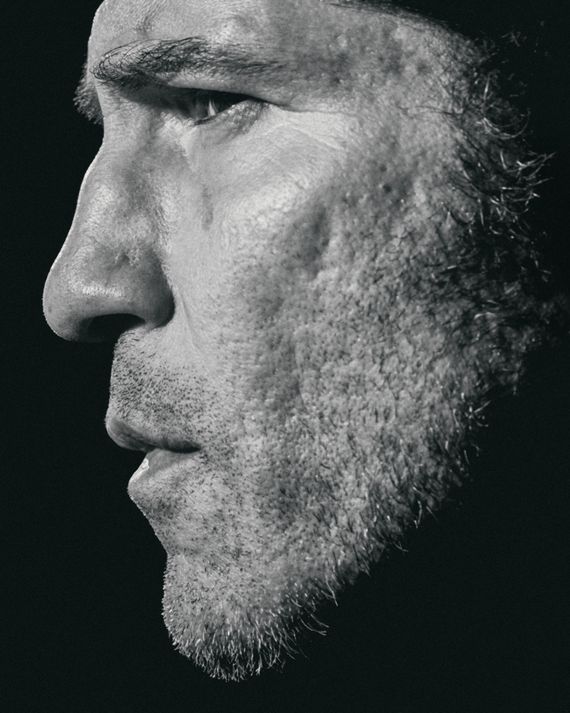
Photo: Balazs Gardi for New York Magazine
Dog Day Afternoon is in previews March 10 at the August Wilson Theatre.
Thank you for subscribing and supporting our journalism.
If you prefer to read in print, you can also find this article in the February 23, 2026, issue of
New York Magazine.
Want more stories like this one? Subscribe now
to support our journalism and get unlimited access to our coverage.
If you prefer to read in print, you can also find this article in the February 23, 2026, issue of
New York Magazine.
See All