
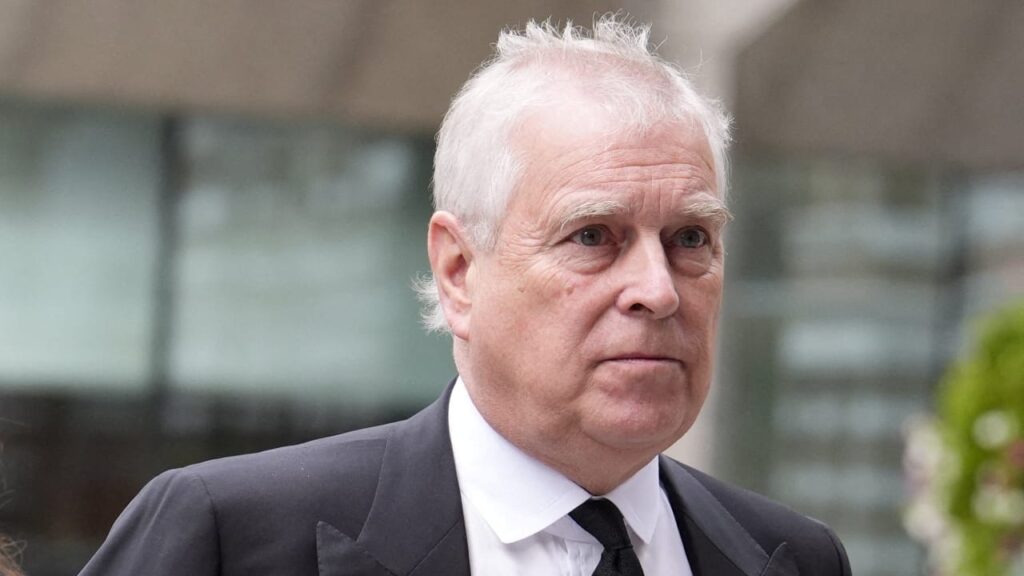
British Prime Minister Keir Starmer’s government agreed on Tuesday to release documents relating to the appointment of Andrew Mountbatten-Windsor as a trade envoy amid widening scrutiny over his ties to US sex offender Jeffrey Epstein.
Last week’s arrest of Mountbatten-Windsor, King Charles’ younger brother, led some lawmakers to openly question, during a debate, whether it was time to end the parliamentary convention that prevents them from criticising the royal family.

Mountbatten-Windsor, formerly known as Prince Andrew, was the first member of the British royal family to be arrested in more than three centuries when he was questioned by officers on suspicion of misconduct in public office.
He has always denied any wrongdoing in relation to Epstein and said he regrets their friendship.
Confidentiality rules
Chris Bryant, a junior trade minister, said during the debate that Mountbatten-Windsor had been on “a constant self-aggrandising, self-enriching hustle” as the envoy.
Bryant called Mountbatten-Windsor “a rude, arrogant and entitled man who could not distinguish between the public interest which he said he served, and his own private interest”.
Mountbatten-Windsor, the second son of the late Queen Elizabeth, served as the UK’s Special Representative for International Trade and Investment between 2001 and 2011, a role that allowed him to travel the world and meet senior business and government figures in an unpaid capacity.
The police began investigating Mountbatten-Windsor after the US government last month released emails that appeared to show he had passed documents to Epstein while he worked as a trade envoy. Trade envoys are usually barred from sharing such material under confidentiality rules.
Files could embarrass former ministers and the royal family
Lawmakers from opposition parties lined up to criticise Mountbatten-Windsor. At least four lawmakers said the convention shielding the royal family in parliament should end.
“These arcane rules make a mockery of our democracy,” said Brendan O’Hara, a member of parliament for the Scottish National Party. “Nobody, regardless of rank or privilege, should or must be above the law.”
The House of Commons Speaker had given lawmakers approval to discuss the former prince on the basis that he is no longer a member of the royal family, having been stripped of his titles.
The Liberal Democrats had put pressure on the government to compel it to release all the documents related to his appointment using an arcane parliamentary procedure known as a humble address.
Bryant said the government supported the motion, and it was passed unanimously by lawmakers.
There was a small turnout from lawmakers from the ruling Labour Party and the opposition Conservatives, the two main political parties.
Bryant said he would try to get the documents released as soon as possible, but officials would need to check that it would not interfere with the police investigation.
Publication of the vetting documents could embarrass figures who served in then Prime Minister Tony Blair’s government when he was appointed, as well as members of the British royal family, which is facing its worst crisis in 90 years over Mountbatten-Windsor’s connections to Epstein.
Mountbatten-Windsor has not spoken publicly since the release of more than 3 million pages of documents by the US government relating to Epstein, who was convicted of soliciting prostitution from a minor in 2008.
Those files suggested Mountbatten-Windsor had, in 2010, forwarded to Epstein reports about Vietnam, Singapore, and other places he had visited on official trips.