
Welcome to the free Sunday Newsletter! Comments are open to all, on condition of civility!
There are two massive victories for Prince William in today’s Sunday newspapers.
As readers of The Royalist will be well aware, William has long urged his father to completely cut the York family out of royal life and has despaired at his father’s half-measures on the matter. His anguish has only been increasing as the Epstein files have revealed the depth of the former Prince Andrew’s and the wider York clan’s involvement with the scandal.
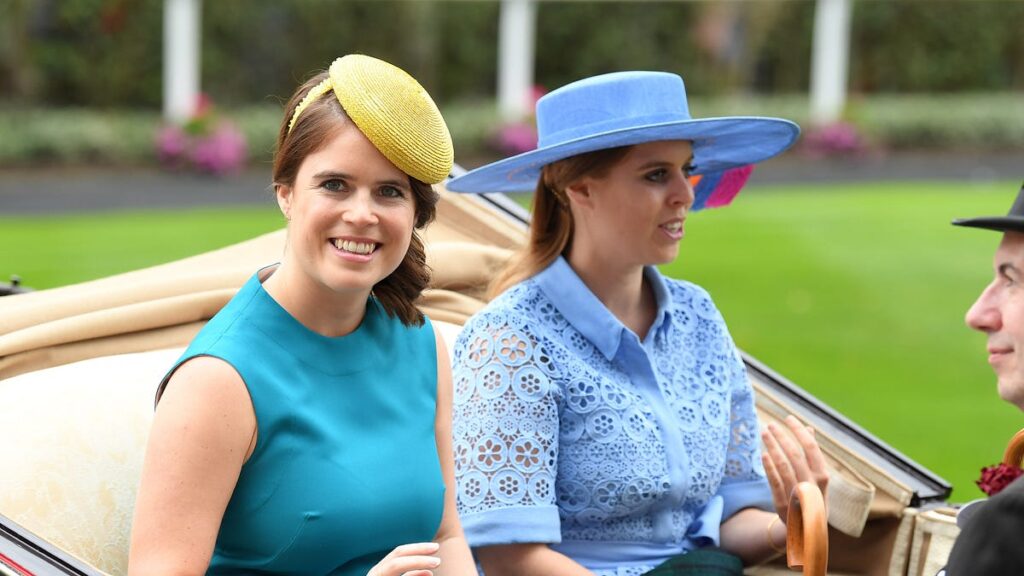
Now, a Mail on Sunday story reports that Princess Beatrice and Princess Eugenie have been told they will not ride in the royal carriage procession at Royal Ascot in June, while The Sunday Times says that William has been lobbying for Andrew to be officially removed from the line of succession since last year.

The Royal Ascot carriage parade is one of the set pieces of the royal year, a highly visible marker of who is “in” and who is “out.” It has traditionally showcased the York family, with Andrew and his daughters very much part of the core line-up. To be excluded from that procession is therefore a key delineator of status, and, in effect, a very public demotion.
Behind the scenes, this looks very much like a win for William. For years he was infuriated by what he saw as his father’s ambivalent approach toward dealing with Andrew and Sarah Ferguson. Now that the King has finally had his road to Damascus moment on Andrew, William fears he is making the same mistake with their daughters.

And indeed, King Charles has consistently signaled that, whatever happens to Andrew, his children should not be punished for their father’s behavior. That message was underlined just three months ago when, days after Andrew was formally stripped of his remaining titles and honors, Princess Beatrice was appointed Deputy Patron of the Outward Bound Trust, a charity closely associated with the late Prince Philip.
It was Charles’s way of saying: whatever is happening to the parents doesn’t affect the children.
Allies of William, however, have felt this was absurdly hasty.
They believed the King should at least have waited to see what else might emerge from the vast cache of U.S. Department of Justice “Epstein files” before elevating Beatrice in this way. That caution now looks prescient. The latest documents and emails rekeased in January mention the York family repeatedly. They show, among other things, that Sarah Ferguson took her adult children Beatrice and Eugenie to visit Jeffrey Epstein in Miami less than a week after his release from prison in July 2009, with Epstein apparently paying thousands of dollars for their flights, and that she later described him in an email as “the brother I have always wished for.”
Further emails suggest Ferguson continued to lean on Epstein for money and advice even after his conviction, including asking him to upgrade flights so she and the “girls” could visit, and discussing her “Mothers Army” and other projects with him.
Separate correspondence shows Princess Beatrice involved in media-management discussions about how her mother’s relationship with Epstein should be framed.

Although there is no suggestion the daughters committed any criminal wrongdoing, the overall picture these documents paint is of a family far more deeply entwined with Epstein than the public had previously understood.
At the same time, long-standing questions about the York sisters’ lifestyle and public role have re-emerged. More than a decade ago, as part of Charles’s drive for a “slimmed-down monarchy,” Beatrice and Eugenie lost their taxpayer-funded police protection and told they were not working royals.
Reports at the time highlighted their frequent foreign trips and travel, and cemented the idea in some royal circles that the Yorks enjoyed the trappings of royal life without a clearly defined public role.
William has long been comparatively cool toward his York cousins.
One long-remembered flashpoint came when he did not invite their mother, Sarah Ferguson, to his wedding, a decision that left the girls deeply upset and convinced he was being mean and exclusionary.
In their eyes, they were among the first to be pushed out of the inner royal circle once Charles’s slimming-down agenda began to bite, losing security, allowances and any realistic prospect of being full-time working royals while still relatively young. That history helps explain why, when Harry and Meghan left the royal family, Beatrice and Eugenie instinctively aligned themselves with the Sussexes.
That alignment was made very visible when Harry and Meghan allowed Princess Eugenie and her husband Jack Brooksbank to move in to Frogmore Cottage when they moved to America. The five-bedroom Windsor home had been renovated at great expense before Megxit, and the Sussexes were subsequently obliged to surrender it back to the Crown.
Eugenie was later photographed visiting the Sussexes in California, including a high-profile outing to the Super Bowl after the couple had settled in Montecito.
For many at the palace, these were clear signals that the York sisters saw themselves in Harry and Meghan’s camp—fellow exiles who felt they had been sidelined by an uncaring institution.
Now, that calculation looks unwise.
Harry and Meghan are heavily invested in portraying themselves as morally and socially above the behavior of the royal institution.
In the wake of the Epstein files, no one seeking that kind of high moral ground wants even a second-hand association with anyone whose family is so directly entangled in the scandal. Meghan’s own name has been dragged into the online frenzy due to an occasional mention in the files, but reputable coverage has stressed that claims linking her to Epstein are misleading and unsupported by evidence.
By contrast, the material on Andrew and Ferguson and the Princesses is extensive, and the princesses now have to live with the fact that their parents’ judgments – and in some cases their own proximity to those judgments – are being raked over in painful detail.
Sources say that last year, in what some around him saw as a last-chance for the Princesses, William and Catherine privately proposed that Beatrice and Eugenie submit their finances to an ethical forensic accountant, so that an independent audit could clear them of any suspicion about how they funded their lavish lifestyles as teenagers and young women. That offer was rejected. The sisters chose to rely on the defense that they had done nothing wrong and that, as private individuals with jobs, their money was their own business.
Publicly, the picture at Christmas this year seemed far more positive when Beatrice and Eugenie made a surprise appearance on the Sandringham church walk, joining King Charles, Queen Camilla and the Prince and Princess of Wales for the traditional Christmas Day service at St Mary Magdalene.
Coverage at the time framed their presence – with Eugenie and Jack Brooksbank walking prominently near the front of the procession – as a notable show of unity and alignment with the wider royal family, after weeks of speculation that they might stay away.
But it was notable that William did not speak with either of them publicly. Today’s Royal Ascot carriage decision makes clear that William does not want the York sisters anywhere near the top tier of royal representation when it really counts.
The second victory for William today comes via the London Sunday Times, which reports that last year he pushed for Andrew to be stripped of his place in the line of succession altogether.
Andrew, remains, absurdly, eighth in line to the throne despite having been forced out of public life and arrested on suspicion of misconduct in public office over alleged sharing of confidential trade information linked to Epstein.
The government has since confirmed that it is actively considering legal changes to remove Andrew from the succession, a step that would require an act of Parliament and parallel moves in up to 14 Commonwealth realms where the King is head of state. Australia and New Zealand have already indicated they would back such a move.
While constitutional experts warn that the process could be complex and time-consuming, at Westminster, there is growing cross-party pressure for Andrew to be removed, with polls showing overwhelming public support for his exclusion.
The Sunday Times report that William was pushing for this last year is significant not just for what it says about his private position, but because it is being briefed into the public domain at this particular moment. It underscores the contrast between a future King who wants decisive action and a present King who has, until now, been cautious about endorsing steps that might punish Andrew’s daughters by association.
Taken together, today’s developments – the Ascot carriage bombshell and the confirmation that William has been lobbying to remove Andrew from the succession – fit neatly into a broader pattern.
Over recent months, I have been reporting that when William becomes king he is planning a bonfire of titles, using royal letters patent to strip non-working royals, including Andrew and the Sussexes, of their HRH styles and princely rank in order to reduce the number of people who can drag the institution into scandal.
The aim is a much tighter, more controlled monarchy in which only a small inner circle carries the burden – and the risk – of representing the Crown.
Against that backdrop, barring Beatrice and Eugenie from the Royal Ascot carriage procession looks less like a one-off snub and more like an early skirmish in a larger campaign.