
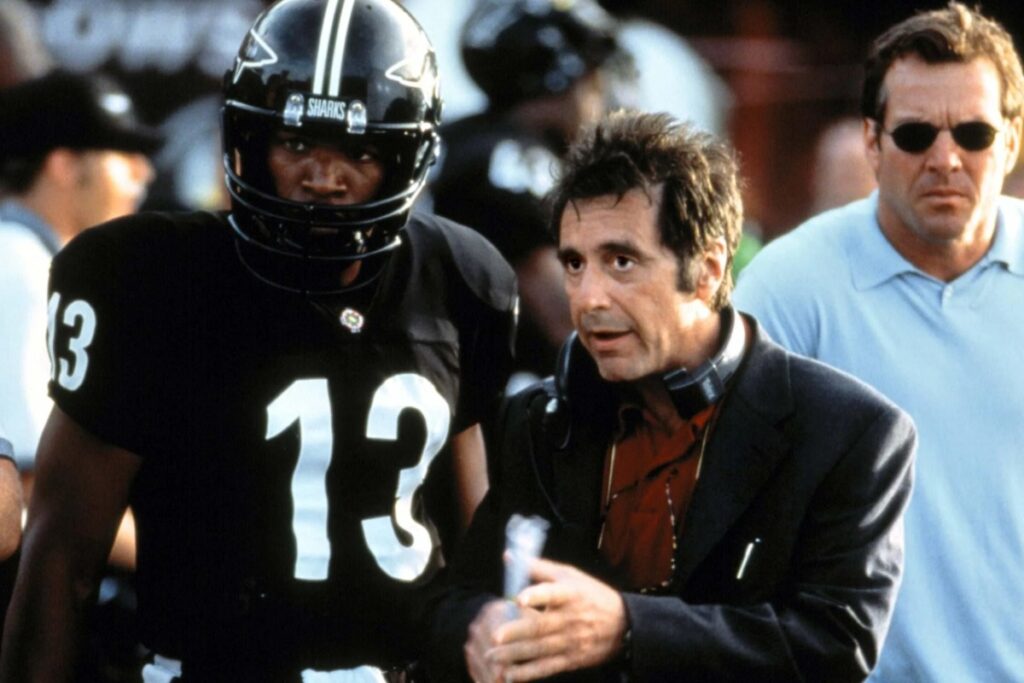
How did a bruising football epic that rattled gatekeepers and split audiences become Oliver Stone’s loudest roar? Any Given Sunday is no longer benched, and the comeback says more than you think.
The helmets clashed on screen, but the real collisions happened behind it. Oliver Stone’s 1999 football drama returns under the microscope, its fevered cutting and sideline power plays exposing the sport as pure American spectacle and hard commerce. With Al Pacino, Cameron Diaz and a breakout Jamie Foxx up front, the production wrestled with rewrites, NFL headwinds and on-set rivalries that leaked into the movie’s pulse. Once a noisy outlier in Stone’s filmography after Nixon, it now draws fresh charge for the way it turns a locker room into a national mirror as much as a box office arena.
A bold play: Any Given Sunday’s explosive journey
When Oliver Stone first tackled football in Any Given Sunday (L’Enfer du dimanche), he was not just making a sports movie. Released in 1999, the film stormed into theaters as a visceral commentary on power, loyalty, and human resilience, using the rough and tumble world of professional football as its backdrop. With a star-studded cast featuring Al Pacino, Cameron Diaz, and Jamie Foxx, it has grown in stature over time, revealing layers that were initially overlooked. But what really went into the making of this once controversial masterpiece?
The storm on the field: plot highlights
Set against the backdrop of the fictional Miami Sharks, the film follows a struggling team under fire from ownership and media. Veteran coach Tony D’Amato (Al Pacino) clashes with the ambitious team owner Christina Pagniacci (Cameron Diaz). Enter Willie Beamen (Jamie Foxx), a brash and untested quarterback who unexpectedly becomes the team’s rising star. Together, they battle internal conflicts, towering egos, and relentless business pressures. The story’s crescendo comes not only from touchdowns, but from its unsparing look at sacrifice, ambition, and fragile personal relationships.
Chaos on the sidelines: crafting the vision
Behind the camera, Stone veered from the politically charged currents of his earlier films like Nixon and Platoon and embraced a grittier, mainstream narrative. His inspiration blended multiple sources, including a non fiction account of football’s underbelly, with contributions from screenwriters like Jamie Williams and John Logan. Crucially, the NFL declined official involvement, so Stone built a fictional league, gaining creative freedom but complicating production. The result fused his kinetic style with raw, high impact football sequences that mirrored the instability of the characters themselves.
A dream team riddled with tension
The cast, packed with Hollywood heavyweights, channeled the intensity on and off the field. Al Pacino brought gravitas as the weary, impassioned coach, while Cameron Diaz surprised many with a sharp portrayal of an unapologetically ambitious owner. Jamie Foxx, not yet a marquee star, clashed at times with co star LL Cool J, adding real life friction to the shoot. To ensure authenticity, actors underwent rigorous football training, absorbing the game’s physicality and grit. Despite the challenges, performances became one of the film’s most celebrated assets.
From divisive reception to cultural landmark
Critics were initially split, with frenetic editing and over the top visuals dividing opinion, while a bold critique of sports culture sparked debate. At the box office, the film held its own, earning 100 million dollars worldwide. Over time, audiences and critics reassessed its deeper layers, noting how it exposes systemic issues in American sports and elevates football to the scale of battle. Stone has reflected on the sport as an arena where modern gladiators fight not just for victory, but for love, loyalty, and survival, themes that continue to resonate.
More than two decades later, Any Given Sunday stands as a testament to Stone’s audacity. Blending chaos with precision, it remains an emotional rollercoaster that is larger than the game it depicts, a modern gladiator tale that rewards viewers with something deeper each time the whistle blows.