
(Credits: Far Out / YouTube Still)
Sun 1 March 2026 21:45, UK
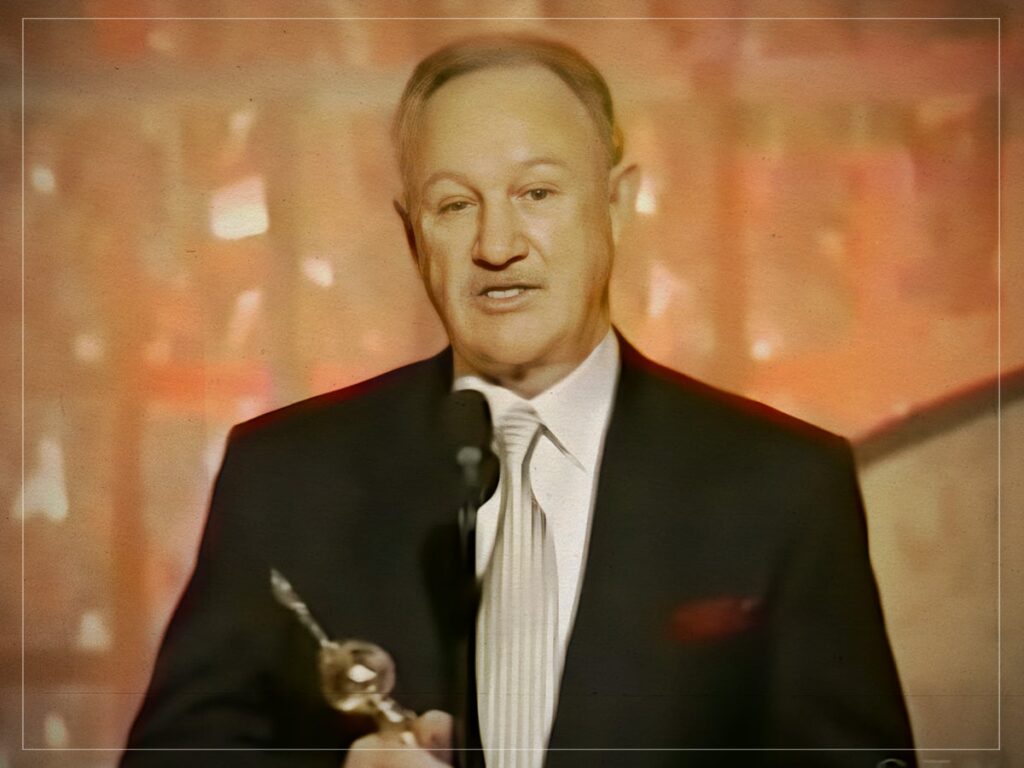
The last year or so has been a shocker for fans of the best actors of all time. Not only did Robert Redford pass away, but Robert Duvall too, and before them Gene Hackman, meaning some of the most recognisable and talented faces in cinema history were gone for good.
Although Hackman wasn’t ever usually mentioned on the same level as the first two names there, he really should have been because he left behind a practically unrivalled library of superb performances in films that will stand the test of time, most notably in the New Hollywood era where he excelled in films like Francis Ford Coppola’s The Conversation, the majestically gritty 1971 classic The French Connection and the little-known but brilliant Scarecrow opposite Al Pacino.
Hackman was one of the most successful stars of the 1970s, able to make critically acclaimed low-budget movies one year and then massive blockbusters the next, playing Lex Luthor in 1978’s Superman and battling his way out of an upturned cruise liner in The Poseidon Adventure, a leading example of the huge-scale disaster movies that were so popular at the time.
But Hackman also had something of a career revival in the 1990s, starting things off by winning a ‘Best Supporting Actor’ Oscar for Clint Eastwood’s superb western, Unforgiven, in 1992. He appeared in three movies adapted from John Grisham novels, who was at the time one of the world’s leading authors, beginning with The Firm, the Tom Cruise-starring 1993 hit, which was Oscar-nominated and brought in almost $300m at the box office against a budget of less than $50m.
He would go on to make another with Runaway Jury starring John Cusack, but in between came a rare low point, as Hackman teamed up with Chris O’Donnell, who was at that point very much flavour of the month thanks to Batman Forever, for a film called The Chamber, a legal thriller about a young lawyer trying to defend his Klansman grandfather in court over a bombing in the 1960s.
The screenplay was adapted by William Goldman, the Oscar-winning writer of stone-cold classic movies like Butch Cassidy and the Sundance Kid and All the President’s Men, and to say that he didn’t have fond recollections of the 1996 movie would be putting it mildly. In his biography, Which Lie Did I Tell, Goldman spoke about working on a Clint Eastwood film the following year, Absolute Power, and said: “I found myself talking, for the first time in my life, with Gene Hackman. I had written his previous movie, The Chamber – a total wipeout disaster, although not his fault or mine.”
Adding: ”While it was a terrible experience, it wasn’t a very interesting one, and besides, I never saw the movie and neither did anyone else, so no one would give a shit.”
To say The Chamber was a calamity on release would be putting it mildly. It lost tens of millions at the box office, and Grisham himself described it as “a train wreck”. He also, however, said that Hackman was the only good thing in it, which may well have been borne out by the fact that the usually excellent Faye Dunaway was nominated for a Golden Raspberry for her performance. The film was directed by James Foley, the man behind 1992’s whipsmart thriller Glengarry Glen Ross, who also passed away last year.