

Listen to this article
Estimated 3 minutes
The audio version of this article is generated by AI-based technology. Mispronunciations can occur. We are working with our partners to continually review and improve the results.
A Newfoundland cancer survivor hopes the recent deaths of two celebrities with colorectal cancer will help bring awareness to the disease.
There has been a documented rise in colorectal rates in young people. Recent modelling suggests colorectal cancer in young adults will double about every 15 years in Canada, the U.S., Australia and the U.K.
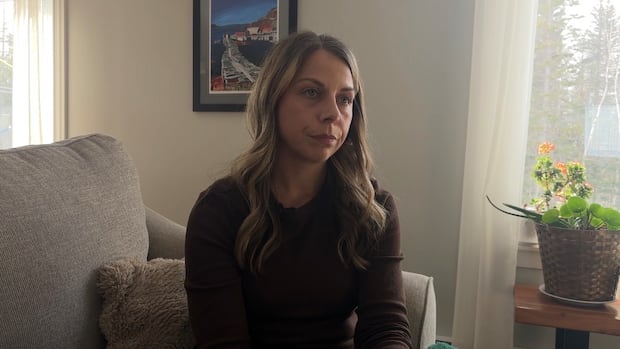
Stephanie Budgell of Pasadena was diagnosed at 35 years old.
“It’s just wild. I don’t know what to make of it, to be honest,” she told CBC Radio’s Newfoundland Morning.
According to the Cancer Society of Canada, in 2025 colorectal cancer was expected to be the fourth most commonly diagnosed cancer in the country, excluding non-melanoma skin cancers. It was also listed as the third leading cause of death from cancer in men and women.
Prior to her diagnoses, Budgell was 18 months postpartum having had her second child and was heading back to work.
“There was a lot of, like, stress and everything in my life. So I was like, ‘Oh, maybe I’m having some tummy trouble,’” she said.
‘Almost 100 per cent preventable’
Earlier this month James Van Der Beek, the actor best known for his role on the television show Dawson’s Creek, died at 48. The actor announced he was diagnosed with Stage 3 colorectal cancer in November 2024.
On Jan. 30, Canadian actress Catherine O’Hara died from a blood clot in her lung. She had also lived with rectal cancer.
Budgell, who is now five years cancer-free, hopes their deaths can raise awareness of the dangers of colorectal cancer, and she’s urging young people to be on the lookout for symptoms.
Symptoms can include diarrhea as well as constipation, a lump in the abdomen or rectum and fatigue.
“A cancer that is almost 100 per cent preventable is still, you know, taking lives [of] people at 48,” she said. “[It’s] a little bit sad for sure.”
Some countries, like the U.S. and Australia, have lowered the screening age to 45 years old, but Budgell isn’t sure if that’s likely to happen in Newfoundland and Labrador.
Download our free CBC News app to sign up for push alerts for CBC Newfoundland and Labrador. Sign up for our daily headlines newsletter here. Click here to visit our landing page.