
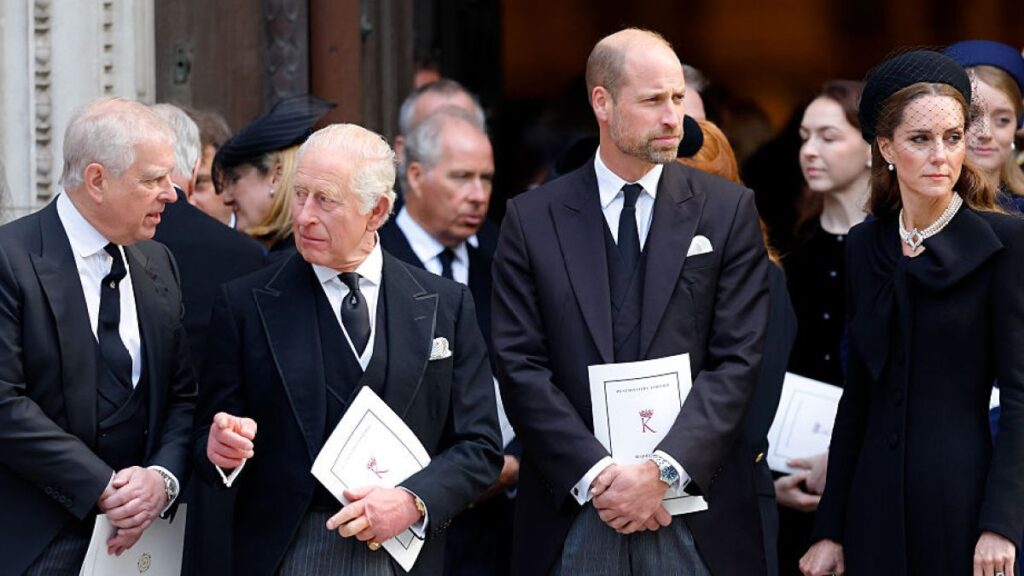
Polling shows fall in support for monarchy, and experts say recovery for the Royal Family will be ‘very slow and incremental’
The King and Royal Family are expected to face further scrutiny of their finances from MPs after the scandal surrounding Andrew Mountbatten-Windsor.
MPs and constitutional experts are warning that the monarch and wider Royal Family’s finances could be put under the microscope, after allegations of how the King’s brother used his taxpayer-funded post of trade envoy sparked uproar.
Anger over Mountbatten-Windsor and his links to Jeffrey Epstein could spread to senior royals, experts said, in a sign that the age of deference under the reign of Queen Elizabeth II could be fading.
But public opinion of the King has been enhanced rather than diminished in the wake of the latest saga, palace insiders believe.
New FeatureIn ShortQuick Stories. Same trusted journalism.
There could even be demands in parliament for members of the House of Windsor to have their financial affairs made public in a register of interests, under similar rules applied to MPs and peers.
King insulated from Andrew fallout, palace insiders believe
However, the palace has been buoyed by polling that is understood to show that the majority of the public can tell the difference between the actions of Mountbatten-Windsor and the wider family.
In answer to the question of how recent events have affected public opinions of the King, two thirds said there was no change at all, 13 per cent had an improved view, while just 3 per cent believed it had been harmed.
It suggests that four times as many people have had their view of Charles enhanced as a result of how he has dealt with the scandal involving his brother than those who think otherwise.
In the wake of Mountbatten-Windsor’s arrest last month on suspicion of misconduct in public office, the monarch issued an unprecedented statement insisting that the “law must take its course”.
The King also reiterated that he would offer “full and wholehearted support and co-operation” to the police investigation.
The former prince, who denies wrongdoing, was later released under investigation after 11 hours of questioning.
Last week, MPs debated a so-called “humble address” motion, tabled by Liberal Democrat leader Sir Ed Davey, calling for the release of files associated with Mountbatten-Windsor’s appointment as trade envoy in 2001.
The motion was backed by the Government, after decades of Whitehall blocking demands by parliamentarians and journalists for more information about his role, which he held for a decade, due to a Freedom of Information exemption for the royals.
Commons Speaker Sir Lindsay Hoyle reminded MPs that while it was acceptable to criticise Mountbatten-Windsor, as he has been stripped of his title, the parliamentary rulebook Erskine May states that they must not challenge the monarch or other royals in the House.
However that debate saw some MPs straying into calls for greater transparency from the palace, including over royal finances.
Royal Family ‘must be held to account’
While he did not criticise the wider Royal Family, trade minister Sir Chris Bryant was trenchant in his criticism of the ex-duke of York, calling him a “man on a constant self-aggrandising and self-enriching hustle, a rude, arrogant and entitled man who could not distinguish between the public interest, which he said he served, and his own private interest”.
And an Early Day Motion signed by 27 MPs from six parties calls for Buckingham Palace to “publish all papers and electronic communications that contain reference to the relationship between Jeffrey Epstein and Andrew Mountbatten-Windsor”.
Green MP Siân Berry, who authored that motion, told The i Paper: “The only real reason MPs were able to criticise Andrew Mountbatten-Windsor in Parliament is because he is no longer a member of the Royal Family.
“With the uncovering of such serious potential corruption, which must have been made worse by his ability to operate in the shadows, the rules that prevent proper criticism and scrutiny of this powerful family are exposed as archaic and ridiculous.
“MPs, the public, and the press must be able to hold those in power to account, and that includes royalty.
“Palace platitudes of support for victims of Epstein’s abuse are meaningless if vital information is still being covered up.
“Royal Freedom of Information exemptions must be removed, and I urge the King to proactively publish all communication between Andrew and Epstein, and engage with parliamentarians to break down these walls of concealment.”
MPs would never dare criticise royals – but Andrew saga changed everything
Even centrist political figures not normally known for their republican views have said the mood has shifted.
Ed Balls, the former Labour cabinet minister, told his Political Currency podcast this week that the Mountbatten-Windsor scandal “changes the relationship between the monarchy and the citizen in a way which won’t easily be reversed”.
Liam Byrne, chair of the Commons Business and Trade Committee, said they would begin gathering information in order to “stand ready to launch an inquiry” into Mountbatten-Windsor’s role as trade envoy, once the police investigation has concluded.
And Rachel Reeves told this newspaper the former prince should repay money to the public purse if he is found to have misused taxpayers’ funds. He has denied any personal gain from his trade envoy role.
Dr Craig Prescott, a constitutional law expert and the author of Modern Monarchy, told The i Paper that deference in Parliament to the monarchy that was strong during the late queen’s reign is “starting to fade away”.
He said select committees could conduct more inquiries on the monarchy, particularly because the sovereign grant, the funding mechanism for the King’s public duties, is up for review this year.
Prescott said there had been a “distinct shift in the mood in Parliament” in part due to Labour’s large majority, with that party’s MPs historically being less deferential to the monarchy than the Tories.
Respect for monarch ‘starting to fade away’
But he added that the humble address debate “was interesting for the openness of MPs to criticise Andrew”.
He said: “This might be a sign that the deference in Parliament to the monarchy is starting to fade away.
“In the reign of Elizabeth II, this was generally a no-no, as scrutinising the monarchy risked being seen as critical of the Queen, and this was left to those, such as Tony Benn, Paul Flynn, and others who were very openly republicans.
“Now, that’s no longer the case, with Charles III, he [and Prince William] were always likely to face more scrutiny.
“As a result, the monarchy will need to be more attuned to Parliament’s mood and act accordingly.
“There is a particular issue with the finances, and there are questions about the size of the sovereign grant and the Duchies of Cornwall and Lancaster.
“Being more transparent about their finances would be a good first step. There have been proposals for a register of interests [similar to those in the Lords and Commons], and so you might see something along those lines.”
Chris Hopkins, political research director of polling company Savanta, said: “I think there’s likely to have been a drop in general support for the monarchy, and our data with [campaign group] Republic tends to show that.
“However I don’t necessarily think that leads to increased republican sentiment, and is more likely to be dissatisfaction towards the institution than a strong desire for them to be replaced with an alternative.
“Whether it’ll last or not is harder to assess – my hunch will be yes, it [Andrew scandal] will do long-lasting damage, but it won’t be fatal and the recovery will likely be very slow and incremental.”