
Meghan Markle and Harry: Expert discusses Oprah interview
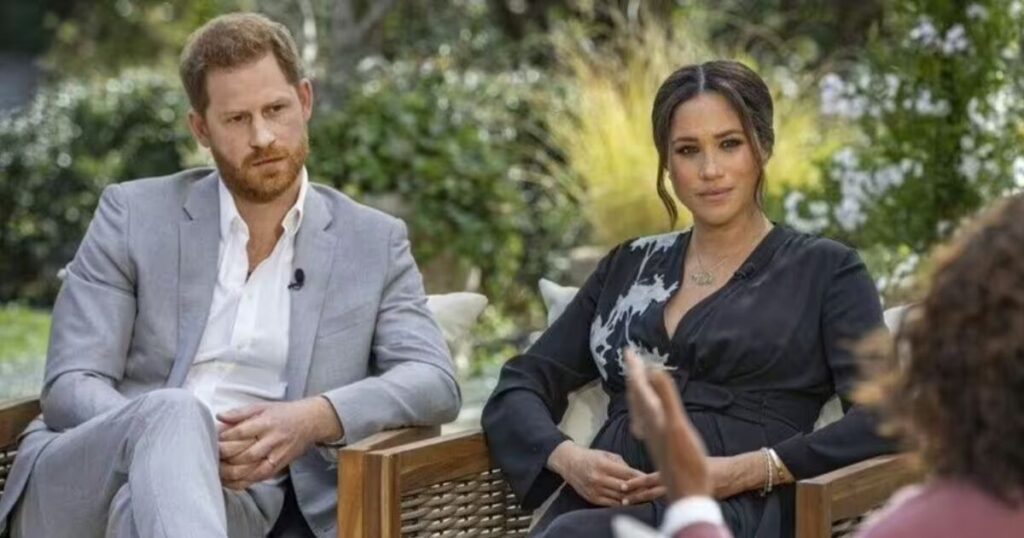
Five years ago today the House of Windsor was rocked by a television moment that exploded far beyond palace walls. Prince Harry and Meghan Markle sat opposite Oprah Winfrey and delivered a two-hour interview that sent shockwaves through the monarchy and dominated headlines worldwide. Long-simmering tensions erupted – allegations of racism, mental health neglect and royal indifference laid bare before millions.
For Buckingham Palace it was not simply another awkward chapter in royal history. It was the moment the monarchy’s intensely private world collided with the unforgiving glare of global television. Queen Elizabeth II’s long-standing philosophy of “never complain, never explain” suddenly looked fragile in the face of a prime-time slot watched worldwide – a royal drama no longer confined behind palace gates but unfolding on the international stage.
Five years on, the aftershocks still ripple through the story of the Duke and Duchess of Sussex – and arguably through the Firm itself.
Read more: Meghan Markle’s ‘beautiful and elegant’ gold bracelet is under £90
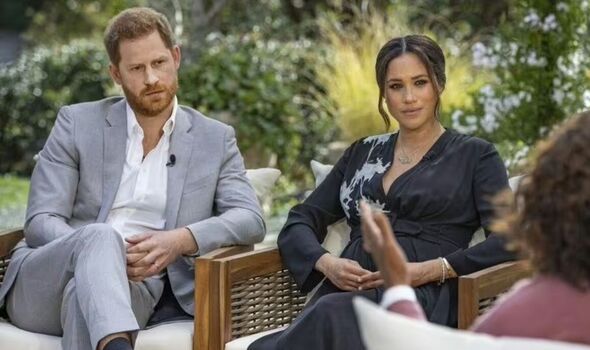
Meghan Markle and Prince Harry were interviewed by Oprah Winfrey in 2021 (Image: CBS)
Royal commentator Richard Fitzwilliams believes the broadcast marked one of the most damaging moments for the monarchy in modern history. “This had a unique appeal, taking Harry and Meghan’s case against the royal family worldwide,” he says.
“In Britain the majority sided with the royals; in the United States many sided with the Sussexes. It was uniquely damaging.” “It was compared to a nuclear weapon fired at Buckingham Palace at the time,” he continued.
Royal interviews were not unprecedented – but the scale of the accusations and the global stage on which they were delivered set this one apart.
Meghan, 44, spoke about feeling unsupported during her time as a working royal, revealing she had experienced suicidal thoughts and claiming she had been denied help. Harry, 41, described a breakdown in relationships with his father, now King Charles III, and his brother, the Prince of Wales, saying he had felt “trapped” within the institution he once represented.
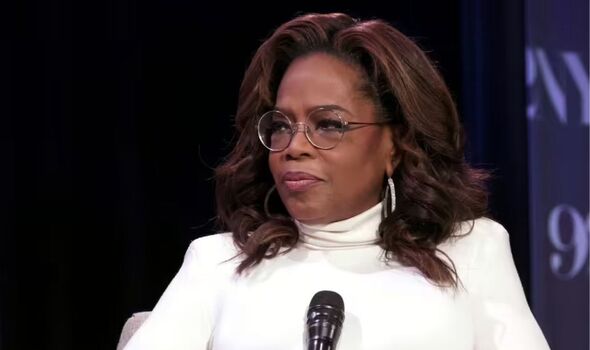
Oprah has made a veiled dig at the couple’s royal title (Image: Getty)
The most explosive moment came when the Duchess alleged that conversations had taken place within the royal household about how dark her unborn son, Prince Archie’s, skin might be – a claim that ignited fierce international debate about race and the monarchy.
Fitzwilliams argues those accusations made the interview incendiary. “The Sussexes claimed that the royal family was racist,” he says.
“The question circulated in the media: who had asked what colour Archie would be? Oprah later clarified that it was not the Queen or Prince Philip, though Harry later rejected the term ‘racist’, saying it was ‘unconscious bias’.
But it dominated headlines at the time.” “People wondered: who was the ‘royal racist’? It became something of a macabre guessing game. Also, the claim that the royal family had been uncaring about Meghan’s mental health and suicidal thoughts was extremely damaging.”
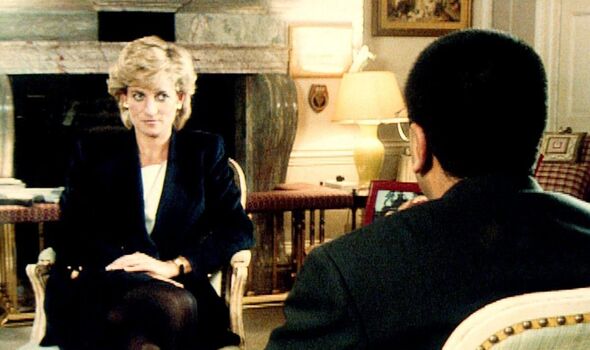
Princess Diana’s interview with Martin Bashir in 1995 for BBC Panorama (Image: BBC)
Those accusations, delivered to millions during one of the decade’s most watched television broadcasts, reverberated worldwide. Yet no evidence or clarification followed, leaving it all to hang over the institution.
Comparisons were quickly drawn with the most famous royal television interview of all – Princess Diana’s 1995 Panorama appearance with Martin Bashir. But Lydia Starbuck, associate editor of Royal Central, believes the Sussexes’ broadcast had a far greater institutional impact. “The gloves appeared to be totally off with Harry and Meghan and the claims they made were dynamite,” she says.
“Diana’s interview had been shocking as it lifted the lid on very personal matters. Harry and Meghan brought the whole Royal Family into their interview. Diana had prodded at the institution in her TV interview. Harry and Meghan shook the whole palace with theirs.”
She says the fallout forced the monarchy into an unprecedented response. “Although expectation and interest in the interview were high, after the huge fallout from Harry and Meghan’s decision to leave the royals a year earlier, no one could have expected the explosive claims made in the Oprah programme,” she added.
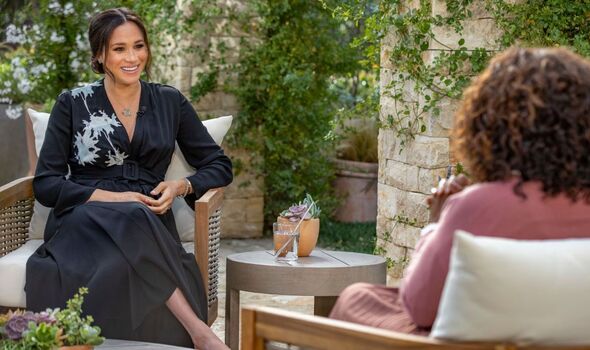
Meghan Markle sat down for an interview with Oprah in 2021 (Image: CBS)
In the months that followed, the broadcast came under scrutiny. Some claims were clarified while others were challenged by commentators and royal sources who argued key details lacked context.
Royal commentator Richard Fitzwilliams believes the controversy damaged the Sussexes’ credibility. “When the interview was fact-checked it revealed numerous errors and questionable claims, and Oprah failed to probe them. That has not helped their reputation,” he says. “The damage, however, had already been done.”
Starbuck says the long-term consequences have been significant. “It’s been ultimately been bad for their credibility,” she says. “At the time, having some of the claims disproved still left them in a fairly strong position but as the years have gone on, and they’ve made more claims that haven’t always held water, the interview has taken on a different aspect. It’s not aged well.
“I think initially the interview divided people into supporters of the couple and cynics. However, the way Harry and Meghan have behaved in the years afterwards is what is really informing their public perception in the UK right now Oprah wasn’t the only reveal-all moment – we’ve had Netflix programmes, Harry’s book, other interviews and then the court cases. It’s formed a pattern of constant complaint about the royals.”
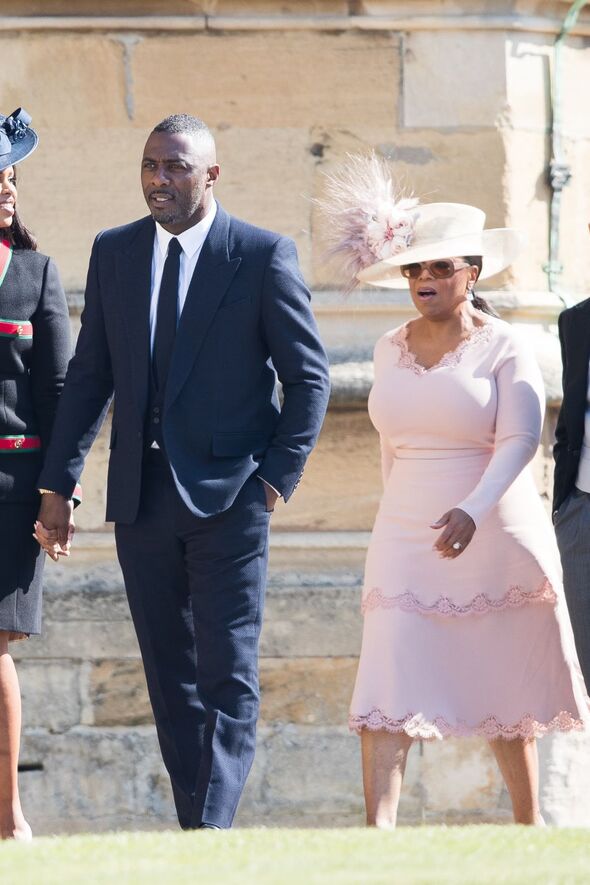
Oprah Winfrey attended the royal wedding of Harry and Meghan back in 2018 (Image: Getty)
Fitzwilliams points to another consequence: the bitter divide between rival royal supporters online. “The bitterness of the online wars between supporters of the Wales’ and the Sussexes is partly linked to this interview and, of course, to the Netflix documentary and to Harry’s memoir Spare,” he says. It also cast a long shadow over the wider royal family. Buckingham Palace responded cautiously, issuing the statement that “recollections may vary”.
Fitzwilliams notes the Queen’s response ultimately became the defining line of the saga. “The irony is that it was the Queen’s response ‘some recollections may vary’ – that became the most memorable line.” Yet not everyone believes the interview should be viewed solely through the lens of institutional damage.
Journalist and commentator Afua Hagan, who specialises in diversity, inclusion and the British Royal Family, argues the Sussexes saw the interview as a rare chance to reclaim control of their narrative. “I think it was a defining moment for Harry and Meghan because it was them telling their own story – talking about what happened to them rather than other people talking about it for them,” she says.
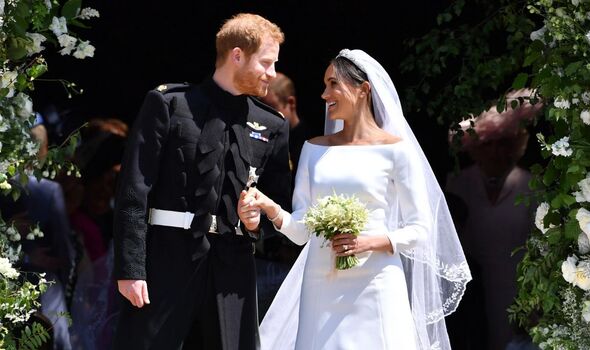
Prince Harry and Meghan Markle tied the knot in 2018 and stepped back as working royals in 2020 (Image: Getty)
“For so long the tabloid press had written so many things about them that were untrue or unkind. This was their opportunity to speak for themselves.” Hagan believes the interview resonated because of the issues it raised. “There were several major revelations – discussions about security for Harry and Meghan, concerns about the colour of their child’s skin, and Meghan speaking openly about her mental health struggles and suicidal thoughts,” she says.
Still, she acknowledges the broadcast intensified divisions that already surrounded the couple. “Harry and Meghan are incredibly divisive figures and that polarisation absolutely still shapes how they are perceived today.”
She added that some reactions to Meghan reflected wider cultural tensions. “Harry married someone who wasn’t white, who was older than him, who was American and an actress – and those things clearly triggered a lot of reactions.”
Prince Harry’s memoir Spare, released in 2023, became one of the fastest-selling non-fiction books in history and further strained relations with the Palace. Meghan has meanwhile sought to build her own lifestyle brand.
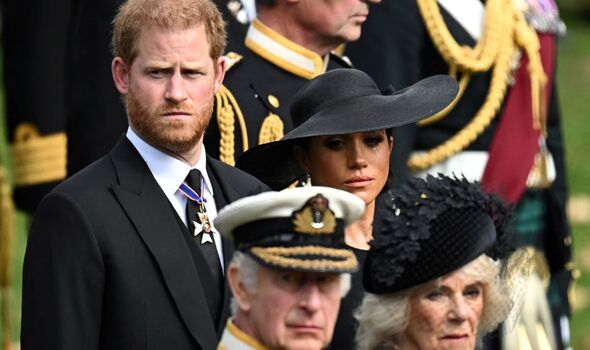
Experts shared they predicted Harry and Meghan will only return for major royal events (Image: Getty)
After a five-year hiatus she returned to social media and launched As Ever, alongside the Spotify podcast Confessions of a Female Founder. Their Netflix projects, including the documentary series Harry & Meghan kept them in the global spotlight, though the pace of new ventures has slowed.
Meanwhile the wider royal family has faced its own controversies, including the continuing fallout surrounding Andrew Mountbatten-Windsor and Sarah Ferguson, a saga some observers believe has softened the shock value of the Oprah interview.
Fitzwilliams believes the broadcast undeniably amplified the Sussexes’ global profile. “It certainly boosted the Sussexes’ brand worldwide enormously,” he says. “It is worth noting, however, that they have failed to make the impact they hoped for in Hollywood.”
Looking ahead, few observers believe the couple will return to royal life in any meaningful capacity. “The issue of whether the Sussexes could return to Britain on anything other than a visit for a specific purpose seems to me remote,” Fitzwilliams says.
Speculation briefly resurfaced last week when the couple flew to Jordan – prompting questions about whether any future connection with royal duties could emerge.
For now, however, the legacy of that Oprah interview still lingers. It was the moment a royal family drama – once contained behind palace walls, which erupted onto the world stage. And once that door opened, the monarchy and the Sussex story changed forever.