
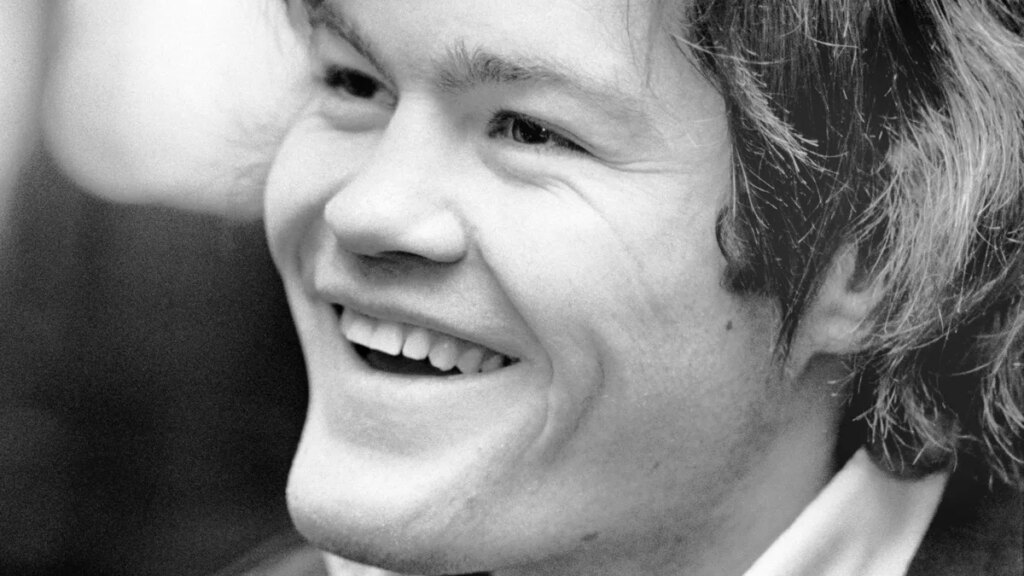
In a three-hour conversation with USA TODAY to mark 60 years of the Monkees, Micky Dolenz shares a detailed oral history.
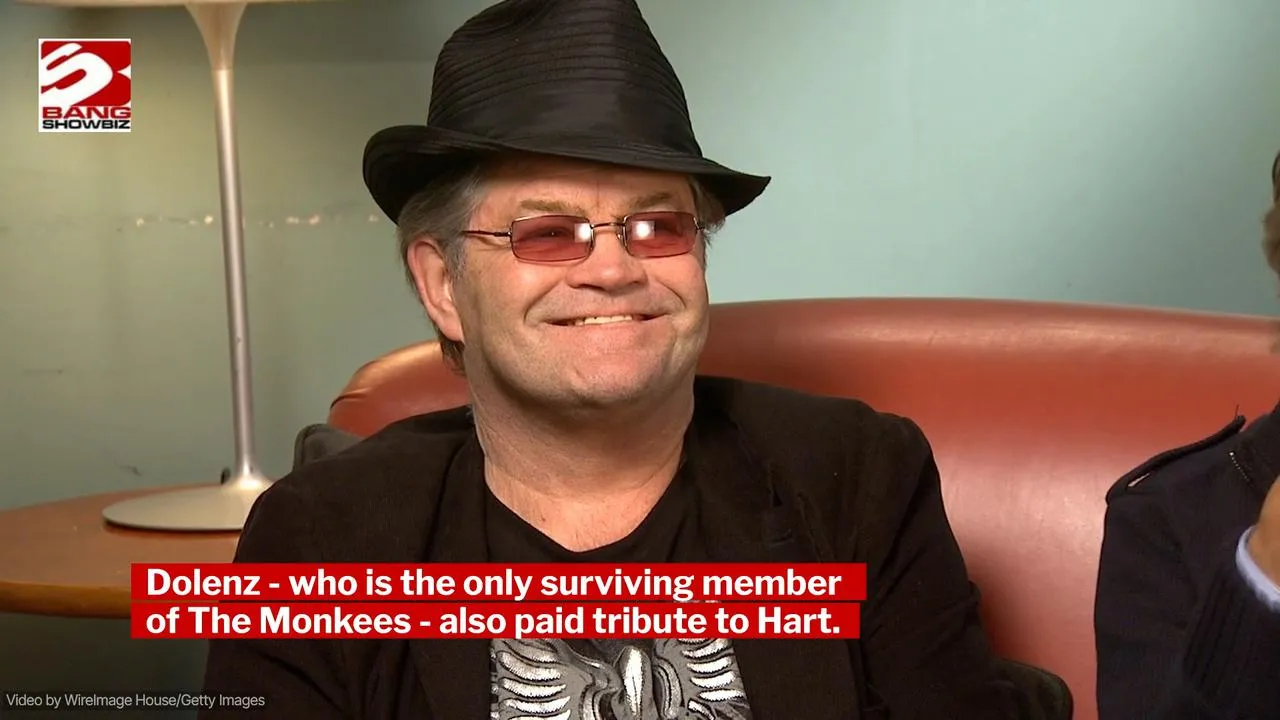

Legendary Monkees songwriter Bobby Hart dies
Bobby Hart, one half of the Boyce and Hart songwriting duo, who penned some of The Monkees’ hit songs, died at 86.
Bang Showbiz
Micky Dolenz is celebrating his late Monkees bandmates Davy Jones, Mike Nesmith and Peter Tork with a 60th anniversary tour.In a lengthy USA TODAY interview, he digs into the Monkees’ backstory, from their TV show auditions through their successful reunion.”The Monkees” sitcom premiered on NBC on Sept. 12, 1966, and became an instant hit.
The way Micky Dolenz sees it, the Monkees’ success was neither predictable nor replicable.
“You can’t reduce it, you can’t take it apart,” he says of the beloved made-for-TV band, soon to turn 60. “You can’t take ‘Star Trek’ and say it was just Leonard Nimoy’s ears, it was William Shatner, it was the writing. You can’t do that.
“To my mind, what happens is you take your best shot, and at some point, the whole becomes greater than the sum of its parts.”
Dolenz, who turns 81 March 8, is celebrating his late bandmates Davy Jones, Michael Nesmith and Peter Tork with his ongoing, hit-packed 60 Years of the Monkees tour. A Sept. 12 stop in LA marks the 1966 premiere date of the innovative NBC sitcom.
In three hours of pre-birthday conversation with USA TODAY, Dolenz offers an in-depth oral history of the Monkees:
This conversation has been edited for length and clarity.
The Monkees were never supposed to be the American Beatles
“It was a sitcom about this imaginary group that wanted to be famous,” says Dolenz, pointing out that the TV show’s co-creator Bob Rafelson came up with the concept of the Monkees before the Beatles exploded.
“It was about the struggle for success: trying to get a gig, trying to get an agent, trying to get a record deal. So it spoke to all those kids that were in their bedrooms, garages and living rooms, rehearsing and trying to be famous. Which does beg the question of how we could afford a Malibu beach house, but that’s Hollywood for you.”
When in the casting process did Micky, Davy, Mike and Peter realize ‘We’re the ones’?
“There was no ‘we.’ I vaguely remember Davy. He’d been on Broadway, he’d been on English television, he had recorded; I had, too. We knew the process and we clicked. I don’t remember Mike and Peter at all until I met them at a wardrobe fitting.
“I was enrolled at LA Trade-Technical College as an architecture student. I had been a child star. After ‘Circus Boy,’ I went back to normal high school. My parents kind of took me out of the business, which was very smart. That post-child star thing is where, excuse my French, you get effed up.
“Every summer, I would do day jobs on TV. That was spending money. You had to be able to sing and play to get in the audition. I go in and I notice immediately, this is laid-back and cool. I thought, I would like to get this one.
“I didn’t quit school because I knew that 99 out of 100 pilots did not sell.”
They already knew how to sing and play instruments. But improv was entirely new.
“There was this improvisational interview [during auditions], which I was not good at. Very uncomfortable,” he remembers. “I was very old-school Hollywood; you get your script, you learn your lines.”
Once cast, the quartet got a crash course in ad-libbing. “We would screen Marx Brothers movies as part of our prep. Laurel and Hardy. Mike was the best at improv, but we got into it quickly. We were bouncing off the freaking walls, but they encouraged it. There were big chunks, scenes all the time, where we’re just winging it.
“I laugh to this day when I see the show. That was some funny s—.”
‘The Monkees’ pilot fell in place after they ditched the father figure
“In the pilot, there was a man who owned the record store and was our manager. We would go to the store and ask him for advice. And the pilot, I understand, did not test well among kids.” So they took out the manager. “We were masters of our own destiny, and we didn’t need my favorite uncle. And we were still nice guys and we still helped little old ladies across the street.”
Being a Monkee was ‘an incredible amount of work’
“Filming a TV series is about 10 hours a day,” starting with makeup at 6 or 7 a.m., Dolenz says. “Twenty-six episodes in one season, filming continuously for six months or so. Three days to film one episode, and then you’d start the next one the next day. I was usually told I had a call at the recording studio, so I’d grab a quick hamburger for dinner, then go to RCA Victor. Because I sang most, not all, but most of the lead vocals. So that could have been to midnight. I was 21 years old − you can do a lot at 21.”
In the ’60s, it felt like a lot of money: “In the original days, we were making $400 a week for everything: recording, acting and the shows.”
The Monkees archetypes weren’t accidental
“Clearly, they were looking for charisma and chemistry. And that’s not something you can really reduce in the scientific sense. It’s more of a gut, emotional thing. It wasn’t: ‘This person sucks and this person is great.’ It was more: Who works together? What’s the chemistry?
“The Lovin’ Spoonful were considered [for the cast] as a whole group. Great band, they had lots going on. But they’re very similar. Somebody must have said, you know, that’s fine if you’re just on album covers. That’s not going to work on television, you’ve got to have distinct looks, distinct ideas.
“They didn’t have to look far for the cute one, that’s Davy, the heartthrob. They were probably looking at the wacky, Red Skelton, Danny Kaye character, that’s me. The wry Will Rogers, kind of dry humor, Nesmith. The Huntz Hall, Peter. I suspect that’s how the four of us were picked, because vive la différence.”
Both Micky and Davy would cut lead vocals. Producers picked which version to release.
“There were a number of occasions where I was given a call sheet to come in and record songs that I rehearsed. And I knew that Davy would also sing the same songs at his call time. I know there is a version of me doing ‘I Wanna Be Free.’ And I know there are versions of him, Mike and Peter. If those even exist anymore; I know ‘Free’ does, because I’ve heard it.
“Somewhere along the line, somebody must have said my voice was more appropriate for some of the pop-rock stuff that the Monkees represent. This would have been the higher-ups like [music supervisor] Don Kirshner saying: What’s going to sell to 10-year-old little girls?
“The producers said, ‘You’re the drummer,’ and I said, ‘But I play guitar.’ And they said, ‘We have enough guitar players, you’re the drummer.’ I did something similar with ‘Circus Boy,’ they said, you’re going to learn to ride an elephant. So I started drum lessons immediately.”
The Monkees were ‘discouraged from being political’
“And we really weren’t. Christ, not like today. I vaguely remember in the early days of filming, a meeting with probably Jackie Cooper [the child star-turned-Screen Gems executive] and somebody from NBC Standards and Practices, making it clear that we were not to make political and social statements when we did interviews. And I understood that, because that wasn’t what the show was about. [It’s right there] in the theme song, ‘We’re too busy singing, to put anybody down.’ So I got that.
“I wasn’t extremely political and I’m still not. I have my own opinions about things, but I just never have gone down that road. I don’t remember David or Mike being very political, I think Peter was the one who probably would have been the most opinionated politically. But we were discouraged. I didn’t have a problem with that. It wasn’t the platform for that, as far as I was concerned. I don’t follow party lines, and I don’t mind saying that. I’m not a sheep, I’m a wolf. I’m a leader.”
The quartet’s version of ‘Ríu Chíu’ has become a holiday classic
“The producers were always stretching. Somebody came up with the idea of doing a Christmas a cappella live. It might have been Chip Douglas, who produced [the Monkees’ album] “Headquarters,” who said there’s this Castilian kind of chant, and it’s beautiful. And, oh, my gosh, I do remember rehearsing extensively for it. I think we did it in one take or two max.”
How the TV band became a real band
“There were two Monkees, as far as I’m concerned. There was Monkees 1.0, which was the imaginary group that lived in the beach house. When we hit the road, I call that Monkees 2.0. We started rehearsing between takes. We had months, I would say the best part of a year. But when we hit that stage, we were a bona fide, frigging group. It was intense. The first show was in Honolulu, because they figured if we really sucked, it was so far away, nobody would know. It was like a garage band, rough and rugged. We did it for thousands of shows.”
Was there a leader in the Monkees?
“There was no leader of the band because there was no band. So the question is moot. It doesn’t compute. Having said that, the writers had written that the character Mike played was a little more, ‘Hey, guys, we should do this or that.’
“Now, when we started doing the music, Mike did take the helm. I remember being quite happy with that. The very first songs we learned to play together as Monkees 2.0 were Mike’s songs. The first song we were ever allowed to record [ourselves] was ”The Girl I Knew Somewhere,” a Mike Nesmith tune.
“I don’t see how we could have done it before that, we’d only been together weeks or months. When we went on tour and played live for months, when we came back, we all knew we could do it. But it was Mike who absolutely led the palace revolt.”
Did Mike and Peter really not get along?
To Dolenz, it felt like sibling rivalry. “That did occur, but it occurs on all productions. You hear about that in bands. Look at the Beatles, the Stones, literally in the Beach Boys.
“There were very different artistic sensibilities, the difference between Peter and Mike and me and Mike was great. I approached the thing as an entertainer/actor that had been hired to play this part. Mike was hired as a singer-songwriter, or so he thought. He also told me he went in and sang some songs and they told him, too much twang. And Peter was into folky, bluesy, Greenwich Village stuff. So there was sibling rivalry. But nothing like the TMZs would like to make a note of.”
None of the Monkees were particularly upset when the show was canceled
“The group didn’t disband, the group didn’t have a major falling out − the show was canceled. I knew what to expect, I’d been through it before. None of us really cared much that it was canceled. I was already on to new horizons and wanted to be a director and writer. So from my point of view, ‘Whew, glad that’s over, that was a lot of work.’ I knew intuitively, I ain’t going to get any other serious acting jobs. But I didn’t want to, I’d already been in the business for 15 years.”
What was the Monkees’ relationship like after the show was canceled?
“When ‘Star Trek’ was canceled, what would have happened? A couple of the actors might have been hanging out, maybe not. But I don’t think William Shatner and Leonard Nimoy would call each other every day and say, ‘Beam me up, Leonard!’
“There were no longer Monkees. There was no office, there was no management. There was nowhere to go, no one telling anyone where to show up.”
Jack Nicholson and the making of the trippy Monkees movie ‘Head’
After “The Monkees” went off the air, the show’s creators went on to make “Easy Rider” and “brought this guy into the fold, a B-movie actor who wanted to be a writer. Well, his name was Jack Nicholson. I fell in love with him immediately − the funniest, most charismatic, brilliant.”
They asked, “ ‘Do you want to do a Monkee movie, like a 90-minute episode of the show, or should we branch out and do something else?’ I remember thinking, yeah, let’s do THAT. So Jack started hanging out, for months it seemed like, coming to my house and learning.”
The Monkees’ 1986 reunion was a fluke
“It was going to be a summer tour of fairs and parks and Disneylands. I was just looking at it as this is going to be a fun little hiatus, seeing David and Peter, who I hadn’t seen in years, maybe Mike will join us. Three years later, I’m still on the road in a very successful resurgence reunion. It had legs.”
Dolenz thinks too much was made of Mike opting out of that initial reunion.
“He was running a video distribution company called Pacific Arts. He couldn’t suddenly disappear for a number of years. But also Mike was making his own music, really great music, Mike and the First National Band. The kind of thing he’d always been wanting to do.”
The band never had any ownership of the Monkees name
To be able to go out on his 60 Years of the Monkees tour, “I had to make a deal,” says Dolenz, with many rights now owned by Rhino Entertainment. “They’re always helpful and supportive, but they are always protecting their brand.
“The way I look at it is, if I wanted to do a show about Batman, I couldn’t do it without getting the rights. I’ve always understood that and I think Mike did, too. David, God love him, always had a problem with that: ‘We are the Monkees.’ And there’s a level of that that’s true. But when I tell people I have absolutely no control, they’re very surprised.”