
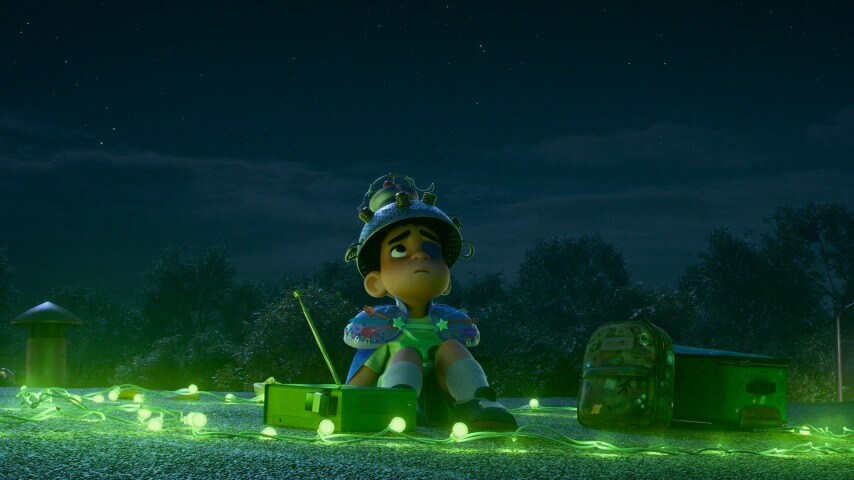
Or, to put it in the man’s own words: “We’re making a movie, not hundreds of millions of dollars of therapy.” That quote comes up in the context, specifically, of Elio, the 2025 film that Docter ordered to be heavily, and expensively, retooled after test audiences were lukewarm on the idea of paying to see it, a process that ended up ditching LGBTQ themes, co-star America Ferrera, and, most notably, director Adrian Molina, who unhappily departed the project. (The resulting film, described by one former Pixar artist as a movie about “nothing,” bombed anyway, it feels noting.) But that pushback on the personal is also just the general theme of the profile, which seems to suggest that Docter—described as “the least assertive member of the braintrust,” referring to the company’s famed inner circle of decision makers during the Lasseter era—went initially overboard in allowing his directors to make personal stories, before taking a hard pivot into something more aggressively commercial.
Some of this, if we’re being honest, feels a tad ideological: The WSJ piece is very careful to note any time a recent Pixar project—including Luca, Elemental, Elio, and the canceled Be Fri, which Disney ended up outright killing after seeing it as a work in progress—was inspired by the director’s youth. (They go a bit softer on Domee Shi’s Turning Red, maybe because Disney has at least succeeded in getting some merchandising money out of Shi’s lockdown-era hit.) The article describes a “come to Jesus” speech that Docter apparently gave to his staff sometime in the not-too-distant past, while also quoting him as saying stuff like “I probably overindexed on, ‘Do whatever you want,’” and “As time’s gone on, I realized my job is to make sure the films appeal to everybody.” (And that’s before you get into specific conversations about removing references to gay or trans characters in films like Elio or the Pixar TV series Win Or Lose, with Docter saying something to the effect that the studio realized “some parents didn’t want entertainment to force them to have a conversation they weren’t ready for with their children”—i.e., the same tired line higher-ups at Disney have given for excising those elements.)
For what it’s worth, the studio’s latest film, Hoppers—which reportedly had some of its pro-environmental messaging plucked out of it on the road to theaters—is getting strong reviews, from both critics and audiences, at least in part for focusing on energetic slapstick wackiness instead of trying to make something more openly heartfelt. So, hey, maybe Docter is correct in this apparent course correction. (The film is expected to win the box office this week, hitting at least $40 million in expected profits.) Even so, it’s kind of depressing to hear that “hundreds of millions of dollars of therapy” quote come out of the guy ultimately responsible for some of the most emotionally intelligent animation in Hollywood, at a studio long held up as the place where animators—like, for instance, eventual Pixar studio head Pete Docter—could make a genuine name for themselves.